-5% on your 1st eSIM
WELCOME5
Loading...
Plan 2 weeks in France with eight day-by-day itineraries for culture, food, adventure, families, romance, art, Paris, and budget travel.
 Dimitri Morvan
The default advice for 2 weeks in France is too blunt. A single Paris-to-Provence loop does work, but it is not the best answer for every traveler, and it can be the wrong answer if you care more about wine, hiking, romance, family pacing, or staying in fewer bases. France's travel network is built for heavy demand, with more than 100 million international visitors in 2024 and a tourism economy estimated at €266.2 billion that supported roughly three million jobs (France tourism scale and 2024 demand), so the practical question is not whether you can do a classic route, but which route fits the way you travel.
That is the point of this comparison. Each plan below gives you a different 14-day shape, with its own route logic, transport choice, accommodation style, timing, packing priorities, and connectivity setup. If you need the short version, France rewards travelers who pick one primary profile and commit to it, instead of trying to collect every famous stop in one trip.
I'll keep this practical. You'll get a direct read on where to base yourself, when trains make sense, when a car is the better tool, what to book early, and how to stay online with a France or European eSIM from Simsima. For a luxury-transfer angle outside the France trip itself, see find luxury charter flights Honolulu.
This is the safest first trip for travelers who want the France they already picture in their heads. Start with Paris for museums, neighborhoods, and a proper arrival rhythm, then move south for slower days in the countryside and a cleaner finish with more space and warmer evenings. The route fits first-timers because it gives you a city base, a rail leg, and a regional base without forcing too many hotel changes.
Use Paris for the first stretch, then shift to a southern base such as Provence or the Riviera. Keep the middle of the trip open for a rail transfer day, because this route is strongest when you leave room for one long move and then settle in. Book Paris accommodation early, because the best locations fill first and last-minute compromises usually mean either a weaker neighborhood or a smaller room.
Practical rule: do the museum-heavy days first, then let the south be your slower landing pad.
For this route, trains are the right default. France's rail network is now even more relevant for a two-week trip, because recent reporting says passenger levels reached a record in 2025, with high-speed services up 4% and regional and commuter lines still growing (rail demand and route planning). That makes a train-first France trip more realistic than older itineraries suggest.
A good tactical layer is connectivity. If you want a setup guide before departure, use how to set up eSIM and install a France or Europe plan before you land. That matters most on transfer days, when maps, ride-hailing, booking confirmations, and train-platform changes all happen at once.
Choose this if food and wine matter more than checklist sightseeing. This route is built for long lunches, cellar visits, vineyard drives, and a slower pace between tastings. It suits travelers who want a trip with a clear theme and fewer cities, not people who need to tick off Paris, the south, and the coast in one run.
Use a car here, or hire a driver-guide if you want to drink without the logistical burden. Wine regions reward flexibility because estates, villages, and restaurants don't all sit on convenient rail lines, and the best days usually combine one tasting, one village stop, and one dinner that doesn't require racing the clock. If you want a more polished version, a sommelier-guide is the right splurge because it keeps the day moving and removes parking stress.
This route also works best in shoulder season, especially if you want calmer roads and easier reservations. The win is not “seeing more,” it is reducing friction between tastings, meals, and overnight stops. Book château visits directly and early, because small properties often limit daily visitors and you don't want to build the route around an unavailable tasting.
A strong 14-day wine trip uses one or two nights per base, not a different bed every night. Put Lyon or Burgundy at the center of the food section, then let Bordeaux or the Loire fill the wine-focused days. Cooking classes work well here because they anchor the trip in something hands-on instead of turning it into a series of similar tasting rooms.
Don't overpack this route with famous names. One great cellar, one memorable table, and one village walk beat five rushed stops every time.
For planning and live access to restaurant bookings, route changes, and vineyard apps, use Simsima's France eSIM so you're not dependent on patchy café Wi-Fi while you're in transit.
Pick this if your ideal France trip involves boots, weather checks, and an early start. The mountain-and-lake version of 2 weeks in France is not about cities at all, it is about moving from one active base to another and using France as an outdoor destination rather than a sightseeing loop. It suits travelers who'd rather spend a day on a trail or in a canyon than in a queue.

July through September is the cleanest timing for this style of trip, because you get the best odds for weather and the longest daylight window. The route should be built around one alpine base, one lake area, and one final nature-heavy stop, instead of bouncing between too many regions. Book guides, ferries, climbing slots, or equipment rentals before you fly, because active travel does not forgive spontaneous planning as easily as city travel does.
Your packing list matters more here than almost anywhere else on this page. Bring proper hiking boots, weather layers, and a daypack you like wearing. If you underpack the right clothing, you end up spending trip time solving avoidable problems instead of enjoying the trail or the water.
Outdoor travel makes offline tools essential, but offline alone is not enough. Download maps before you leave each base, then keep mobile data available for emergency messages, last-minute weather changes, and route updates. That is exactly where a France eSIM is useful, because it gives you simple data-only access without depending on a local shop or hunting for public Wi-Fi.
If your route includes remote valleys or canyon roads, don't assume every location will behave like a city center. Plan your driving and hiking days with slack, not with a minute-by-minute schedule.
This is the smartest version for travelers who want France with the least hotel churn. Stay in Paris for the full two weeks, then use day trips to Versailles, Giverny, and nearby towns to keep the trip varied without repacking every few days. It works well for business travelers, repeat visitors, and anyone who values comfortable routines over constant movement.
Paris gives you strong rail, dense neighborhoods, and enough variety to fill two weeks without boredom. Use the city as the anchor, then bolt on one or two day trips when you want grand architecture or a countryside reset. This is the route for travelers who hate transfer days and want to avoid spending half the trip in lobbies, stations, and check-in lines.
The best version of this plan is disciplined. Stay in one neighborhood with good metro access, book the major day trips early, and keep at least a few unstructured evenings for dinners or walks along the Seine. A Navigo Easy card is useful here if you're moving around the city a lot, and it keeps local transit simple.
Paris rewards people who move slowly and eat locally. If you treat it like a hit list, you'll only see queues.
For a direct planning companion, use Paris day trip ideas to choose the right outing, then book the reserved-ticket options first. If you want a Paris-specific mobile setup, use Simsima's France eSIM for Paris so you can switch between metro maps, restaurant apps, and last-minute train changes without worrying about Wi-Fi gaps.
This route is for travelers who want atmosphere to do as much work as attractions. Keep the bases smaller, the dining better, and the transfer count lower. For a couple's trip, the goal is not maximum coverage, it is better pacing, prettier stays, and enough margin to enjoy a room, a terrace, or a late dinner without rushing.
Shoulder season is the best choice because it keeps famous places more manageable and makes dinners and walks feel less crowded. Book accommodation well ahead, mention the honeymoon or anniversary if you're celebrating one, and prioritize places with a strong sense of setting, not just a luxury label. The best romantic France trips have one or two standout meals, one scenic stay, and one surprise moment that feels personal.
That surprise can be simple. A private tasting, a spa session, or a sunset viewpoint is usually enough. Don't overdesign it, because couples often remember the unplanned pauses more than the tightly scheduled parts.
Use your phone for reservations and timing so you don't have to keep asking at the desk or pulling out paper confirmations in front of your partner. A data plan is useful for that kind of low-friction coordination, especially when dinner times shift or a train arrives late. Simsima's France eSIM is a practical fit here because it gives you discreet booking access while you're on the move.
The best romantic route is one where you stop trying to impress the itinerary and start enjoying the stay.
Pack for evenings that run later than your daytime plan. Comfortable but polished shoes, a light jacket, and room in the schedule matter more than adding another destination.
This is the most direct answer for travelers who want a real France trip without a luxury budget. It trades polished hotels and high-cost transfers for buses, hostels, markets, and more local friction. That's fine if you care more about independence and flexibility than about the smoothest possible version of the trip.
Use buses such as FlixBus or BlaBlaCar when the route makes sense, because the savings can be meaningful on a two-week trip. Keep train travel for the legs where speed or convenience matters, and don't pay for premium transport just because it feels more comfortable on paper. Put your money into a few high-value experiences instead of upgrading every night's bed.
Supermarkets and markets should be part of the plan, not an afterthought. Breakfast from Carrefour or Monoprix, lunch from a market, and one nicer dinner every few nights keeps costs under control without making the trip feel stripped down. Free museum hours and low-cost attraction platforms also help, but don't turn every day into a scavenger hunt for discounts.
Budget travelers still need strong mobile data. Booking hostels, splitting costs, checking bus departures, and finding the right local stop all get harder when you're relying on weak hotel Wi-Fi or a patchy café signal. Use Simsima's best eSIM for France if you want a simple data-only setup before arrival, then keep your regular number for calls and texts.
This route works best when you accept that comfort is uneven. Some nights will be basic, some meals will be simple, and some transfer days will be long. That's not a flaw, it's the trade-off that makes the trip affordable.
Choose this if you want France as a layered cultural trip rather than a scenic one. This plan is ideal for museum lovers, architecture fans, and anyone who would rather spend time with collections, façades, and old city fabric than with beaches or nightlife. Paris can lead, but it should not be the only lens.
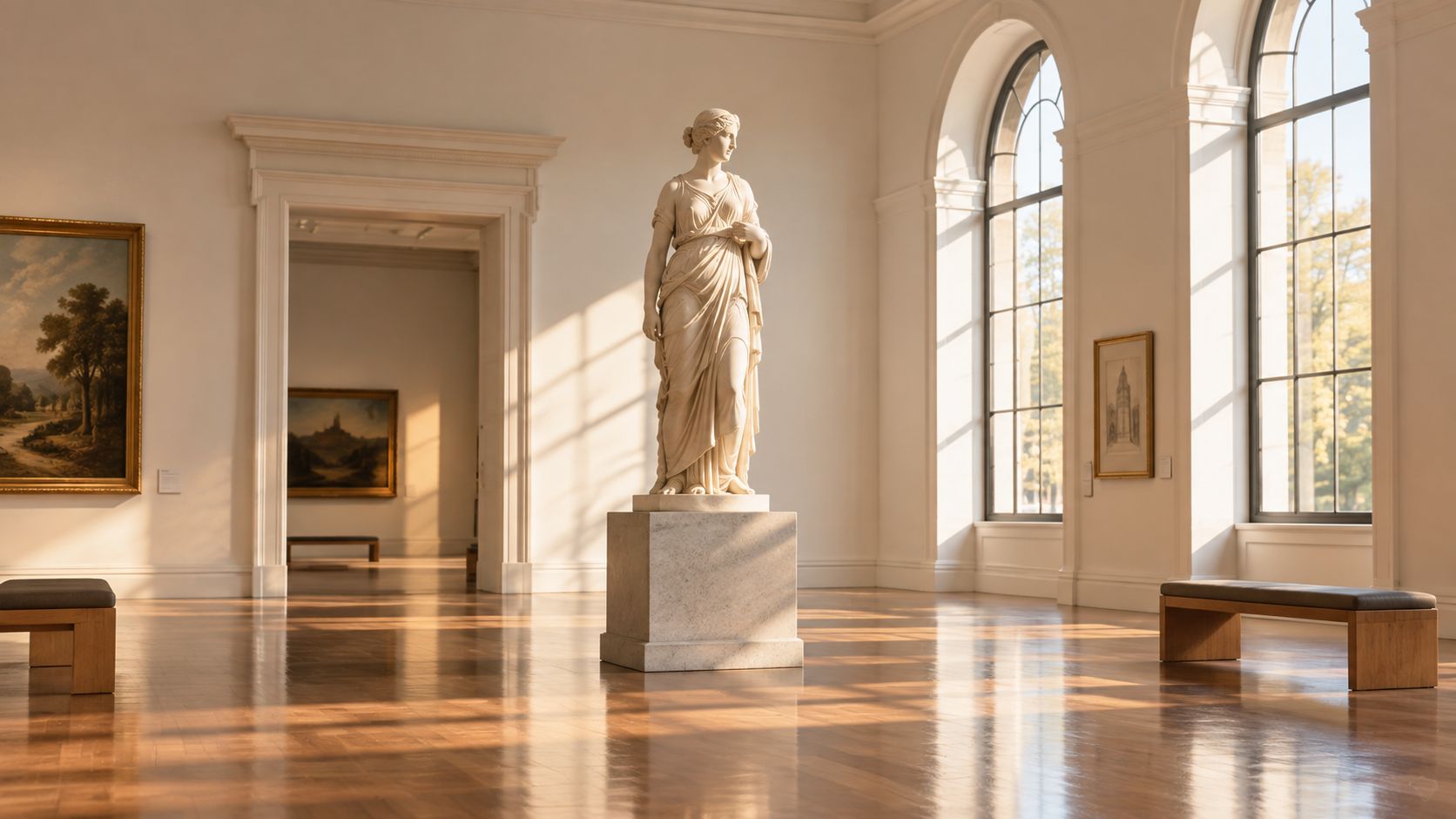
The best art trip is not a race between famous institutions. It is a sequence of collections, neighborhoods, and buildings that make sense together, with enough time to absorb each stop instead of skimming it. Use Paris for the deepest museum days, then add a second city or region with strong architectural identity so the trip doesn't flatten into one long gallery crawl.
For planning, check temporary exhibitions before you leave, not during the trip. That lets you shape the order of visits around the shows that matter most to you, instead of discovering too late that the best exhibition already closed. Evening visits can also work well because many museums feel calmer later in the day.
Museum audioguides, offline notes, and a phone that can pull up exhibition information on the spot all improve the experience. A France eSIM helps because it keeps museum apps, real-time schedules, and transit directions available while you move between institutions. If you want to add deeper interpretation, book one or two private guides instead of trying to outsource the entire trip to a guide for two weeks.
Art trips fail when they become pure coverage exercises. Pick fewer rooms, then stay long enough to actually look.
This route also benefits from a solid outer layer and comfortable shoes. A lot of time gets spent walking, standing, and moving between buildings, and the wrong footwear can ruin an otherwise excellent itinerary.
This is the route for households that need balance, not intensity. Families with children, teenagers, and older relatives do best with fewer bases, straightforward transport, and a mix of iconic sights and low-effort days. The right plan keeps everyone in the trip, instead of letting the youngest or oldest traveler absorb the consequences of bad pacing.
Book family-sized accommodation with space for meals and downtime. Apartments or family hotels give you more control over breakfast, laundry, and evening rest, which matters more on a two-week trip than most families expect. Build in one or two home-base days per week so the trip has some recovery built into it, not just movement.
Choose transportation with the least stress for the group. Scenic train routes are usually easier than a string of car transfers when you're managing bags, snacks, and varying energy levels. Day trips on Monday through Thursday can also be smarter because some attractions are less crowded and the day feels less compressed.
Research family facilities before you go. Bathrooms, stroller access, shade, and simple food options matter more than they do on a solo or couple's trip, and you'll feel the difference fast if you skip the homework. Keep a few backup activities in every base so the trip doesn't collapse when a child gets tired or an older traveler wants a quieter afternoon.
A data connection helps families coordinate without stress. Group messages, map sharing, and last-minute reroutes are all easier when everyone can stay connected, and a France eSIM is a clean way to do that across the trip. It also helps when one person wanders ahead or a teenager wants to separate for an hour and still stay reachable.
The family win is not doing everything. It is finishing the trip with everyone still speaking to each other.
| Itinerary | Implementation Complexity 🔄 | Resource Requirements ⚡ | Expected Outcomes ⭐📊 | Ideal Use Cases | Key Advantages 💡 |
|---|---|---|---|---|---|
| Classic Paris to Provence: Culture & Countryside | 🔄🔄 Moderate, multi-city planning and frequent train transfers | ⚡ Moderate, rail pass, mid-range hotels; minimal car need | ⭐⭐⭐, Broad cultural coverage and variety; limited time per region 📊 | First-time France visitors, families, cultural immersion | 💡 Iconic sites, strong food/wine, reliable transport |
| Wine Country Deep Dive: Bordeaux, Burgundy & Loire Valley | 🔄🔄🔄 High, car logistics and advanced château reservations | ⚡ Moderate (driving essential; higher tour/tasting costs) | ⭐⭐⭐⭐, Deep wine education and gastronomic impact 📊 | Wine enthusiasts, culinary professionals, romantic couples | 💡 Immersive tastings, expert-led experiences, quieter towns |
| Adventure & Nature: Alps, Lakes & Outdoor Activities | 🔄🔄 Moderate, activity bookings, weather-dependent logistics | ⚡ High, gear, guides, seasonal access; flexible pacing | ⭐⭐⭐, High outdoor engagement; variable accessibility and connectivity 📊 | Outdoor enthusiasts, adventure travelers, photographers | 💡 Nature-focused routes, licensed guides, adjustable difficulty |
| Paris Extended Stay with Day Trips | 🔄 Low, single base with routine day-trip coordination | ⚡ Low–Moderate, one accommodation, local transport passes | ⭐⭐⭐, Deep Parisian immersion; limited regional diversity 📊 | Short-time travelers, business visitors, culture-focused stays | 💡 Minimal transfers, strong neighborhood exploration, cost-efficient |
| Romantic Itinerary: Honeymoons & Couples' Getaways | 🔄🔄 Moderate, luxury reservations and surprise coordination | ⚡ High, boutique/luxury hotels, private experiences | ⭐⭐⭐⭐, High personalization and romantic impact 📊 | Honeymooners, anniversaries, couples seeking intimacy | 💡 Curated romantic experiences, luxury perks and privacy |
| Budget Backpacker Route: Maximum Value & Local Experiences | 🔄🔄 Moderate, flexible routing, hostel and low-cost research | ⚡ Low, buses/hostels, market dining, minimal extras | ⭐⭐, High authenticity and savings; lower comfort level 📊 | Backpackers, students, budget-conscious travelers | 💡 Cost-effective, social hostels, authentic local interactions |
| Art & Architecture Focus: Museums, Galleries & Historical Sites | 🔄🔄 Moderate, museum scheduling and possible private guides | ⚡ Moderate–High, admissions, museum pass, guide fees | ⭐⭐⭐⭐, Deep educational and cultural impact; potential museum fatigue 📊 | Art historians, curators, architecture enthusiasts | 💡 Curated access, curator-led tours, rich historical context |
| Multi-Generational Family Adventure: Balancing All Ages | 🔄🔄🔄 High, coordinate varied needs, multiple accommodation types | ⚡ High, family suites, transport, activity adjustments | ⭐⭐⭐, Balanced experiences for all ages; logistical trade-offs 📊 | Multi-gen families, groups with children and elderly relatives | 💡 Flexible pacing, family amenities, built-in rest days |
Choose one primary traveler profile before you book anything. That single decision should drive your bases, your transport, and how many moving parts you allow into the trip. If your route is city-heavy, trains usually win. If your route is vineyard-heavy or nature-heavy, a car can be the right tool, but only if you're honest about parking, driving fatigue, and the time lost to transfers.
Then cut the itinerary down to something you can sustain. Fewer bases almost always beat more bases for a two-week France trip, because every hotel change consumes time and energy. Reserve the scarce pieces first, such as top restaurants, château visits, major museum slots, guides, or activity rentals, then leave recovery space around transfer days so the trip doesn't feel like a relay race.
Use this planning checklist before you commit. Choose the season that matches your goal, whether that's shoulder-season crowds, summer hiking, or a quieter city stay. Lock accommodation by base, not by night, then match transport to the route instead of forcing train and car decisions after the fact. Track the budget in advance, pack layers and comfortable shoes, download offline maps, bring chargers and backups, and confirm eSIM compatibility before departure.
Simsima fits that last step well because it offers France and European data plans, Smart Link or QR-code installation, no app requirement, no ID or KYC, and data-only connectivity for navigation, bookings, translation, and family coordination. That setup is useful whether you're crossing regions by train, driving through wine country, or managing a mixed-age family itinerary. For solo travelers planning broader Europe routes, how to plan Europe for solo backpackers is a useful companion.
The best 2 weeks in France itinerary is the one whose pace and priorities you can keep for all 14 days. If the plan fits how you move, eat, book, rest, and stay online, the trip will feel easy even when it's full.
Simsima gives you France and Europe eSIM options that are built for travel days, day trips, and multi-city routes. If you want reliable mobile data for navigation, reservations, and group coordination on your France trip, visit Simsima and choose the plan that matches your itinerary.

Founder of Simsima. A passionate traveler based in Barcelona, he helps travelers stay connected without breaking the bank on roaming fees.
LinkedIn