-5% on your 1st eSIM
WELCOME5
Loading...
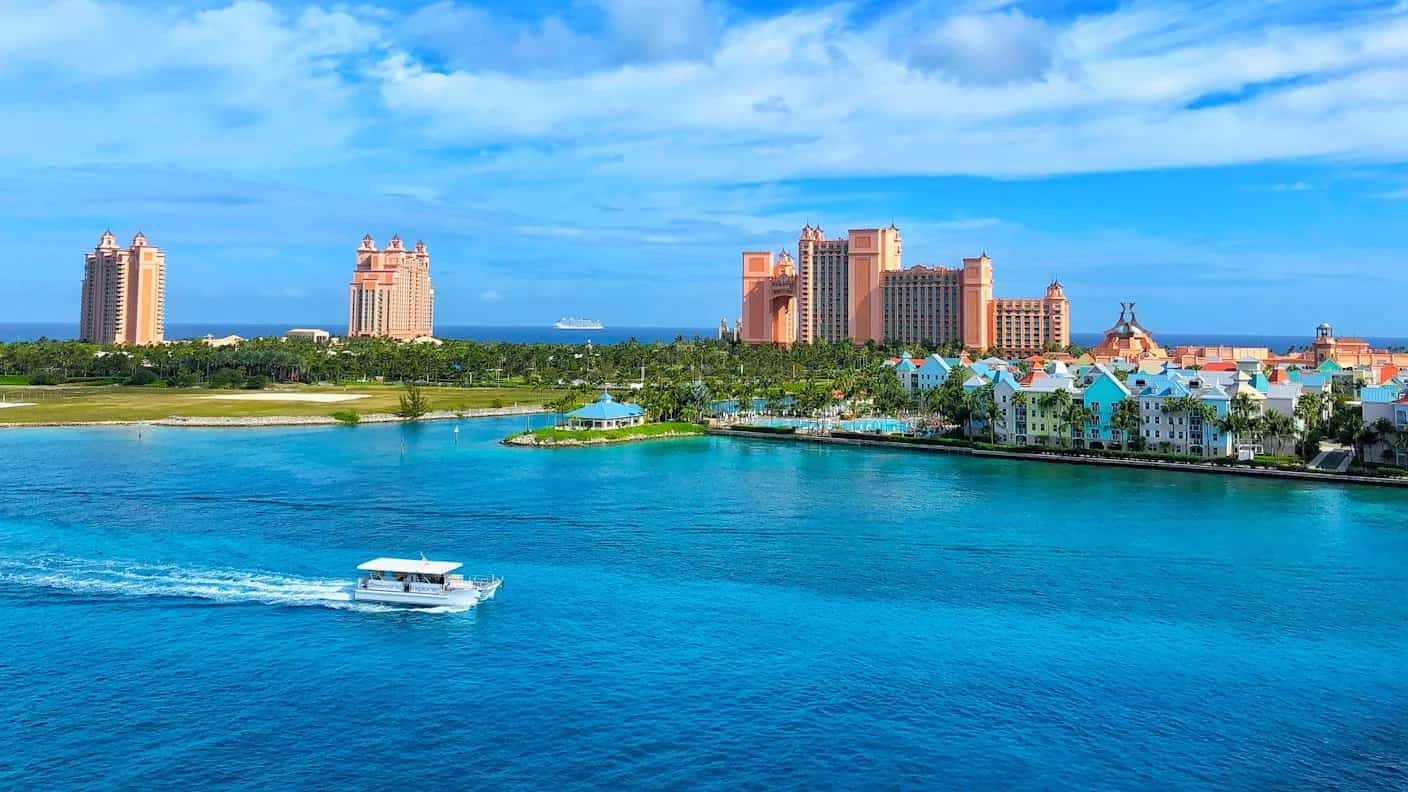
Compare BTC and Aliv coverage, unlimited and capped Bahamas eSIM plans for 2026, and get practical tips for Nassau, Paradise Island, the Out Islands and cruise day trips.
 Dimitri Morvan
Looking for the best eSIM for Bahamas? This guide compares the top providers, plans and prices. The Bahamas is one of those destinations where staying connected changes the whole shape of the trip. Whether you are hopping between Nassau, Paradise Island, Grand Bahama and the Out Islands, jumping off a cruise ship for a day tour, or working remotely from a beach cafe, a Bahamas eSIM lets you land with mobile data already on your phone. No SIM registration paperwork, no airport counter, no roaming shock when you get home. In this guide we compare Bahamas eSIM plans for 2026, look at how BTC and Aliv perform across the islands, and share practical tips for cruise days, boat trips and hurricane season.
Travelers arriving in the Bahamas have three realistic options for mobile data: buy a local BTC or Aliv SIM at the airport, pay roaming rates on their home plan, or install an eSIM before flying out. Roaming charges from US, Canadian and European carriers to the Bahamas remain steep, and buying a physical SIM at Lynden Pindling International often means queuing, showing ID and completing registration before you can leave the terminal. An eSIM sidesteps all of that: you buy the plan online, scan a QR code at home, and toggle the line on when you land. For short trips, cruise stopovers and multi-island itineraries, this convenience gap is why most seasoned Caribbean travelers now default to eSIM. Compare that with the roaming picture: a typical US postpaid plan without an add-on can bill up to ten dollars per day for basic data in the Bahamas, and pay-per-use rates on European plans are usually worse. Cruise-line day passes are cheaper than shipboard packages but disappear the moment you leave the port area. Against that backdrop, a prepaid eSIM is not just more convenient, it is often the lowest total cost for anyone spending more than a day in the country.
The trade-off is that your phone must be carrier-unlocked and eSIM-capable. Most devices sold in the last three or four years by Apple, Google and Samsung support eSIM out of the box, but older or carrier-locked handsets may not. If you are unsure, our supported devices page lists compatible models so you can confirm before booking.
Cruise ship Wi-Fi packages are notoriously expensive, slow and metered, and satellite connections drop the moment you step onto a tender boat. A local BTC or Aliv SIM works well if you are staying in the Bahamas for a few weeks and do not mind the paperwork, but you lose your primary line and have to swap the tray each time. An eSIM keeps your home number reachable, activates in seconds and gives you native Bahamian speeds the moment your ship is in range of a coastal tower. For day trips off a cruise, it is by far the most practical choice.
The Bahamas has two main mobile operators. BTC, the historic incumbent, runs the most extensive network across New Providence, Grand Bahama and the Family Islands, and consistently ranks first in nPerf's Bahamas measurements for overall quality, download speeds and coverage reach. Aliv, launched more recently, has built a competitive footprint in Nassau and Freeport with attractive pricing and improving reach into the Family Islands, though its coverage thins faster once you leave the main hubs. Both networks operate primarily on 4G LTE with an expanding 5G footprint in Nassau and Freeport. Voice-over-LTE and Wi-Fi calling are supported on most modern devices when paired with a compatible plan, which matters if you rely on your data eSIM alongside your home number over Wi-Fi. When choosing a provider, the key question is not really BTC versus Aliv on paper but which network your specific eSIM plan is routed through, since that determines the towers your phone actually connects to on the ground.
Choosing a Bahamas eSIM plan really comes down to three questions: how many days will you be connected, how much data do you realistically need, and do you want the reassurance of an unlimited pack? For most travelers on a week-long trip, a mid-size capped plan covers navigation, messaging, streaming and social sharing without breaking a sweat. Cruise passengers spending just a day or two ashore can often get by with the smallest packs.
Digital nomads and remote workers extending their stay lean toward unlimited plans, especially if they plan to run video calls, upload footage or hotspot a laptop from a beach house on Eleuthera or Exuma. Unlimited plans also make sense during hurricane watches, when you may need continuous access to weather radar, airline apps and family updates without keeping one eye on a data counter.
One quiet advantage of buying through Simsima: our Bahamas plans route through the strongest available local network, so you get the same coverage footprint a domestic subscriber sees, without the SIM registration process a walk-in customer has to complete.
Nassau, Paradise Island and the Atlantis resort corridor enjoy the strongest signal in the country, with reliable 4G LTE almost everywhere and pockets of 5G near the cruise port, Bay Street and Cable Beach. Grand Bahama, centered on Freeport and Lucaya, is similarly well covered, particularly along the main resort strip. If you are docking on a cruise, you can generally count on solid data the moment you are within a few kilometers of shore. Junkanoo Beach, the Queen's Staircase and the Fish Fry at Arawak Cay all sit inside the strongest coverage zone, so social sharing and rideshare apps work as smoothly as they would in a US metro. Even Blue Lagoon Island and other nearby cays typically hold a signal thanks to shoreline towers on New Providence.
The Out Islands are more of a mixed bag. Exuma has decent coverage around Georgetown and the Sandals corridor, but drops noticeably on the more remote cays that make Instagram famous. Eleuthera holds a signal along the main road but weakens on side tracks and hidden beaches. Andros, the largest and least developed island, has the patchiest network and is often the place where travelers first notice the difference between BTC and Aliv. Long boat trips between islands almost always mean signal loss for stretches at a time, so download offline maps and playlists before you leave the dock.
Here is a comparison of the main Bahamas eSIM plans against the leading international providers. Simsima offers competitive pricing thanks to direct deals with local carriers.
On the configurations shown above, Simsima delivers the most competitive rates against the leading international providers. You also benefit from instant activation and reliable network coverage in Bahamas.
Installing a Bahamas eSIM takes a few minutes and is best done a day or two before departure, on a stable home Wi-Fi connection. The process is the same regardless of provider, and Simsima sends the QR code plus written instructions immediately after purchase.
In most cases the eSIM connects automatically the moment your phone catches a BTC or Aliv signal in the terminal. If it does not, toggle Airplane Mode on and off, restart the phone, and make sure the Bahamas line is selected as the primary data line. Nine times out of ten, one of those three steps solves it. If it still refuses, Simsima support is available around the clock and can walk you through it before you even reach the taxi rank.
The right mobile data plan is only useful if you pair it with the tools that make Bahamian travel smoother. A few habits go a long way toward stretching your allowance and staying oriented across the islands.
The Bahamas sits squarely in the Atlantic hurricane belt, and the official season runs from June through November with peak risk in September and October. During that window, weather can change fast, flights get rescheduled, and inter-island ferries pause on short notice. A working data line lets you follow National Hurricane Center updates, receive push alerts from your airline, and coordinate with your hotel or charter without waiting for a Wi-Fi hotspot. Locally, both BTC and Aliv send SMS-based emergency broadcasts across their networks, which your eSIM will receive automatically as long as it is active. This is genuinely useful information during a storm watch, and one more reason to keep the line switched on rather than falling back on hotel Wi-Fi alone. If you plan to charter a boat or fly a small plane between islands in shoulder season, check the forecast the morning of departure and again just before boarding.
Boat trips are the other place where connectivity behaves unpredictably. Signal drops off within a few kilometers of shore, so day trips to swimming pigs on Exuma, blue holes on Andros or the pink sands of Harbour Island will almost always include stretches of no coverage. Download what you need first, share your itinerary with someone on land, and treat the reconnection at the marina as part of the return-to-port checklist.
If your Bahamas trip is really a broader Caribbean itinerary, an eSIM starts to pay off even more. Many travelers combine Nassau with Jamaica, Turks and Caicos or a cruise loop that touches multiple islands in a week. Rather than juggling several local SIMs, a single regional plan can cover the whole route with one QR code and one set of settings. Regional plans also spare you the annoyance of hunting down each country's local operator on the fly. If your cruise itinerary includes Grand Turk, Ocho Rios, Cozumel or Puerto Plata, a Caribbean-wide eSIM covers all of them at once. This is especially valuable when the ship docks late, port Wi-Fi is saturated and you only have a few hours ashore before the all-aboard call.
For digital nomads in particular, the Bahamas is emerging as a Caribbean base thanks to the BEATS residency program and stable resort infrastructure. Reliable mobile data is the backbone of that lifestyle, and pairing an unlimited eSIM with a fiber connection at your rental gives you the redundancy remote work quietly requires.
eSIM for the Caribbean: Island Hopping Without Buying a Plan Per Island
Most Bahamas eSIMs route through one of the two national operators: BTC (Bahamas Telecommunications Company) or Aliv. BTC ranks first in nPerf's Bahamas barometer for overall network quality and has the widest reach across the Family Islands, while Aliv is a strong alternative in Nassau and Grand Bahama. Simsima's Bahamas plans use the strongest available local network so you get coverage equivalent to a domestic SIM.
Yes, your phone must be carrier-unlocked. Devices bought directly from Apple, Samsung or Google are typically unlocked by default. If you purchased your phone through a home-country carrier, request an unlock before your trip. Most carriers process this within a few days, and once unlocked the eSIM installs and activates like any other data plan.
In most cases, yes. As soon as your ship is within a few kilometers of a Bahamian port such as Nassau, Freeport or a private cay served by a coastal tower, the eSIM connects to the local BTC or Aliv network. Once you tender ashore, coverage is as strong as anywhere else in the country. Signal drops off further out at sea, so the eSIM is best treated as a shore-day tool rather than a ship-day one.
5G is available but limited. You will find pockets of 5G coverage in central Nassau, near the cruise port, along Cable Beach and in parts of Freeport, mostly on BTC. Elsewhere, expect solid 4G LTE, which is more than enough for navigation, streaming, video calls and social sharing. Coverage rollout is ongoing, so 5G reach continues to grow year over year.
Yes. The Bahamian dollar is officially pegged one-to-one with the US dollar, and USD is accepted almost everywhere alongside BSD. In practice you can pay in either currency and change often comes back mixed. There is no need to exchange money before you arrive, and your card will typically be charged in USD regardless of which note you hand over.
No. Buying a physical prepaid SIM from BTC or Aliv typically requires showing ID and completing a short registration form. An eSIM purchased online is already provisioned to your account with the provider, so you skip that step entirely. This is one of the practical reasons short-stay travelers and cruise passengers prefer eSIM in the Bahamas.
Bahamian mobile networks are generally robust and both BTC and Aliv have hardened core sites, but any storm can cause temporary outages. Best practice during hurricane season is to keep your phone charged, install your airline and accommodation apps in advance, and note down emergency numbers and consulate details offline. An eSIM stays useful throughout, and you can fall back on Wi-Fi calling at your hotel if towers are briefly overloaded.
Single-country Bahamas eSIMs work only in the Bahamas. If your itinerary includes Jamaica, Turks and Caicos or other Caribbean stops, look at Simsima's regional plans, which cover multiple destinations under one activation. Alternatively you can install several country-specific eSIMs on the same phone and toggle between them as you travel.
Get a multi-country plan and save on your mobile data.
Or choose another country:
Bahamas eSIM plans — Browse and compare all available Bahamas eSIM plans on Simsima
eSIM-supported devices — Check whether your phone supports eSIM before you buy a Bahamas plan
How Simsima works — Learn how to buy, install and activate an eSIM in a few minutes

Founder of Simsima. A passionate traveler based in Barcelona, he helps travelers stay connected without breaking the bank on roaming fees.
LinkedIn Destinations
 Destinations
 Destinations