-5% on your 1st eSIMuntil October 31
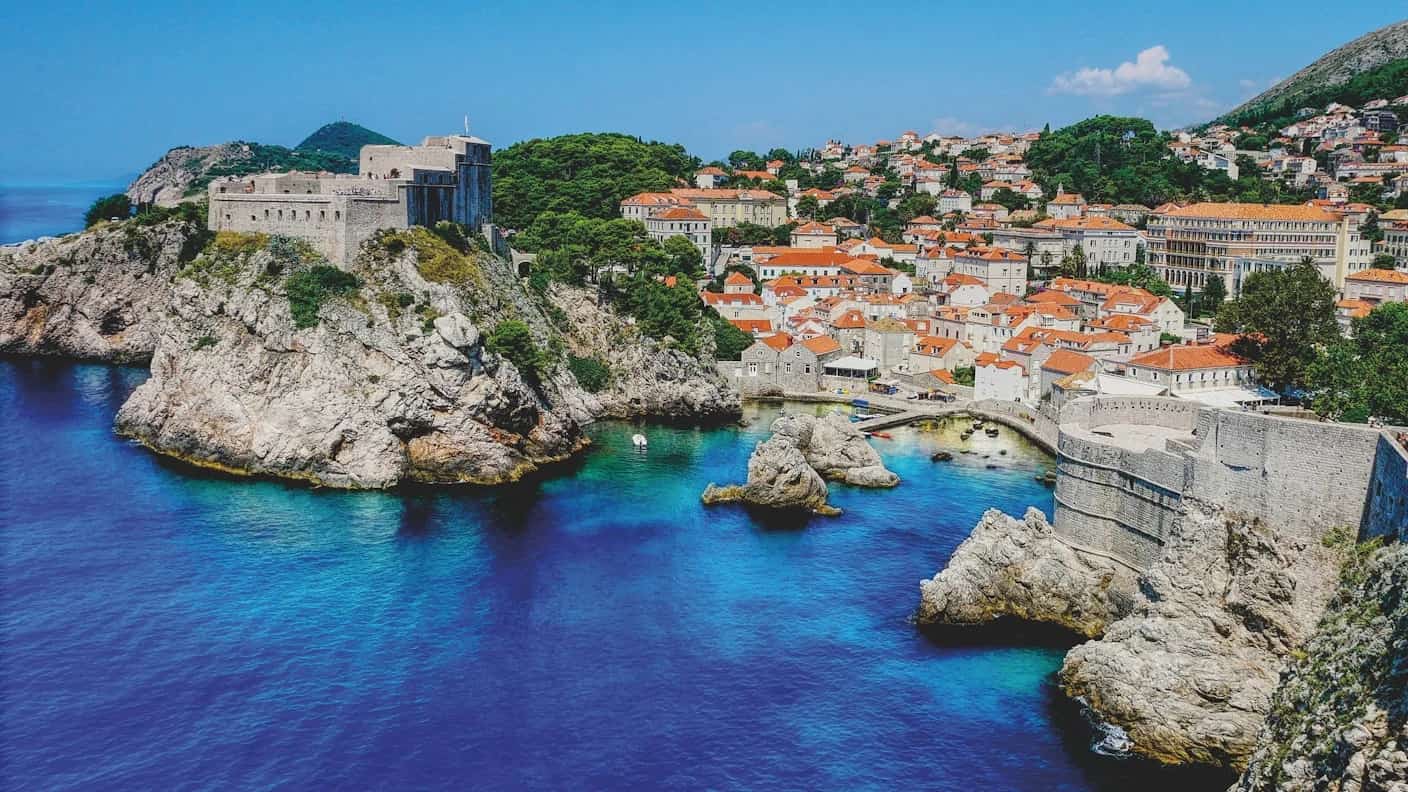
Hrvatski Telekom, A1 and Telemach cover Croatia's coast and cities in 4G, with 5G in Zagreb, Split and Dubrovnik; the weak spots are island interiors, remote coves and the deeper trails at Plitvice. Croatia has quietly become one of Europe's most demanding destinations for mobile connectivity. A traveler might start the morning uploading drone footage from the walls of Dubrovnik, hop a catamaran to Hvar for lunch, and finish the day video-calling home from a konoba in Split. That kind of itinerary punishes a bad data plan, and it is exactly the type of trip a good Croatia eSIM is built for.
The good news is that Croatia is a mature mobile market. Three operators, Hrvatski Telekom (HT), A1 Hrvatska, and Telemach, cover the country with modern 4G LTE and a growing footprint of 5G. Since Croatia joined the eurozone in 2023 and remains a full Schengen member, pricing, roaming behavior inside the EU, and border crossings by ferry or bus have all become simpler than they used to be. For visitors, that means an eSIM purchased before departure will typically work the moment the plane door opens in Zagreb, Split, Dubrovnik, or Pula.
Key takeaways
- Croatia has three national operators: Hrvatski Telekom (HT), A1 Hrvatska, and Telemach, with HT ranked first in the nPerf 2025 barometer, ahead of Telemach and A1.
- 5G is widely available in Zagreb, Split, Dubrovnik, Rijeka, and Zadar, and is expanding into secondary cities and larger islands.
- Coverage on major islands like Hvar, Brac, Vis, and Korcula is generally solid in towns and harbors, but can weaken in interior valleys and remote coves.
- Croatia uses the euro (EUR) and is part of the Schengen Area; a Europe regional eSIM can also cover Slovenia, Italy and Hungary, but check its country list, especially for Montenegro and Bosnia and Herzegovina.
- For most travelers, a dedicated Croatia eSIM or a Balkans/EU regional plan is cheaper and simpler than activating carrier roaming from home.
Do you need an eSIM in Croatia if your SIM is from the EU?
Probably not. Croatia is in the EU, so a mobile plan from any EU country, or from Iceland, Liechtenstein or Norway, works there under the EU's roam like at home rules: calls, texts and data are billed at your domestic rates, within your operator's fair-use limits. If that is you, a travel eSIM is only worth it when your home plan has a small data allowance abroad.
Visitors from the US, Canada, Australia and most of Asia pay their carrier's international roaming rates in Croatia, and many UK carriers now charge daily fees in the EU again since Brexit. Those are the travelers for whom a Croatia eSIM makes the clearest sense.
HT, Telemach or A1: Croatia's networks in nPerf's 2025 ranking
Croatia has three mobile networks. In nPerf's 2025 barometer, which covers January to December 2025, Hrvatski Telekom (HT, part of Deutsche Telekom) ranked first with an average download speed of about 131 Mbps, ahead of Telemach at about 92 Mbps and A1 Hrvatska at about 88 Mbps. All three are fast enough in Zagreb, Split, Zadar and Dubrovnik that most visitors will not notice the difference in town.
The gaps appear outside the cities, on island interiors and in the karst valleys inland, where one network can hold a signal and another drop to 3G. The networks a Simsima plan can use are listed in each plan's details.
Islands, ferries and Plitvice: where the signal holds
Hvar Town, Stari Grad, Bol on Brač, Korčula Town and Vis harbor all have good 4G, as do the ferry ports of Split and Dubrovnik. On Jadrolinija ferries and Krilo catamarans, the signal usually holds near the coast and weakens in the middle of longer crossings, such as Split to Vis or Lastovo. Interior roads on Vis and the far coves of Korčula and Mljet have patchier coverage.
- Plitvice Lakes: signal is usable at Entrance 1 and Entrance 2 and around the park hotels, weaker on the boardwalks deep in the canyon
- Krka: fine around Skradin and Skradinski buk, with weak pockets further upstream
- The A1 motorway from Zagreb to Split: 4G most of the way, with drops in the long tunnels such as Sveti Rok and Mala Kapela
- Download the Jadrolinija timetable and your tickets before a ferry day rather than reloading them at sea
Data for a Zagreb to Dubrovnik coast trip
A popular two-week route flies into Zagreb, stops at Plitvice, drives down to Zadar and Split, spends three nights on Hvar or Brač, and ends in Dubrovnik. Since the Pelješac Bridge opened in 2022, the coastal drive to Dubrovnik no longer has to pass through Bosnia and Herzegovina at Neum.
- Cities: ride-hailing with Bolt or Uber, maps, restaurant bookings and messaging, around 500 MB a day
- Island days: ferry apps, beach and boat-trip research, photo sharing, around 300 to 700 MB a day
- Working remotely from Split or Zadar under Croatia's digital nomad visa: plan on an unlimited plan or 20 GB or more as a backup to apartment Wi-Fi
- Total for a two-week vacation without remote work: about 8 to 10 GB
Downsides of an eSIM in Croatia
- No Croatian number: paying for street parking by SMS in Split, Zagreb or Dubrovnik usually works only from a Croatian number, so use the pay machines or a parking app instead
- No calls or SMS on the eSIM, so apartment hosts who text a door code need your home number or WhatsApp
- Island interiors and the middle of long ferry crossings can lose signal on any network
- Your phone must support eSIM and be carrier-unlocked, and hotspot use depends on the plan
- EU residents may pay for something their home plan already includes
Day trips to Mostar, Kotor and Slovenia
Day trips from Dubrovnik to Kotor in Montenegro and from Split to Mostar in Bosnia and Herzegovina leave the EU, and a Croatia-only plan stops working there. Even without crossing, phones near the border around Neum or south of Dubrovnik can switch to a Bosnian or Montenegrin network, which is billed as non-EU roaming on many home plans. Lock your phone to a Croatian network in its network settings if you see that happen.
Slovenia and Italy are both in the EU and Schengen, so there is no border stop, but a Croatia-only travel plan still covers only Croatia. For a route through several of these countries, check the country list of a multi-country plan below.
Croatia eSIM Plans Compared (2026)
Here is a comparison of the main Croatia eSIM plans against the leading international providers. Simsima offers plans on the local networks, with transparent pricing.
Unlimited data plans
- SimsimaBest priceUnlimited · 3 days$9.26
- AiraloUnlimited · 3 days$9.45
- AlosimUnlimited · 3 days$9.45
- NomadUnlimited · 3 days$10.04
- TruelyUnlimited · 3 days$12.90
- SimsimaBest priceUnlimited · 5 days$15.44
- AiraloUnlimited · 5 days$16.28
- NomadUnlimited · 5 days$16.42
- Orange TravelUnlimited · 5 days$17.84
- AlosimUnlimited · 5 days$18.90
- SimsimaBest priceUnlimited · 7 days$22.12
- NomadUnlimited · 7 days$22.81
- AiraloUnlimited · 7 days$23.10
- AlosimUnlimited · 7 days$24.15
- SailyUnlimited · 7 days$28.99
- SimsimaBest priceUnlimited · 10 days$26.24
- AiraloUnlimited · 10 days$27.30
- AlosimUnlimited · 10 days$29.40
- NomadUnlimited · 10 days$30.10
- BnesimUnlimited · 10 days$30.45
- SimsimaBest priceUnlimited · 15 days$34.82
- AiraloUnlimited · 15 days$37.27
- AlosimUnlimited · 15 days$37.80
- SailyUnlimited · 15 days$48.99
- TruelyUnlimited · 15 days$50.92
- SimsimaBest priceUnlimited · 30 days$54.04
- Sim LocalUnlimited · 30 days$54.34
- AiraloUnlimited · 30 days$56.18
- AlosimUnlimited · 30 days$57.75
- SailyUnlimited · 30 days$59.99
Prices last updated: October 19, 2026
Capped data plans
- SimsimaBest price1 GB · 7 days$3.92
- Saily1 GB · 7 days$3.99
- Orange Travel1 GB · 7 days$4.19
- Sim Local1 GB · 7 days$4.20
- Simoptions1 GB · 7 days$4.73
- SimsimaBest price3 GB · 30 days$7.35
- Ubigi3 GB · 30 days$7.35
- Roamless3 GB · 30 days$7.45
- Alosim3 GB · 30 days$7.88
- Saily3 GB · 30 days$7.99
- SimsimaBest price5 GB · 30 days$10.08
- Yesim5 GB · 30 days$10.08
- Sim Local5 GB · 30 days$10.24
- Roamless5 GB · 30 days$10.45
- Airalo5 GB · 30 days$10.50
- SimsimaBest price10 GB · 30 days$14.40
- Gigsky10 GB · 30 days$14.79
- Truely10 GB · 30 days$16.49
- Airalo10 GB · 30 days$16.80
- Yesim10 GB · 30 days$16.80
- SimsimaBest price20 GB · 30 days$21.60
- Sim Local20 GB · 30 days$22.31
- Yesim20 GB · 30 days$23.10
- Airalo20 GB · 30 days$24.68
- Alosim20 GB · 30 days$25.20
Prices last updated: October 19, 2026
Prices in these tables are refreshed as providers change them, so compare the one that suits your trip. A Simsima Croatia plan installs before you leave and activates on arrival, the first time it connects to a Croatian network.
Before you fly to Zagreb, Split or Dubrovnik
- Install the eSIM at home over Wi-Fi; it activates when it connects to a Croatian network after landing
- Turn on data roaming for the Croatia eSIM line only and turn it off on your home line to avoid charges
- Download offline maps of the islands and national parks you plan to visit
- Save your ferry tickets and Plitvice entry time slot as screenshots
- If you land at Split or Dubrovnik and the eSIM does not connect, restart the phone and check that the eSIM line is selected for mobile data
Croatia eSIM questions travelers ask
eSIM Europe: The Complete Guide to Staying Connected Across 30+ Countries
Frequently Asked Questions
It depends on your trip. EU residents can usually rely on their home plan under EU roaming rules. Visitors from outside the EU can compare the unlimited and capped plans in the table above; a 10 GB capped plan suits most two-week vacations, and unlimited plans suit remote workers. The networks each plan uses are listed in its details.
In nPerf's 2025 barometer, Hrvatski Telekom ranked first with an average download speed of about 131 Mbps, followed by Telemach and A1 Hrvatska. In Zagreb, Split and Dubrovnik all three are fast enough for maps, streaming and video calls.
There is no Croatian number, so SMS parking payments and text messages from hosts will not work on it. Island interiors and open-sea ferry stretches can lose signal, hotspot use depends on the plan, and EU visitors may not need one at all.
A Croatia plan only works in Croatia. Day trips to Kotor in Montenegro or Mostar in Bosnia and Herzegovina need a plan that lists those countries, and near those borders your phone may switch to a non-EU network.
Yes, the comparison table includes unlimited Croatia plans. Speed is reduced after a daily high-speed allowance until the next day, so check the daily limit if you plan heavy video uploads or tethering.
In the towns and harbors of Hvar, Brač, Korčula and Vis, yes, with good 4G. Signal weakens in remote coves, island interiors and the middle of longer ferry crossings, and returns near port.
No. A travel eSIM is bought online and installed from a QR code or install link, with no in-store registration. Buying a physical prepaid SIM from HT, A1 or Telemach in a shop is the option that involves showing ID.
#Croatia#Europe#Travel#eSIM

Dimitri MorvanFounder
Founder of Simsima. A passionate traveler based in Barcelona, he helps travelers stay connected without breaking the bank on roaming fees.
LinkedIn