-5% on your 1st eSIM
WELCOME5
Loading...
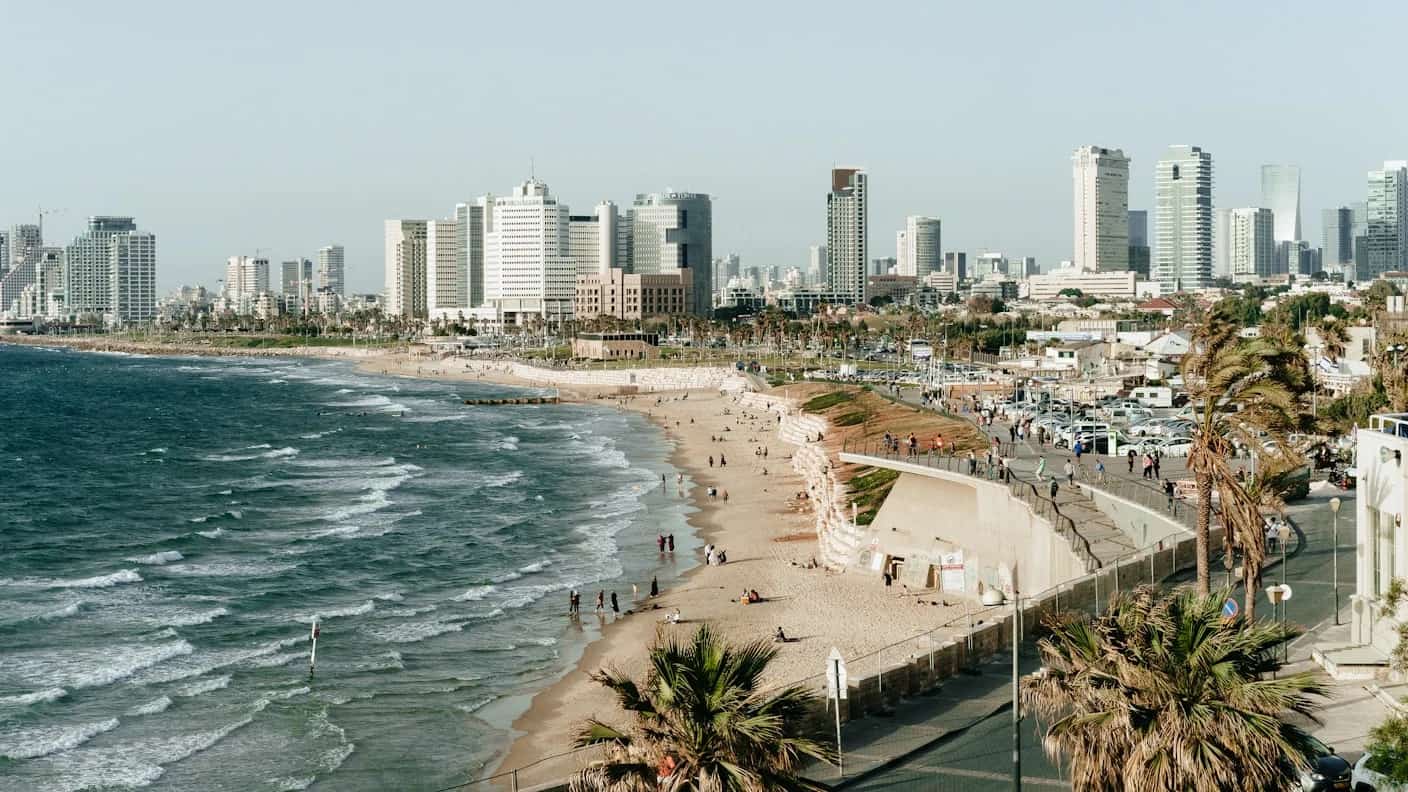
Compare the best Israel eSIM plans for 2026. Coverage across Tel Aviv, Jerusalem and Eilat, prices verified this week, and a step-by-step setup guide.
 Dimitri Morvan
Looking for the best eSIM for Israel? This guide compares the top providers, plans and prices. Israel welcomes millions of visitors every year, from pilgrims walking the Old City of Jerusalem to divers heading south to Eilat and beach-goers chasing Tel Aviv sunsets. The country runs on modern LTE and 5G networks, but airport security lines can be long and local prepaid SIM cards are notoriously pricey compared to the rest of the Middle East. A travel eSIM for Israel solves both problems: you land already connected, and you pay a fraction of the local retail rate. This guide compares the best eSIM for Israel across the main providers, with prices verified as of 2026-09-24.
Israel has four major mobile operators competing on a dense, modern network. LTE covers essentially the entire country, and 5G is widely available in Tel Aviv, Jerusalem, Haifa, Beersheba and the coastal corridor. According to nPerf's 2025 mobile barometer, Cellcom is the top-performing carrier in Israel for overall connection quality, with Partner and Pelephone close behind.
Most travel eSIM providers for Israel connect to one of these four carriers, and several use multi-network switching to pick the strongest signal wherever you are. For a trip covering Tel Aviv, Jerusalem, Eilat and the Dead Sea, any of the top three networks will keep you connected on the road, in the desert and at the beach.
Israel eSIM plans come in two main types: unlimited data plans (a fixed number of days with no data cap) and capped plans (a set data allowance over a defined period). The tables below compare plans from the leading travel eSIM providers, with prices refreshed as of 2026-09-24.
Simsima offers Israel eSIM plans in both unlimited and capped formats over 7, 15 and 30 days. There is no ID verification, no passport scan and no physical SIM swap: you purchase online, receive the eSIM profile by email within seconds and activate it before your flight. For travelers combining Israel with Jordan, Egypt or the wider region, Simsima also offers multi-country trip packs that cover several destinations on a single eSIM.
Here is a comparison of the main Israel eSIM plans against the leading international providers. Simsima offers competitive pricing thanks to direct deals with local carriers.
On the configurations shown above, Simsima delivers the most competitive rates against the leading international providers. You also benefit from instant activation and reliable network coverage in Israel.
Setting up an eSIM for Israel takes just a few minutes. Complete these steps before your flight so you can breeze through Ben Gurion airport already connected — helpful when security queues are long and you want to text family, book a Gett taxi or check your hotel address on the way out.
Israel's compact geography makes mobile coverage remarkably consistent. In Tel Aviv, Jerusalem, Haifa, Beersheba and along the coastal Highway 2, expect strong 5G on all four national networks. Eilat, the Dead Sea resorts and the Ramon Crater have solid LTE, though 5G thins out in the Negev desert. Cellcom typically has the edge on rural signal, which matters if you plan to hike in the Judean Desert, drive up to the Golan Heights or spend a night in a Bedouin camp near Mitzpe Ramon.
Travelers heading into the West Bank — for Bethlehem, Jericho, Ramallah or Hebron — will generally keep data service on Israeli carriers, though signal can be patchier in Palestinian cities where local operators dominate. Gaza is not covered reliably by Israeli travel eSIMs and is not currently a tourist destination. Along the northern border and in the deep south near Taba, your phone may occasionally hop to a Jordanian or Egyptian network — travel eSIMs will typically block roaming outside Israel, which is what you want.
Israel has excellent mobile infrastructure, but a few practical steps will help you get the most out of your Israel travel eSIM — especially during Shabbat, in the desert and in busy tourist zones.
You can buy physical SIM cards in Israel — at Ben Gurion airport, in the arrivals hall of Terminal 3, in Cellcom and Partner stores in Tel Aviv, and at kiosks along Ben Yehuda Street. The catch is price: Israel is one of the most expensive countries in the region for prepaid tourist SIMs, and airport counter rates are markedly higher than what you would pay online. You also queue with your passport, wait for activation and are locked into whichever carrier has a booth at your terminal.
An eSIM sidesteps all of that. You purchase online before your flight, install the profile in minutes and land already connected. You keep your home SIM active in the phone — useful for receiving one-time codes from your bank, airline notifications and messages from family — while the Israel eSIM handles your data. Combined with data-only apps like WhatsApp, iMessage, Signal and FaceTime, a good travel eSIM covers everything you actually need for voice, video and messaging in Israel.
Roaming with your home carrier in Israel is almost always the wrong answer. Most US and European plans either exclude Israel from their travel bundles or charge premium daily fees that add up quickly over a one- or two-week trip. Even carriers that include Israel often throttle speeds after a small daily allowance. A dedicated Israel travel eSIM is typically a fraction of the roaming cost for the equivalent amount of data, and you keep full 4G/5G speeds throughout the plan.
Compared to buying a Cellcom, Partner or Pelephone prepaid SIM locally, an eSIM is also usually cheaper — and you avoid the airport queue and the passport-registration step. The comparison tables higher up on this page show live pricing from the main travel eSIM providers so you can pick the best value for your trip length and data needs.
A few Israel-specific details are worth knowing before you land. Ben Gurion airport (TLV) is efficient but security on the way out can be famously long — often two to three hours for international departures, especially in high season. Having a working Israel eSIM from the moment you land means you can pull up your hotel address, message a driver, and check in for your return flight without hunting for airport Wi-Fi. Gett is the dominant ride-hailing app, and Bolt operates in Tel Aviv and Jerusalem; both need a live data connection to book and pay.
Shabbat deserves a second mention because it changes the rhythm of a trip. From about an hour before sundown on Friday until an hour after sundown on Saturday, buses and trains stop across most of the country, many restaurants close in Jerusalem, and the West Jerusalem light rail does not run. Tel Aviv is more secular and stays lively, and taxis operate everywhere for a small surcharge. Because Google Maps' transit directions can be misleading during Shabbat, downloading offline maps and screenshots of your planned routes ahead of time is a good habit — and it is where a reliable data connection pays for itself when you inevitably need to replan on the fly.
Border crossings are another moment where connectivity matters. The Allenby / King Hussein bridge to Jordan, the Yitzhak Rabin crossing near Eilat and the Taba crossing to Egypt can all take several hours. Having data on your Israeli eSIM up to the border, and a plan for the other side (a Jordan or Egypt eSIM, or a regional Middle East pack), keeps you connected while you queue and while you swap networks after crossing.
The right Israel eSIM depends on how you travel. A weekend in Tel Aviv for a wedding or a conference is very different from a two-week loop through Jerusalem, the Dead Sea, Masada, Eilat and back up to the Galilee. As a rough guide: light users who mainly need maps and messaging can get by on 3 GB for a short stay; typical tourists doing maps, ride-hailing, social media and photo sharing should aim for 5 to 10 GB per week; digital nomads working from Tel Aviv cafes or streaming shows in the hotel will want an unlimited plan.
If you are pairing Israel with Jordan (Petra, Wadi Rum) or Egypt (Sinai, Cairo), consider a regional Middle East plan or a multi-country trip pack instead of stacking separate country eSIMs. It is usually cheaper and simpler than buying a new profile at every land border.
eSIM for the Middle East: Cheap Data, Restricted Calls
Yes, your phone must be carrier-unlocked. Phones purchased directly from Apple, Samsung or Google are usually unlocked by default. If you bought your phone through a carrier contract, contact them to request an unlock before your trip to Israel.
iPhone XS and newer, Samsung Galaxy S20 and newer, Google Pixel 3a and newer, and many recent Motorola and Xiaomi models support eSIM. Check your phone's settings for an "Add eSIM" or "Add Cellular Plan" option to confirm before you buy.
For standard travel use — Google Maps, WhatsApp, Gett taxis, social media and occasional photo uploads — 5 to 10 GB comfortably covers a week in Israel. Heavy users who stream video or work remotely from Tel Aviv should choose an unlimited plan.
Yes. Israeli mobile networks cover the Dead Sea resorts, Masada, the Ramon Crater and most of the West Bank including Bethlehem and Jericho. Coverage in Gaza is not reliable and it is not currently a tourist destination.
Yes. Mobile networks in Israel run 24/7, including Shabbat. What changes on Shabbat is public transport, many shops and some restaurants — especially in Jerusalem — not the cellular service itself. Your data connection stays fully live.
Travel eSIMs for Israel are data-only, so they do not include an Israeli phone number. Use apps like WhatsApp (extremely popular in Israel), iMessage, Signal or FaceTime for voice and video calls over your data connection.
Cellcom ranked as the top-performing Israeli network in nPerf's 2025 barometer, but Partner and Pelephone are very close behind, especially in the Tel Aviv metropolitan area. For most travelers, the differences are marginal — any of the three top networks will feel fast and reliable.
Get a multi-country plan and save on your mobile data.
Or choose another country:
Israel eSIM plans — Browse and compare all available Israel eSIM plans on Simsima
multi-country trip packs — Traveling across the Middle East? Get a single eSIM for Israel, Jordan, Egypt and more
eSIM-compatible devices — Check if your phone supports eSIM before purchasing an Israel plan

Founder of Simsima. A passionate traveler based in Barcelona, he helps travelers stay connected without breaking the bank on roaming fees.
LinkedIn Destinations
 Destinations
 Destinations