-5% on your 1st eSIM
WELCOME5
Loading...
Everything you need to pick the right Tunisia eSIM in 2026: how Ooredoo, Orange and Tunisie Telecom compare, coverage from Tunis to Djerba and the Sahara, install steps, and how much data a trip needs.
 Dimitri MorvanAugust 13, 20267 min
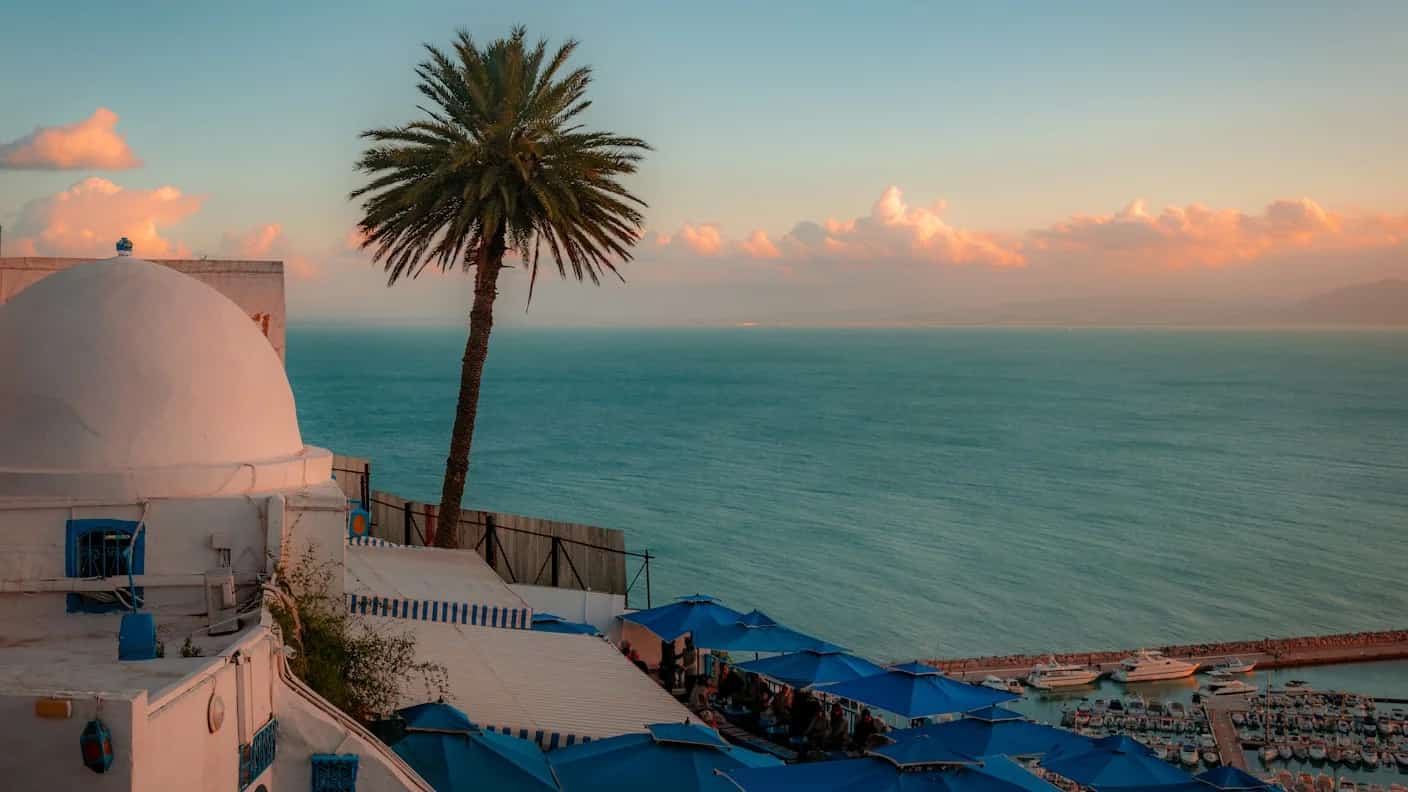
Tunisia's coast is where the signal is: Ooredoo, Orange Tunisie and Tunisie Telecom run dependable 4G from Tunis and Sidi Bou Said to Sousse, Sfax and Djerba, while the Sahara around Douz and the Grand Erg can lose signal. Tunisia packs Roman Carthage, the blue-and-white lanes of Sidi Bou Said, Saharan gateways at Douz and Tozeur and the beaches of Djerba into one compact country. Getting around runs on good data for maps and messaging, and an eSIM is the cleanest way to get it: install before you fly, land at Tunis, Djerba or Enfidha, and your phone connects the moment it finds a local network. This guide compares the best eSIM options for Tunisia, explains what Ooredoo, Orange and Tunisie Telecom deliver, and helps you pick the right plan.
Two networks share the top spot. In the nPerf 2025 mobile barometer for Tunisia, covering the whole of 2025, the state-owned Tunisie Telecom and Orange Tunisie are ranked first ex aequo: Tunisie Telecom has the higher score, 77,847 nPoints, and the fastest median download speed, 77.22 Mbps, while Orange (75,713 nPoints, 49.05 Mbps) has the best latency. Ooredoo is third with 67,969 nPoints and 45.93 Mbps.
On the coast the three are close enough that any will do for maps, messaging and video calls. Further south, the size of each network's rural footprint matters more than the median speed, so check the networks listed in each Simsima plan's details if you plan a desert trip.
Ooredoo, Orange Tunisie and Tunisie Telecom, all overseen by the national regulator, the Instance Nationale des Télécommunications, sell prepaid SIMs from counters and stores at the main airports and in every town center. You need your passport to register the line, and data packs are priced in Tunisian dinars, which you buy locally.
A local SIM gives you a Tunisian number, useful for louages, taxis and guesthouses that call rather than message. The catch is the arrival: charter flights to Enfidha and Djerba often land in waves, and the counter queue comes on top of passport control. An eSIM installed at home has you online for the transfer to Hammamet, Sousse or Houmt Souk; the tables below compare prices.
Tunisia is an affordable data market, so eSIM prices are low and allowances go a long way. Simsima runs on the local networks with transparent pricing. Here is how a light 1 GB pack compares across eSIM providers:
If you would rather not track your usage, Tunisia also has unlimited-data eSIMs, with speed reduced after a daily high-speed allowance until the next day. Here is how the unlimited plans compare:
Simsima's full Tunisia lineup runs from small packs up to larger monthly allowances on the local networks. Because data is cheap here, a 3 to 5 GB plan comfortably covers most coast-and-culture trips, with more for longer stays or remote work.
Tunis, Carthage, Sidi Bou Said and La Marsa, Hammamet, Nabeul, Sousse, Monastir, Mahdia, Sfax and the island of Djerba have dependable 4G, and the A1 motorway down the coast stays connected. Kairouan, El Jem and its Roman amphitheater, and Tozeur town are covered too.
South and west of Gabès, coverage follows the oases. Matmata's troglodyte homes and Tataouine's ksour have signal in the villages; the Chott el Djerid crossing, the dunes around Douz and Ksar Ghilane, and the former Star Wars sets near Tozeur and Ong Jmel can be weak or offline. Desert camps are often without any signal, so download maps and your booking before you leave town.
A popular ten-day loop spends three nights around Tunis with Carthage and Sidi Bou Said, two in Sousse or Monastir with a day at El Jem, a night in the desert near Douz or Tozeur, and three on Djerba. Long drives and louage rides make maps and messaging the main uses.
Installation takes a couple of minutes and is best done at home on Wi-Fi before you fly. The plan activates on its own when it connects to a local network on arrival, so the validity window does not start early.
eSIM for the Middle East: Cheap Data, Restricted Calls
Any travel eSIM that lists Tunisia and fits your trip length works on the coast. The tables above compare capped and unlimited plans from several providers; for a Sahara excursion, check which network each plan uses.
You do not get a Tunisian number, so drivers and guesthouses may need your WhatsApp, and remote desert areas stay offline as with any SIM. Your phone must also be eSIM-compatible and unlocked, and tethering at a Hammamet resort depends on the plan.
The nPerf 2025 barometer ranks them first ex aequo: Tunisie Telecom has the higher score and the fastest median download speed, Orange Tunisie the lowest latency. For a coast-and-culture trip, both are fine.
Yes. Houmt Souk, Midoun and the hotel zone on Djerba have dependable 4G, and the eSIM connects there like anywhere else in Tunisia once your phone finds a local network.
Recent smartphones work on Tunisian 4G networks. With your home SIM you pay your carrier's roaming rates, which are usually high in North Africa. With a travel eSIM, the phone must support eSIM and be carrier-unlocked.
For ten days of maps, messaging and social media, 3 to 5 GB is usually enough. A resort stay with hotel Wi-Fi needs less; long road trips with streaming need more.
Get a multi-country plan and save on your mobile data.
Tunisia eSIM plans — Browse and compare all available Tunisia eSIM plans on Simsima
eSIM-supported devices — Check whether your phone supports eSIM before you buy a Tunisia plan
How Simsima works — Learn how to buy and install an eSIM in a few minutes, and how it activates on arrival
Founder of Simsima. A passionate traveler based in Barcelona, he helps travelers stay connected without breaking the bank on roaming fees.
LinkedIn