-5% on your 1st eSIMuntil October 31
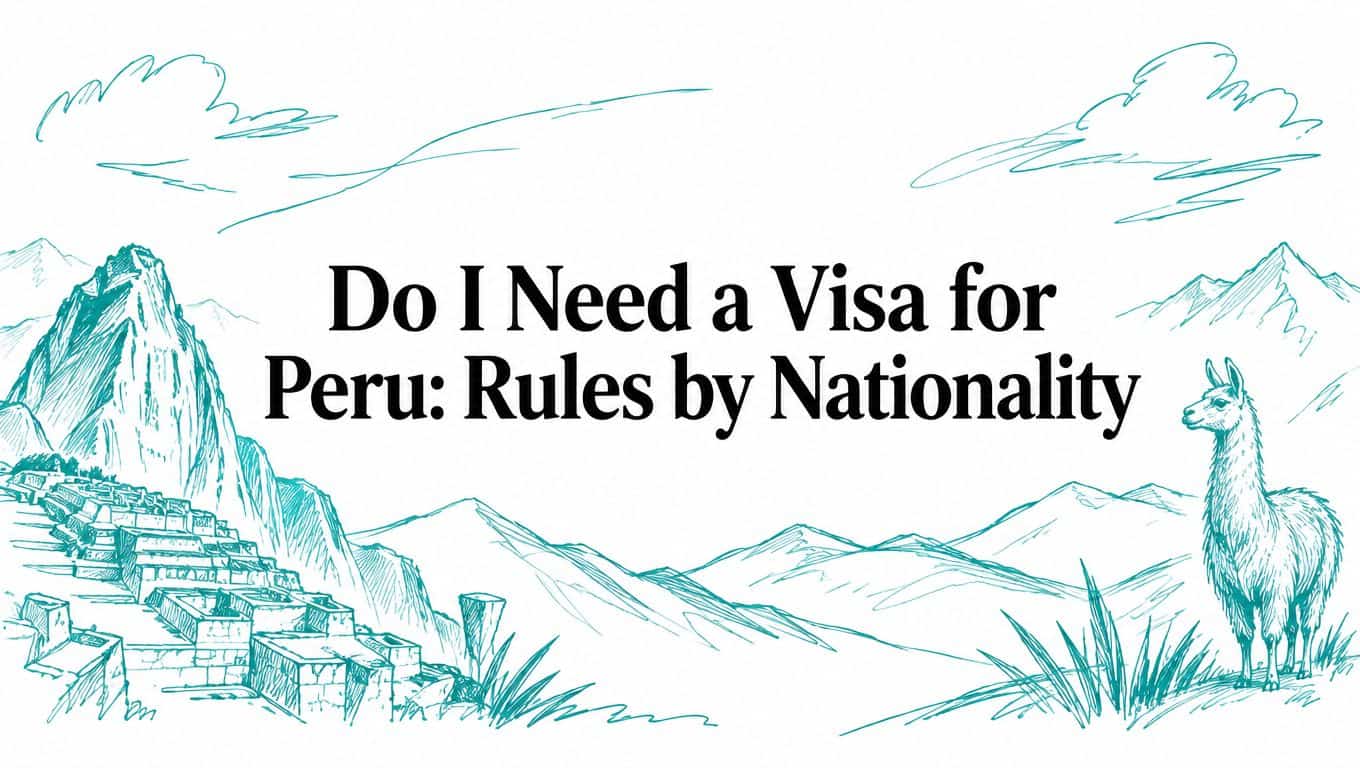
Around 95 countries, including the United States, the United Kingdom, Canada, Australia, Japan, Singapore, and most European Union countries, don't need a visa to visit Peru for tourism. Visa-free visitors commonly receive permission for up to 90 days at entry, while Peru's rules can allow a stay of up to 183 days in eligible cases, depending on the authorization granted.
You're probably asking this with a passport beside you, a flight to Lima booked, and one practical concern: will an airline agent let you board, and will Peruvian immigration let you in? The answer isn't determined by nationality alone. Peru assesses your passport, any qualifying visa or residence permit you already hold, and the purpose of your trip.
That distinction matters. A U.S. passport holder visiting Machu Picchu as a tourist usually follows a simple visa-free process. A Chinese or Indian passport holder may qualify through a valid visa from another country. A traveler attending meetings or signing a contract may need a business visa even if tourism would be visa-free.
Do You Need a Visa for Peru and What to Expect at the Border
Start with the broad rule. Citizens of the United States, Canada, the United Kingdom, and Australia don't need a tourist visa for Peru, and many other nationalities qualify through bilateral or regional exemptions. Peru's official travel guidance also identifies visa-free access for various European, American, and Asia-Pacific passport holders, but your exact nationality still needs checking before you travel. The official Peruvian visa and entry guidance is the best starting point.
If your passport is visa-exempt, the usual sequence is straightforward:
- At check-in, the airline may verify your passport, destination details, and evidence that you can leave Peru.
- At immigration, an officer checks your documents and decides how long you're authorized to stay.
- At arrival processing, keep the entry record or Andean Migration Card details available for your departure and any later immigration questions.
- At customs, complete any declaration the authorities require for your belongings.
Peru's rules generally distinguish between a common tourist authorization of up to 90 days and the broader legal possibility of a stay of up to 183 days, depending on nationality and the authorization issued. Don't assume the maximum automatically applies. The permission recorded at entry is the one that controls your trip.
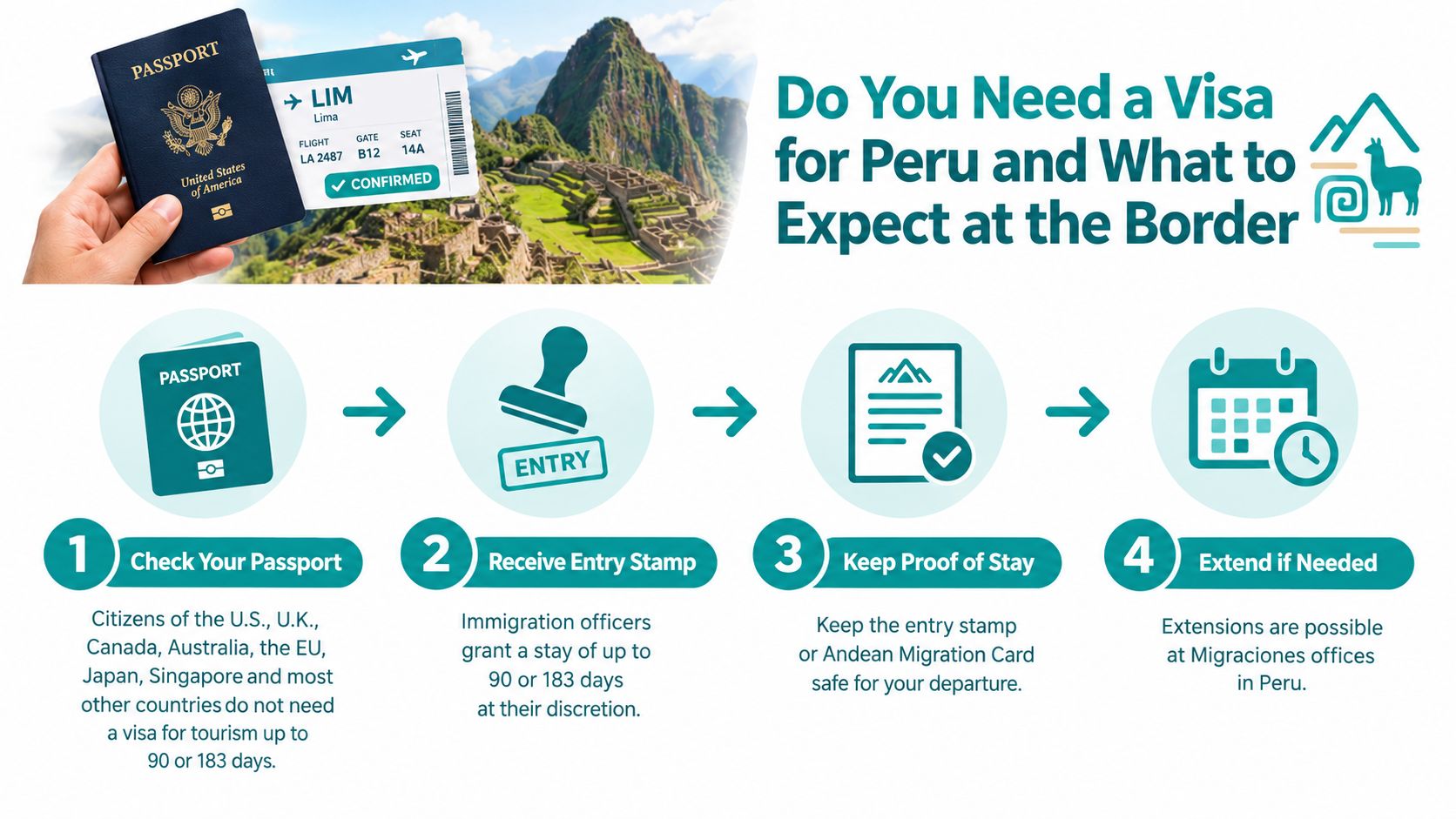
An officer or airline may ask for a printed or digital onward ticket and the address of your first accommodation. Keep those details accessible rather than buried in an email account. If your nationality requires a visa, Peru's public guidance says you should submit the application at least 15 calendar days before travel, so visa eligibility belongs on your planning checklist well before departure.
Tourism vs Business Stays and the Six-Month Passport Rule
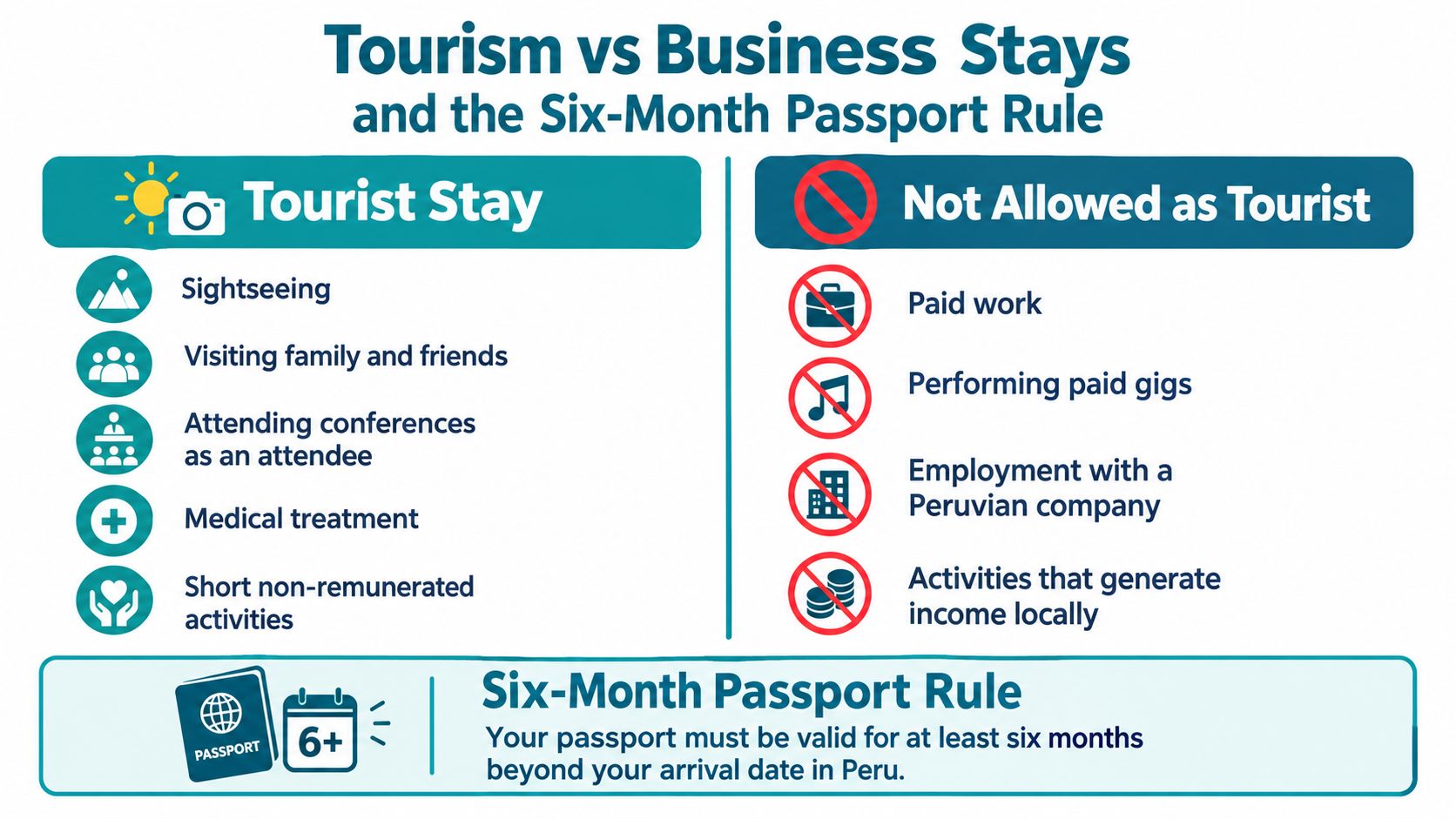
The word “business” causes confusion because travelers use it casually. Attending a conference as a guest, visiting family, sightseeing, receiving medical treatment, or taking part in a short unpaid activity may fit a visitor purpose. Negotiating a commercial arrangement, signing contracts, performing services, or carrying out paid work in Peru is a different compliance question.
Peru's official guidance draws a particularly important line for travelers from major visa-exempt markets. Citizens of the United States, Canada, the United Kingdom, and Australia can enter without a tourist visa, but they need a business visa to legally enter contracts or agreements. The U.S. Department of State's Peru entry information also highlights the distinction between tourism and commercial activity.
Check the passport before checking the visa
Your passport is the foundation of either route. It must be valid for at least six months from arrival, and this requirement applies to both visa-exempt and visa-required travelers. An airline can apply document checks before you reach Peru, so a passport nearing expiry can create a boarding problem even when no visa is required.
A useful decision test is:
- Tourism: sightseeing, visiting friends, or attending an event as a non-working participant.
- Commercial activity: negotiating or signing agreements, delivering services, or carrying out work connected to a business.
- Study or employment: activities tied to a Peruvian institution or employer, which normally require a purpose-specific immigration category.
If you're planning an extended itinerary, a guide such as this practical itinerary for two weeks in Peru can help you separate ordinary travel days from activities that may need additional authorization.
Visa-Exempt Nationalities and Conditional Entry Pathways
Peru's visa policy is broad but not flat. A United Nations information note records that Peru removed the tourist-visa requirement for nationals of around 95 countries, with permitted stays of up to 183 days. That headline figure is useful for understanding the scale of access, but it doesn't replace a nationality-specific check.
| Nationality group | Examples | Permitted stay | Conditions |
|---|---|---|---|
| North America | United States, Canada, Mexico | Often up to 90 days at entry | Tourism must remain within the permitted visitor purpose |
| Europe | Most European Union countries, United Kingdom, Switzerland | Depends on the nationality and authorization issued | Check the current exemption before departure |
| Asia-Pacific | Japan, Singapore, Malaysia, the Philippines, Thailand, Taiwan | Depends on the passport and applicable waiver | Existing visas can matter for some nationalities |
| Conditional pathways | China and India, among others | Subject to the applicable exemption and entry authorization | A qualifying third-country visa or residence document may remove the need for a separate tourist visa |
The China and India pathway is the edge case many simple checkers miss. Chinese and Indian passport holders may enter for tourism or business without a separate Peruvian tourist visa if they hold a valid visa or qualifying residence document from places such as the United States, Canada, the United Kingdom, Australia, or the Schengen area. The document must meet Peru's validity conditions, so travelers should confirm the exact rule before relying on it.
Peru's consular guidance also lists visa-exempt groups across Europe, the Americas, and parts of Asia-Pacific. Japan, Singapore, Malaysia, the Philippines, Thailand, and Taiwan appear in the official guidance, but exemptions can depend on the passport and the purpose of travel.
Practical rule: Treat your entry decision as a three-part check: passport nationality, qualifying documents already in your possession, and what you intend to do in Peru.
The United Nations information note on Peru's visa policy provides useful policy context. For a booking decision, confirm the current position with Peru's immigration authority or the nearest Peruvian consulate.
Peru Visa Types Compared Tourist Business Student and Work
The right visa follows the activity, not the label you give your trip. A visitor who says “I'm only going for a few meetings” may still need a business category if those meetings involve commercial agreements. Someone who plans to work for a Peruvian employer needs a work-related route, even if the assignment is short.
| Visa type | Purpose | Typical length of stay | Who needs it | Application lead time |
|---|---|---|---|---|
| Tourist | Leisure, visits, and other permitted visitor activities | Visa-required travelers may receive up to 183 days under the applicable authorization | Nationalities not covered by a tourist exemption | At least 15 calendar days before travel |
| Business | Commercial meetings, agreements, or related business activity | Set by the category and authorization | Travelers whose purpose falls outside ordinary tourism | At least 15 calendar days before travel |
| Student | Enrollment in a Peruvian educational program | Tied to the approved study purpose | Students attending a qualifying institution | Confirm with the consulate before booking |
| Work | Paid employment or contracted services | Tied to the work authorization | Employees or contractors whose activity requires local authorization | Start early and follow category guidance |
The tourist route is the simplest for eligible passport holders, but it doesn't create a general right to work. A business visa is not a substitute for a work authorization either. Student applications usually depend on documentation from the educational institution, while work applications commonly depend on the employment relationship and supporting documents.
Travelers working across borders should also separate immigration permission from financial preparation. If your plans involve a digital-nomad-style arrangement, review practical guidance on income proof for nomad visas while confirming Peru's own current category requirements with official authorities.
For a required tourist visa, Peru says the application should be submitted at least 15 calendar days before the trip, as stated in its public tourist visa application guidance. Consulates may request different supporting material, so use their instructions rather than copying a checklist from an old forum post.
Step-by-Step Application Options and Processing Times
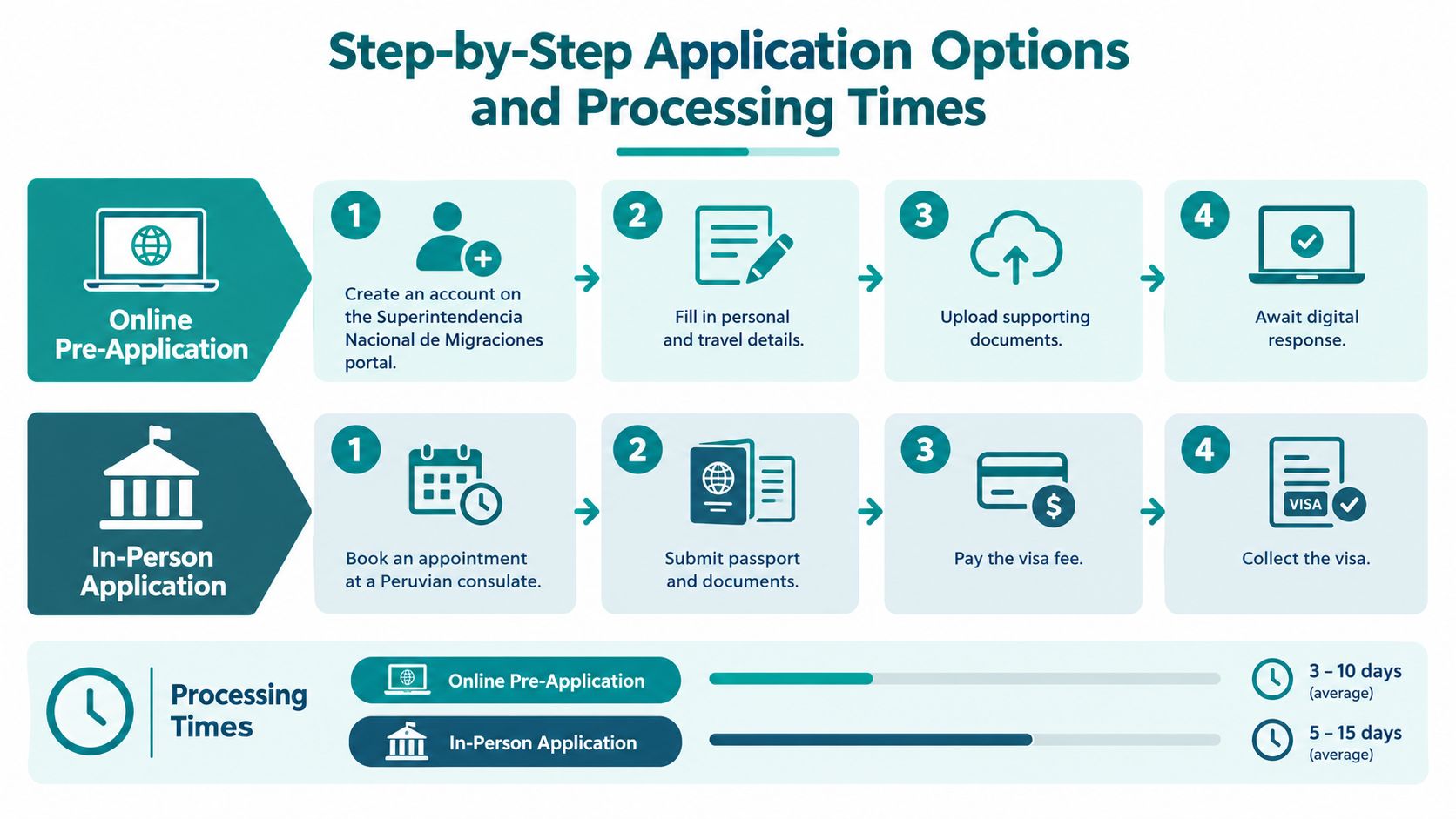
If you do need a visa, begin by identifying the authority responsible for your category. A tourist application is not interchangeable with a business, student, or work application, and an online immigration procedure isn't automatically a replacement for a consular application.
Start with the official category
Prepare the information that explains your case clearly:
- Identity: Use the passport that you'll carry to Peru and check its remaining validity.
- Purpose: Describe tourism, business, study, or employment accurately.
- Timing: Submit a tourist visa application at least 15 calendar days before travel.
- Evidence: Follow the consulate or immigration authority's current list for itinerary, accommodation, financial support, institutional letters, or employment documents.
- Consistency: Make sure dates, passport details, travel purpose, and supporting letters match.
Some cases are handled through a Peruvian consulate abroad. Others may involve Peru's immigration authority for an extension, status change, or related procedure. The exact route depends on the category and your location, so don't assume that every applicant can complete every step online.
Understand the stay calculation
Peru's public guidance says an approved tourist visa can allow up to 183 calendar days without extension. That allowance may be used as one continuous visit or across multiple consecutive visits within 12 months of issuance, subject to the terms of the authorization. This is different from the commonly granted visa-free visitor permission, which is often up to 90 days at the border.
The practical lesson is simple. Track visa validity, authorized stay, and passport validity as separate dates. A visa's existence doesn't mean you can remain indefinitely, and an approved length of stay doesn't remove the need to leave before the authorization expires.
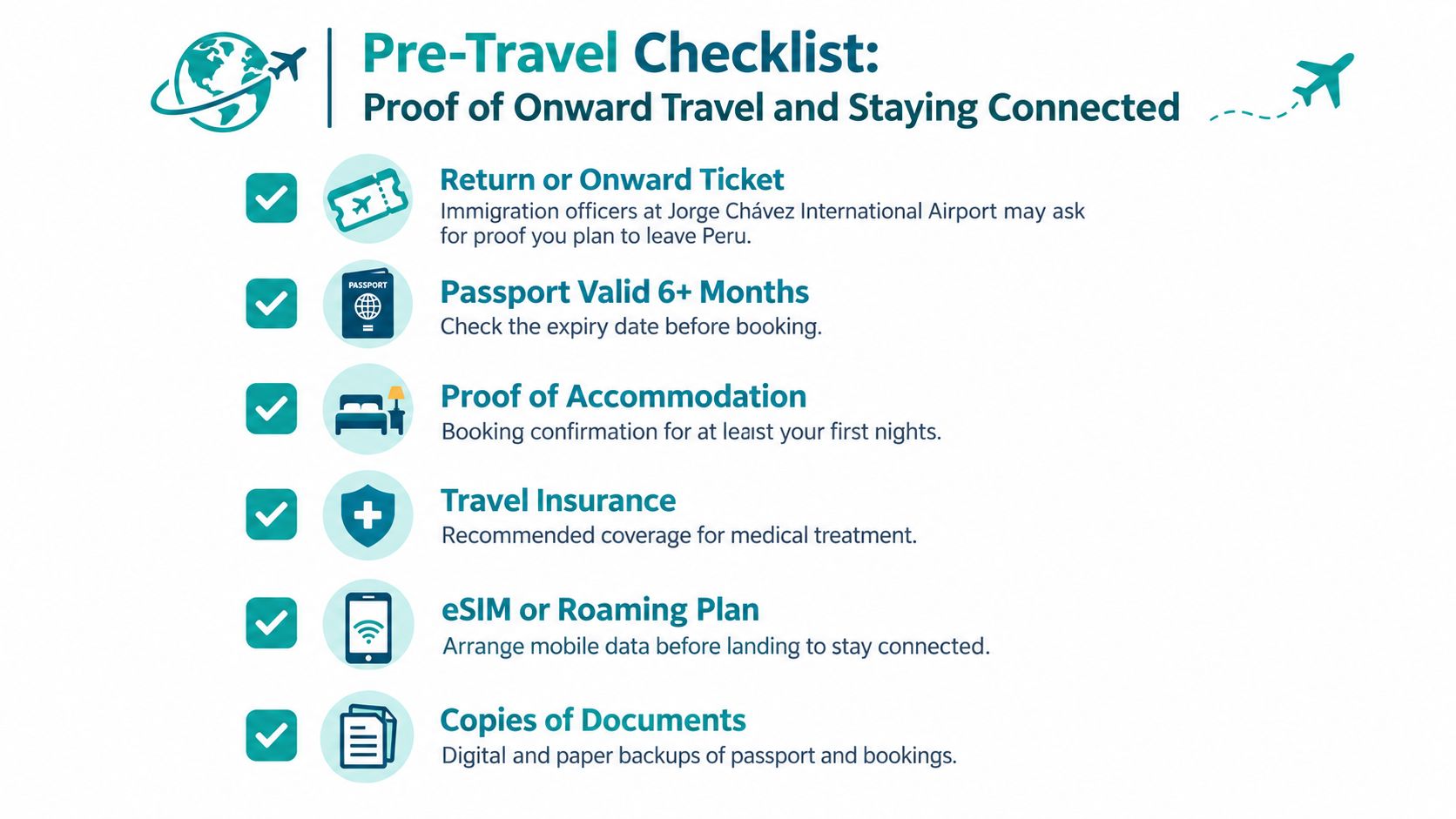
Pre-Travel Checklist Proof of Onward Travel and Staying Connected
Visa approval answers only one question: whether you can seek entry under a particular category. Before flying to Lima, assemble the evidence that makes your intended stay easy to explain.
Keep your return or onward ticket available, whether you're leaving by air or continuing overland. An immigration officer or airline may ask how you plan to leave Peru. Your first accommodation address is also worth saving offline, along with your visa approval if you needed one.
Put the practical documents in one place
Carry or securely store:
- Passport: Confirm at least six months of validity from arrival.
- Travel evidence: Keep your onward itinerary accessible without relying on airport Wi-Fi.
- Accommodation details: Save the first address and booking confirmation.
- Entry documents: Keep a digital copy of any visa and the immigration record issued at arrival.
- Health information: Check current health advice for the regions you plan to visit, especially if your route includes the Amazon.
Customs is separate from immigration. Follow the declaration instructions at the airport and ask an official if you're unsure whether an item needs to be reported. Cameras, laptops, drones, and other equipment can raise questions when they look commercial or unusually substantial, so keep purchase or ownership records where practical.
A small amount of preparation also improves the first hour after landing. A local SIM or eSIM can help you reach your accommodation, use maps, translate messages, and contact assistance without waiting for airport connectivity. This guide to the best eSIM options for Peru can help you compare the practical setup before departure.
If you want useful organization without sacrificing personality, small travel items can also elevate your trip with custom details, such as labeled luggage accessories or personalized holders for document copies.
Common Misconceptions Overstays and Business Trip Traps
"My cousin used the same passport and had no problem" isn't a reliable visa check. The traveler may have had a different purpose, a qualifying third-country visa, a different entry authorization, or merely received a different decision at the border. Peru's rules depend on the individual traveler's documents and intended activity.
The most common mistake is treating a tourist permission as a general work permit. Attending a conference as an attendee isn't the same as negotiating and signing a contract. Visiting a property isn't the same as carrying out paid services. A remote worker may also face immigration, tax, and employment questions that a tourist stamp doesn't answer automatically.
Track the date you were actually granted
Use the entry record provided by Peruvian authorities to identify your permitted departure date. If you stay beyond the authorized period, Peru's official process guidance warns that overstays can trigger fines. The amount and consequences depend on the applicable immigration rules, so contact the authorities promptly rather than waiting until the airport.
Don't rely on a remembered maximum such as 90 or 183 days. Those figures describe different parts of Peru's system, while your own authorization controls your case.
Before booking, verify the current position through Peru's immigration authority and the nearest consulate. Rules can change, and a forum post may describe an older process or someone else's nationality. A careful traveler checks the official position close to departure, then keeps copies of the documents used to make the decision.
Final Verdict and Frequently Asked Questions for Peru Entry
For most travelers from North America, Europe, and major Asia-Pacific markets, a tourist visa isn't required. The decision still depends on your passport, any qualifying visa or residence document you hold, and your purpose of travel. Confirm six months of passport validity, keep onward travel evidence available, and check the stay authorized at entry.
Use this final checklist:
- Verify the current rule for your passport.
- Check whether an existing third-country visa changes your eligibility.
- Confirm that your trip is strictly for tourism.
- Submit a required application at least 15 calendar days before travel.
- Save your passport, visa, accommodation, and onward-travel documents offline.
- Record the date by which you must leave Peru.
How long can a tourist stay?
Many visa-exempt travelers receive up to 90 days at entry. Peru's rules also provide for stays of up to 183 days in applicable cases, and a required tourist visa may authorize that longer period under its terms. The immigration authorization issued for your case is decisive.
Do minors need separate documentation?
A minor needs their own travel identity document, and additional parental authorization may be required depending on who accompanies them. Check the current requirements with the Peruvian consulate before departure.
Can you extend a stay inside Peru?
Where an extension or other immigration procedure is available, apply through the appropriate Peruvian immigration channel before your authorized stay ends. Don't wait until departure day.
What happens at Lima airport?
Expect airline document checks before boarding, passport control after landing, and customs processing. Officers may also ask for onward travel or accommodation details. Keep your records easy to retrieve, and use this prepaid eSIM guide for travelers if you want mobile data ready for maps and messages after arrival.
Simsima offers prepaid travel eSIM plans for Peru and more than 190 countries, with one-tap Smart Link installation or a QR code and no physical SIM or KYC. Visit Simsima before your flight to arrange mobile data, keep your arrival documents accessible, and stay connected from the moment you land.
#peru visa#visa for peru#peru entry rules#peru tourist visa#peru travel requirements

Dimitri MorvanFounder
Founder of Simsima. A passionate traveler based in Barcelona, he helps travelers stay connected without breaking the bank on roaming fees.
LinkedIn