-5% on your 1st eSIMuntil October 31

Fourteen days is enough to experience Peru's highlights, including Lima, the Sacred Valley, Cusco, and Machu Picchu, with room for one carefully chosen add-on. Peru welcomed 4,157,469 international visitors in 2025, so this is a major destination where popular routes and landmarks deserve advance planning.
You're probably looking at a map, trying to decide whether Lima, the Andes, Machu Picchu, Arequipa, the Amazon, and Lake Titicaca can fit into one trip without turning every morning into a luggage transfer. They can't all fit comfortably. The better approach is to build the trip around altitude progression and capacity, then add one extra region only if it supports the kind of experience you actually want.
Peru rewards a deliberate route. Start on the coast, move gradually into the Sacred Valley, spend meaningful time in Cusco, and reserve Machu Picchu before arranging the surrounding details. That order gives you a better trip than chasing every famous landmark in a random sequence.
Why Two Weeks Is the Sweet Spot for Peru
Your first day in Lima should feel like an arrival, not a challenge. Check into Miraflores or Barranco, eat something excellent, walk along the coast, and let your body recover from the flight. Lima gives you food, museums, colonial architecture, and Pacific views without immediately demanding a serious physical effort.
That gentle opening matters because Peru changes dramatically as you travel inland. Lima sits at sea level, while Cusco, the Sacred Valley, and other Andean destinations require your body to adjust to thinner air. A two-week itinerary gives you enough space to make that transition instead of flying into Cusco and scheduling a demanding hike the next morning.
Peru's international tourism market is still recovering rather than operating at its pre-pandemic volume. The country's 4,157,469 international visitors in 2025 represented 78.8% of pre-pandemic levels, while tourism generated US$5.351 billion in foreign exchange earnings, exceeding pre-pandemic revenue by 14%, according to Peru's official tourism reporting. For travelers, that means the classic circuit remains commercially important, with strong demand for flights, hotels, trains, guides, and entrance reservations.
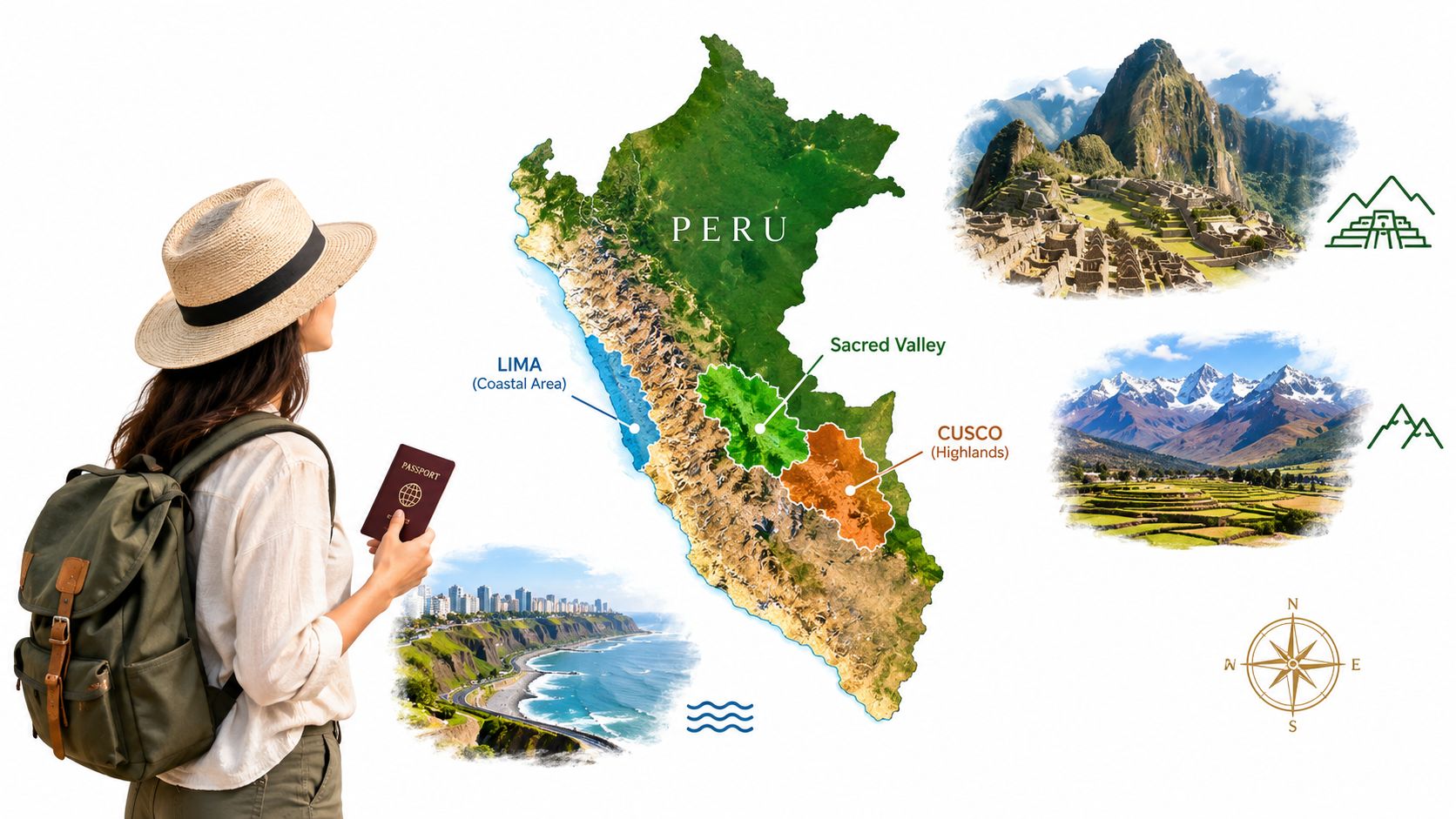
What 14 days lets you do well
A balanced trip usually includes:
- Lima: Give the capital enough time for its neighborhoods, food, and historical center.
- Sacred Valley: Use it as an acclimatization zone and a base for villages, markets, and archaeological sites.
- Cusco: Explore the former Inca capital after your body has had time to adjust.
- Machu Picchu: Treat it as the centerpiece, not a rushed day trip squeezed between unrelated transfers.
- One add-on: Choose Arequipa, the Amazon, or another southern destination, but don't collect destinations just to mark them off.
The planning mistake is trying to turn fourteen days into a month. Adding too many flights and overnight transfers leaves you with a long list of places and little memory of any of them. Two weeks works because it creates a logical coastal-to-highland journey, with enough flexibility for weather, transport changes, and slower mornings.
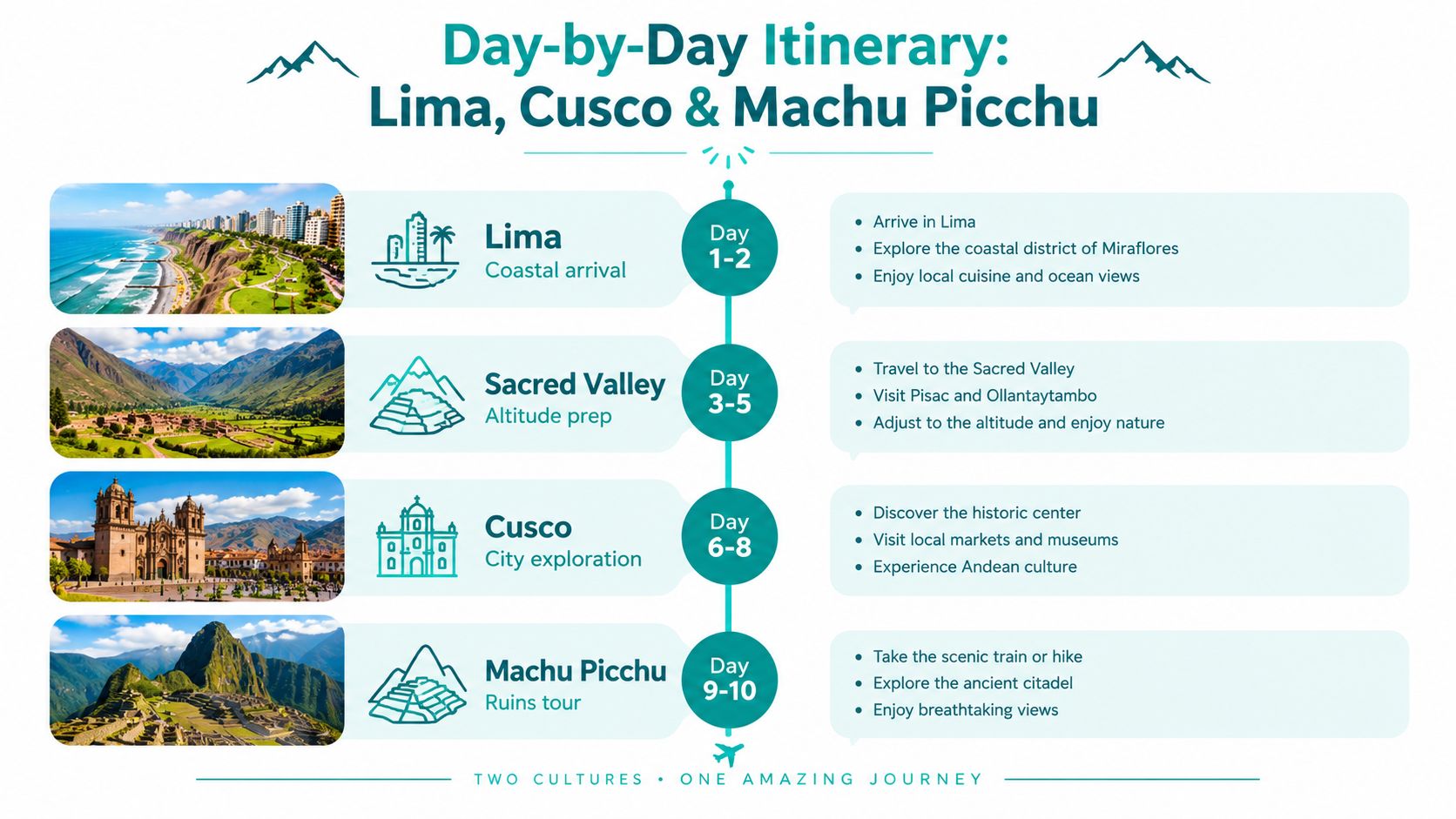
Day-by-Day Itinerary for Lima, Cusco, and Machu Picchu
This route prioritizes comfort over bragging rights. It puts Lima first, uses the Sacred Valley to ease into altitude, and saves Cusco's steeper streets and major excursions until later.
Days 1 and 2 in Lima
Arrive in Lima and stay in Miraflores or Barranco. Keep the first day simple. Walk the Malecón, have a relaxed meal, and avoid booking a late-night transfer immediately after a long international flight.
On the second day, explore the historic center, visit a museum or archaeological site, and return to Barranco for its galleries, cafés, and public art. Lima is also where you should complete practical tasks, including withdrawing money, checking transport confirmations, downloading tickets, and buying anything you forgot to pack.
Days 3 through 5 in the Sacred Valley
Fly from Lima to Cusco, then continue directly toward the Sacred Valley rather than spending your first high-altitude night in central Cusco. The valley is a calmer introduction, and towns such as Pisac or Ollantaytambo give you access to markets, scenery, and Inca sites without forcing you into an exhausting schedule.
Use the first valley day for a quiet walk and a long lunch. On the next day, visit selected sites rather than trying to see every stop on a standard tour. Keep the final day flexible for a longer excursion, a train departure, or just more rest.
Practical rule: Reserve Machu Picchu and any trek before you finalize the rest of the route. Your permit or entry date should shape the itinerary, not the other way around.
Travelers who want the Inca Trail need to plan even earlier. The route has a hard limit of 200 trekker permits per day, while the wider route system allocates 500 daily permits when guides and support staff are included, according to MachuPicchu.org's trekking route guidance. If your preferred date sells out, you may need to switch routes or use train-based access.
Days 6 through 8 in Cusco
Move into Cusco after your Sacred Valley stay. Spend the first day walking slowly around the historic center, seeing Coricancha, the Plaza de Armas, and nearby streets without adding a demanding mountain excursion.
Your second Cusco day can focus on San Blas, local markets, museums, and food. Use the third for a carefully chosen excursion, such as nearby archaeological sites, only if you're sleeping well and handling the altitude comfortably. Don't schedule Rainbow Mountain just because it appears on every social media feed. It's a strenuous high-altitude outing and a poor choice when you're still experiencing headaches, nausea, or unusual fatigue.
Days 9 and 10 at Machu Picchu
Travel to Aguas Calientes or the appropriate trail staging point according to your ticket and route. If you're taking the train, avoid treating the visit as a rushed out-and-back from Cusco. Staying nearby makes the morning more manageable and protects your visit if transport is delayed.
Machu Picchu remains Peru's dominant historical attraction. Industry reporting puts attendance at about 1.45 million visitors in 2025, while official reporting recorded 1.5 million visitors during the first ten months of 2025, as summarized by The Rio Times. Book the entry circuit, train, and accommodation together, then confirm the current entry rules before departure.
Days 11 through 14 for your chosen finish
Return to Cusco after Machu Picchu and keep one night as a buffer. Finish with another Cusco day, return to Lima for your international flight, or use these final days for one add-on that doesn't create a frantic chain of transfers.
Before booking every leg, compare the route as a whole using a multi-destination trip planning framework. The right itinerary is the one that still works if a road closure, delayed train, or tired travel day changes your plans.
Adding Arequipa, Nazca, or the Amazon to Your Trip
Choose one add-on based on your interests, not on the fear that you're wasting time. The classic southern route already contains major contrasts, from Lima's coastal food culture to Andean archaeology and highland terrain. A detour should add a truly different experience.
| Destination | Best For | Travel Time from Cusco | Typical Cost Range |
|---|---|---|---|
| Arequipa | Colonial architecture, food, museums, and a slower city atmosphere | Long overland transfer or a flight connection | Budget to premium, depending on hotel and excursions |
| Nazca | Travelers determined to see the Nazca Lines by air | Requires a separate southern-coast routing decision | Moderate to premium because of the flight and transfers |
| Amazon | Wildlife, jungle lodges, river excursions, and a sharp change of environment | Flight connection and lodge transfer | Moderate to premium, with lodge packages often bundling activities |
| Puno and Lake Titicaca | Highland lake culture, islands, and traditional communities | Long overland journey from the Cusco region | Budget to premium, depending on boat trip and accommodation |
Arequipa and Nazca
Arequipa is the easiest add-on to recommend when you want architecture, food, and a city that feels distinct from Cusco. The white volcanic-stone center, Santa Catalina Monastery, museums, and excellent regional cooking justify several nights without requiring another major trek.
Nazca makes sense only if the Lines are a personal priority. The flight adds weather and logistics considerations, and the destination works better as part of a southern-coast route than as a casual side trip from Cusco. Don't add Nazca just because it appears on a map between other places. It can consume valuable time while giving you a brief, highly scheduled experience.
The Amazon
Choose the Amazon if wildlife and immersion matter more to you than colonial streets or another archaeological site. A lodge-based stay typically bundles transport, meals, and guided excursions, making the experience feel self-contained once you arrive.
The tradeoff is route complexity. You'll need a flight connection and onward lodge transport, and the experience won't combine neatly with every Cusco departure. It's still the strongest one-choice add-on for travelers who want Peru to feel ecologically diverse rather than focused almost entirely on the Andes.
Puno and Lake Titicaca
Puno and Lake Titicaca appeal to travelers interested in highland communities, boat trips, and cultural scenery. The journey is long enough that it deserves dedicated space, not a quick overnight inserted between Cusco and Arequipa.
My recommendation is simple. Choose Arequipa for food and architecture, the Amazon for wildlife, Nazca for a specific bucket-list interest, and Puno when lake culture matters more than efficiency. Don't combine several of them unless you're comfortable sacrificing rest and accepting a transfer-heavy trip.
Navigating Altitude and Staying Healthy
Altitude should determine your itinerary more than a landmark checklist does. The comfortable sequence is Lima, Sacred Valley, Cusco, then higher or more strenuous excursions. Flying from the coast directly into Cusco and immediately booking a full-day hike is the classic way to lose the first part of your trip.
Stay in the Sacred Valley first when your plans allow it. Keep your initial walks short, eat lightly if your stomach feels unsettled, and avoid alcohol while you're assessing how your body responds. Hydration helps, but it isn't a magic cure, and forcing down large amounts of water won't compensate for ignoring symptoms.
Recognize the warning signs
Common altitude problems include headache, nausea, dizziness, unusual tiredness, poor sleep, and shortness of breath during easy movement. Mild symptoms call for rest and a slower schedule. Worsening symptoms, confusion, severe breathlessness, or an inability to walk normally require urgent medical attention and descent.
Your body gets the final vote. Canceling a hike is inconvenient. Continuing upward while seriously unwell can turn a holiday problem into a medical emergency.
Talk to a clinician before travel if you have a relevant medical condition or want advice about preventive medication. Don't treat coca tea, coca leaves, or over-the-counter pain relief as a guaranteed solution. They may be part of local travel routines, but they don't replace acclimatization or medical care.
Build rest into the route
Use your first Sacred Valley day as a low-pressure day. In Cusco, schedule sightseeing in clusters so you can return to your hotel rather than spending every hour walking steep streets. Put the most demanding excursion after you've had time to sleep, eat, and judge your response.
Altitude isn't the only disruption to plan for. U.S. government travel guidance for Peru warns travelers about crime and civil unrest, and demonstrations can disrupt roads, trains, and highways without warning. Keep copies of bookings, allow flexibility around major transfers, and ask your accommodation about current local conditions before setting out.
Packing Essentials and Budget Planning
Pack for several climates, not one imagined version of Peru. Lima can feel mild and coastal, while Andean mornings, sunny afternoons, and rainy periods demand quick changes. A small, adaptable bag beats a heavy suitcase when you're moving between cities, trains, and hotels.
Pack in layers
- Clothing: Bring moisture-wicking base layers, a warm mid-layer, a rain shell, comfortable trousers, and clothes suitable for city dinners.
- Footwear: Use broken-in walking shoes with reliable grip. Archaeological sites and cobbled streets punish flimsy soles.
- Health items: Carry personal medication, basic stomach remedies, sunscreen, lip balm, and any altitude medication prescribed for you.
- Documents: Keep passport copies, insurance details, entry confirmations, train tickets, and emergency contacts available offline.
- Trail equipment: For a trek, confirm what the operator supplies before buying or carrying bulky gear.
- Small comforts: A refillable bottle, earplugs, a compact power bank, and a light daypack earn their space.
Budget by category rather than chasing one total that won't fit every traveler. Accommodation ranges from simple guesthouses to polished hotels, meals can shift from market counters to destination restaurants, and transport costs rise sharply when you book popular trains, private transfers, or late departures. Spend first on the reservations that control your route, then save on flexible meals and optional tours.
A practical split is to reserve money for transport, accommodation, Machu Picchu access, food, excursions, and contingency costs. Don't assume the cheapest ticket is the best value if it creates a missed connection or an extra hotel night. For portable snack ideas and ingredient context before departure, this maca resource from Bearded Brothers can help you decide what to bring from home.
You'll also want to account for connectivity before leaving. Compare installation methods and plan validity with this guide to how much an eSIM costs, then download confirmations while you still have dependable Wi-Fi.
Staying Connected With eSIM and Local SIM Options
Connectivity is a logistical tool on this route, not just a way to post photos. You'll use mobile data for airport transfers, maps, train confirmations, translation, restaurant searches, and messages when plans change.
Peru's urban performance is comparatively strong, with 48.6 Mbps download, 20.8 Mbps upload, and 70% nationwide stability, while rural Andean and Amazon areas often fall to 5–15 Mbps or less, according to the Peru internet connectivity guide from EarthSIMs. Treat Lima and Cusco as places to complete important online tasks. Before leaving for remote corridors, cache maps, tickets, hotel addresses, and documents.
Choose the setup that matches your route
| Option | Best Use | Main Advantage | Main Limitation |
|---|---|---|---|
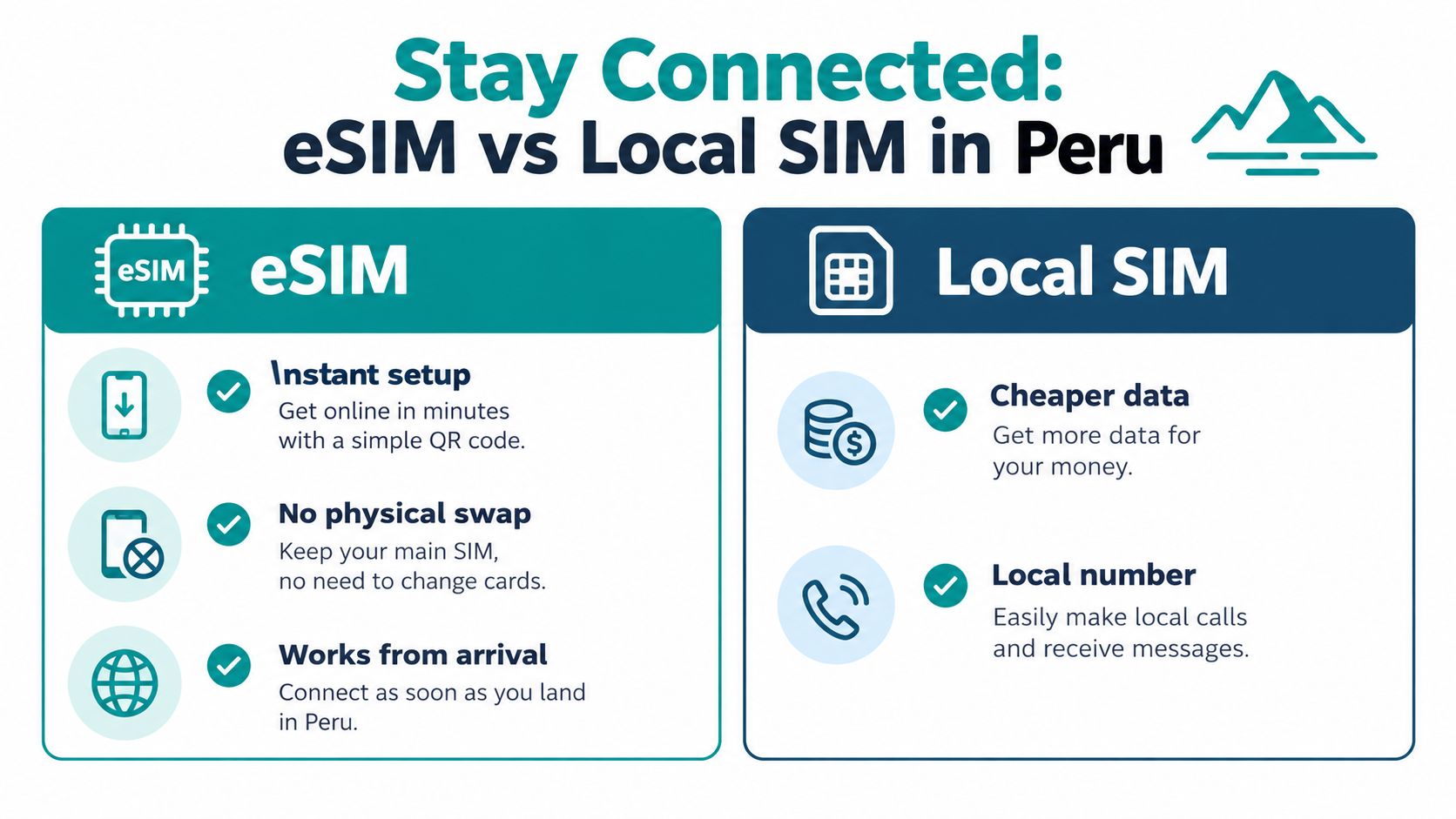
| eSIM | Travelers with a compatible unlocked phone | Install before departure and connect on arrival | Requires device compatibility and setup before the trip |
| Local SIM | Travelers who want a local number or lower local pricing | Physical number and familiar local service | Requires a shop visit, physical swap, and sometimes registration |
| Hotel and café Wi-Fi | Light browsing and uploads | No mobile purchase required | Not dependable for navigation or transfers |
An eSIM is the cleanest choice for a short, multi-stop trip. Install it before flying, keep your regular SIM active if your phone supports dual SIM, and set the eSIM as the data line after landing. A local SIM can still make sense if you need a Peruvian number, use an older phone, or expect to stay mostly in cities.
Install before the altitude and the transfers
Buy and install your data plan while you have stable Wi-Fi. Label the lines clearly, disable data roaming on your home SIM, and test activation before departure. Save the QR email or installation details offline, because troubleshooting at a mountain station is needlessly stressful.
Travelers comparing temporary numbers and physical options can use this temporary SIM card overview as background before deciding. For a destination-specific checklist, review this guide to the best eSIM for Peru. The important decision isn't the brand alone. It's whether your phone works with any carrier, your plan covers the full route, and your critical information remains available without a signal.
Final Tips for a Smooth Two-Week Peru Trip
Book Machu Picchu access, your train or trek, and the key accommodation before filling the calendar with day tours. The most common mistake is rushing from Lima to high-altitude activities without a recovery period. Keep one flexible buffer near the end, carry offline documents, and check local transport conditions before every major move.
Peru is easier when you accept that weather, altitude, and demonstrations can change the plan. Choose fewer regions, stay longer in the places that matter, and let the route serve your energy rather than your checklist.
Simsima offers prepaid Peru eSIM data plans with digital delivery, QR-code or one-tap installation, and no physical SIM swap, so you can prepare connectivity before flying to Lima. Review the available options and choose a plan for your route at Simsima.
#2 weeks in peru#peru itinerary#machu picchu#cusco travel#peru guide

Dimitri MorvanFounder
Founder of Simsima. A passionate traveler based in Barcelona, he helps travelers stay connected without breaking the bank on roaming fees.
LinkedIn