-5% on your 1st eSIM
WELCOME5
Loading...

Plan your Mexico in February trip with weather insights by region, top festivals, packing tips, and smart ways to stay connected on the road.
 Dimitri Morvan
Most guides get Mexico in February wrong. They sell it as one clean, ideal month, when it's really two different trips wearing the same label, an inland culture run and a coast price spike. If you go in blind, you'll either overpay for beach heat or under-plan for cool highland nights.
February is also a pressure month on the calendar. Constitution Day is legally observed on the first Monday of February, even though the historical date is February 5, 1917, the year the current Constitution replaced the 1857 Constitution and became the foundation of Mexico's legal system Mexbound's holiday guide. Add Candlemas, Flag Day, and the moving date of Carnival, and you've got a month where timing matters more than vague “best time to visit” advice.
The lazy advice says February is Mexico's sweet spot. That's only half true. February is good, but it's also when the country splits into two very different travel markets, one defined by dry, comfortable inland weather, the other by crowded, expensive beach corridors.
Mexico City, Oaxaca, and San Miguel de Allende work in February because the weather supports walking, museums, food neighborhoods, and day trips without the humidity that slows you down elsewhere. That's the right move if you care more about streets, plazas, and restaurants than pool time. The trade-off is obvious, you lose beach energy, but you gain better prices and a far easier pace.
Cancún, Tulum, Los Cabos, and Puerto Vallarta are different. February there is warm, dry, and heavily booked, which is exactly why so many travelers get squeezed into bad dates and inflated rates. The smart approach is to decide whether you want city value or coastal peak season before you book anything.
Practical rule: stop asking whether Mexico in February is “good,” and ask which Mexico you actually want, inland culture or beach demand.
If you're trying to combine both in one trip, use a split-city plan rather than a vague loop. A multi-stop itinerary works best when you lock the inland base first and only then add the coast, which is why a multi-destination trip plan beats random back-and-forth bookings.
February in Mexico is a regional story, not a national one. Inland cities stay dry and easy for walking, while the coast runs warm, busy, and priced for peak demand.
Mexico City and San Miguel de Allende are the kind of places that reward February travelers who care about streets, museums, food, and day trips. Days feel pleasant, but nights turn cold enough that you need to plan for layers. Tijuana and other border or desert stops stay dry and comfortable, which works well if you want urban movement without tropical heat.
The coast is a different bet. Cancún and the Riviera Maya give you the warmest swimming weather, but you pay for it with crowd pressure and higher rates. I would stay inland in early February and only head to the beach if the trip is built around beach time. That is the cleaner, cheaper choice.
Dry weather shapes the trip more than temperature alone. Less rain means more time outside, more walking, and more strain on transit, restaurants, and hotel inventory where everyone wants to be.
For a local-season view of Tulum, the weather breakdown at Irie Tulum Boutique Hotel's February guide is a useful cross-check, especially if you are weighing beach comfort against crowd levels. The same advice applies to booking decisions. If you want the coast, commit early. If you want value, stay inland longer and treat the beach as an add-on, not the main event.
| Region | Example Destinations | Daytime High (°F / °C) | Nighttime Low (°F / °C) | Rainfall Days | Sea Temp (°F / °C) | Notes |
|---|---|---|---|---|---|---|
| Highland cities | Mexico City, San Miguel de Allende | 72 to 76°F / 22 to 24°C | 44 to 47°F / 7 to 8°C | Low | N/A | Mild days, cold nights, strong for walking and sightseeing |
| Northern border zones | Tijuana, desert cities | About 19 to 20°C highs | About 8 to 9°C lows | Low | N/A | Cool, dry, and easy for urban travel |
| Caribbean resort zones | Cancún, Riviera Maya | About 29 to 30°C | Warm nights | Low to moderate | About 26 to 28°C | Warm, beach-ready, and busier |
| Pacific leisure coast | Puerto Vallarta, Los Cabos | Warm daytime conditions | Mild nights | Low | Coastal waters stay usable | Good for resort time, but booking pressure rises fast |
February isn't just a weather month, it's a civic and cultural month. If you ignore the holiday calendar, you'll end up booking on top of local movement, bank closures, or parade traffic and wondering why everything feels tighter than expected.
Candlemas, or Día de la Candelaria, falls on February 2. It's a food-and-family day, not a tourism spectacle, but it still shapes restaurant rhythms and local routines. Constitution Day lands on the first Monday of February, which means the observed holiday, not the historical date, creates the long weekend. Flag Day arrives on February 24, and it's civic rather than tourist-driven, so don't expect it to behave like a vacation holiday.
Carnival is the wildcard. Its dates move by year, which is exactly why coastal bookings can go sideways if you assume “February” is specific enough. Mazatlán and Veracruz, in particular, can dominate lodging demand in the week leading into it, and that spills into transport, pricing, and availability well beyond the parade route.
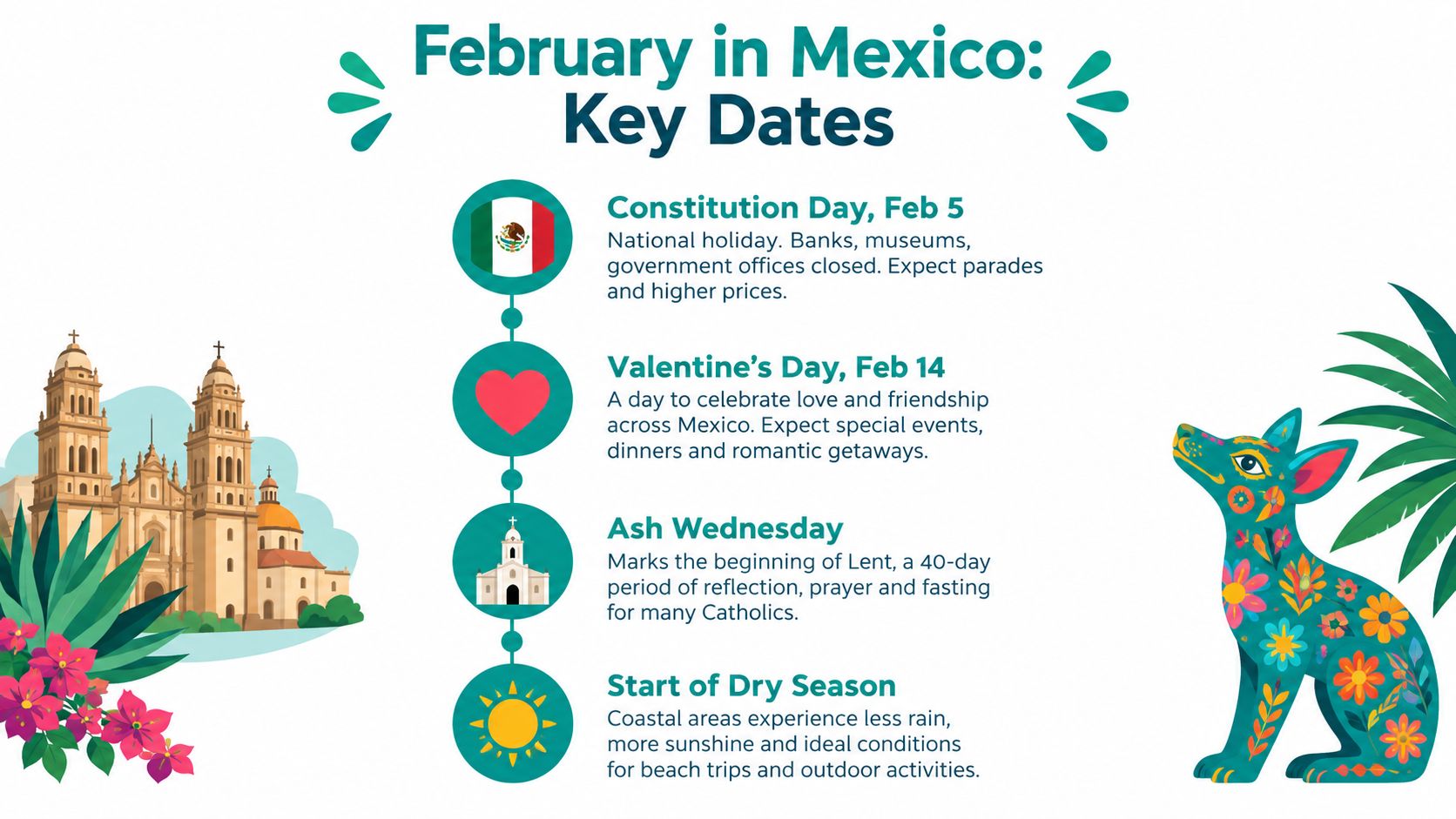
If you're traveling for culture, book either before or after the Constitution Day weekend window so museums, banks, and offices don't get in your way. If you're going coastal, confirm Carnival dates before you lock hotels. The wrong assumption here costs money.
February is also one of Mexico's stronger inbound months, with 3.88 million international tourist arrivals in February 2026, up 4.2% year over year, and 8.01 million total international visitors, up 8.5% Destination.com's February travel data. That's why the holiday calendar feels less like background trivia and more like a pricing lever.
February pricing in Mexico splits cleanly by trip style. Inland cities hold up better. Beach towns get expensive fast. If you book the wrong week for the wrong destination, you pay for the mismatch.
The first 10 days give you the cleanest value window. Mexico City, Oaxaca, and San Miguel de Allende are the smarter plays here because demand is steadier, stays are easier to find, and you avoid beach-season markups. Late February is a different market in Cancún, Los Cabos, and Puerto Vallarta, where spring-break pressure starts to squeeze availability and push rates up.
If you want warm weather and you are willing to pay for it, late February works. If value matters, book early and stop trying to time a bargain in the second half of the month.
For travelers budgeting the whole trip, not just the room, how to budget a trip is worth a look. February costs move as a bundle. Flights, hotels, day tours, and data all tighten at the same time, so treating them separately usually leads to a bad total.
| Region | Early Feb (1-10) | Mid Feb (11-20) | Late Feb (21-28) |
|---|---|---|---|
| Mexico City, Oaxaca, San Miguel de Allende | Best value, calmer stays | Still workable | Good, but demand rises around holiday spillover |
| Cancún, Tulum, Isla Mujeres | Better if you want quieter beaches | Crowded and more expensive | Peak-season pressure, book early |
| Los Cabos, Puerto Vallarta | Strong value window | Steadier demand | Heavier spring-break pricing |
| Mazatlán, Veracruz | Good before Carnival timing locks in | Booking starts to tighten | Strong demand if Carnival overlaps |
| Hybrid inland plus coast | Ideal for the inland leg | Best for transfer planning | Coast leg gets expensive fast |
Book flights based on the leg that will be hardest to replace. For early-February trips, a 6 to 9 week window is sensible. For late-February beach runs, give yourself 10 to 14 weeks. That is not overplanning, it is how you avoid paying peak prices for the only room left.
If connectivity matters, sort it out before you go. A trip that jumps between cities, airports, and beach towns burns through maps, rides, and messaging quickly, so a practical eSIM plan breakdown is worth checking before departure.
Pack for the region, not for the country. That's the only way to avoid hauling the wrong kit across Mexico. February in Mexico City is not the same as February in Cancún, and your bag should make that obvious.
If you're heading to Mexico City, Oaxaca, or San Miguel de Allende, bring layers. Nights get cold enough that a light jacket alone feels flimsy, and you'll thank yourself for a fleece, sweater, or compact insulated layer once the sun drops. Add sturdy walking shoes, because cobblestones and long museum days punish bad footwear fast.
A small rain shell still makes sense, even in a dry month, because dry doesn't mean impossible. I'd also bring a scarf, not as fashion, just as a practical answer to chilly buses and over-air-conditioned restaurants.
If your February is about Cancún, Tulum, Isla Mujeres, Los Cabos, or Puerto Vallarta, pack for sun and salt. Reef-safe sunscreen, quick-dry swimwear, a rash guard, sunglasses, and after-sun care are the basics. Don't pretend the weather is mild just because evenings aren't cold; the core issue is getting sun-drained after a full day outside.
You also want the boring travel gear that saves trips. A Type A and Type B adapter, a power bank, and photocopies of your passport and reservation details in a separate bag are smarter than they sound.
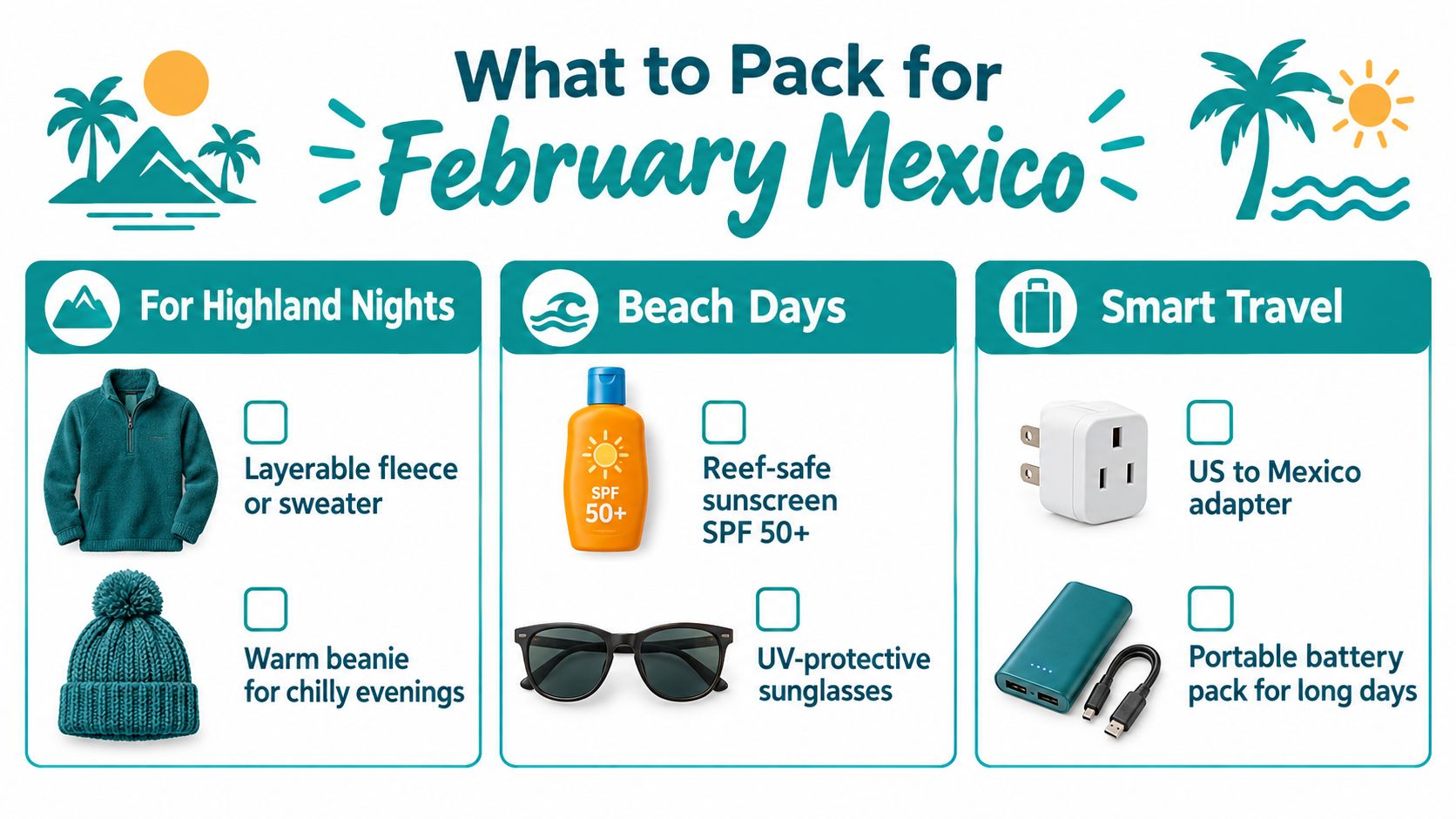
Packing rule: if your itinerary includes both highlands and coast, pack for the coldest evening and the sunniest afternoon. Anything else is optimism, not planning.
February travel in Mexico doesn't require paranoia. It does require judgment. The issues are predictable, and once you name them, they're easy to handle.
The first is UV exposure at coastal resorts. If you're going beach-heavy, use reef-safe SPF 30 or higher and reapply every two hours. The second is altitude in places like Mexico City and Puebla, where the first 48 hours can feel tiring if you arrive dehydrated and try to do too much too fast. The third is dry air, dust, and pollen in inland and northern cities, which can irritate your throat, eyes, and sinuses.
Hydrate aggressively when you're above 2,200 meters. Keep a saline spray handy if dry air bothers you, and don't try to brute-force a walking itinerary on day one at altitude. That's how people turn a good trip into a headache.
Resort zones are still tourist zones, with the usual common-sense precautions you'd use anywhere else. The bigger risk is moving between cities after dark, especially on rural highways. Daytime transfers are the cleaner choice, and if you're combining inland and beach destinations, build that into the plan instead of pretending the drive is just another errand.
Drink bottled or filtered water, use the pharmacy network when you need it, and carry insurance that explicitly covers altitude-related evacuation from Mexico City. That last part is easy to ignore until it isn't.
For a February trip, treat an eSIM as the default. Airport SIM counters move slowly, hotel Wi-Fi can be patchy, and roaming plans from home carriers usually cost more than they should for the convenience they offer. With an eSIM, your phone is ready before you land, which matters when you step into a taxi queue or need maps at the curb.
Mexico's main networks, Telcel, AT&T Mexico, and Movistar, are broadly supported through eSIM profiles, so you are not dealing with a niche workaround. Scan a QR code or use an in-app install, activate before departure, and keep moving. For a short trip, a modest data allowance usually covers maps, ride apps, messaging, and the occasional stream, especially if you split time between cities and resorts.
Simsima is a practical choice here. It offers prepaid Mexico data plans, supports one-tap Smart Link installation, and keeps the setup digital, which suits travelers who want the connection handled before wheels-up.
If you keep your home number for calls and SMS, an eSIM data-only setup is cleaner than swapping plastic cards at the gate.
Single-country Mexico plans make sense if your trip stays inside the country. Regional North America plans make more sense if Mexico is just one leg of a larger route. Install before you leave, keep your primary line active for important texts, and test data before you disconnect from airport Wi-Fi.
For the setup, follow the eSIM installation steps before you travel so you are not troubleshooting in a taxi line. Rural signal gaps still happen in Oaxaca and Chiapas highlands, so do not expect perfect coverage everywhere. For city travel, airport transfers, and coast itineraries, an eSIM is the sensible move.
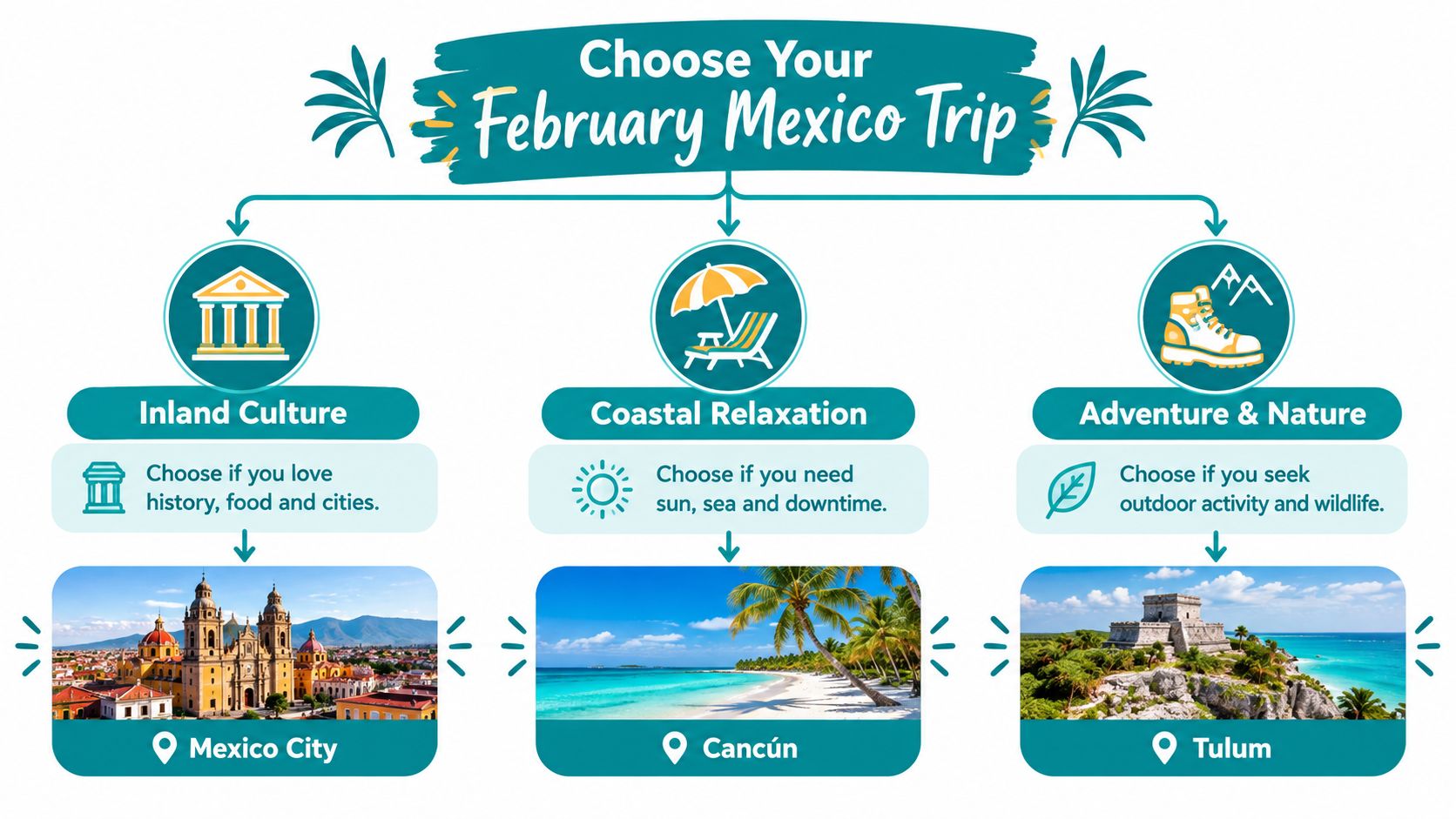
Don't finish this kind of trip planning with vague preferences. Pick the branch that matches your actual travel style, then book around it. February rewards travelers who make one clean decision, not people who try to do every version of Mexico at once.
Choose Mexico City, Oaxaca City, or San Miguel de Allende if you want walkability, food, museums, and cooler nights. Book early February if you want calmer streets and better value, and lock reservations around the Constitution Day weekend so you don't get caught in closures. Pack layers, a rain shell, and a solid walking shoe.
Choose Cancún, Tulum, or Isla Mujeres if your priority is warm water, beach time, and easy resort days. Book late-February beach stays well in advance, because that's where prices get mean. Bring reef-safe sunscreen, a rash guard, and enough data for maps and ride apps because you'll use both more than you think.
Choose a hybrid if you want both sides of February Mexico, but be honest about the trade-off. Inland first, coast second, is the cleaner sequence because it puts your cheaper, quieter leg before your higher-demand leg. The only real trap here is ignoring Carnival timing, so verify dates before you lock any coastal hotel.
If you want a trip that feels smoother than the average February rush, plan the weather, the holiday calendar, and your data connection together. Simsima gives travelers a prepaid Mexico eSIM they can install before departure, which is exactly the kind of practical setup that prevents airport friction. Visit Simsima and sort your Mexico connection before you book the rest of the trip.

Founder of Simsima. A passionate traveler based in Barcelona, he helps travelers stay connected without breaking the bank on roaming fees.
LinkedIn