-5% on your 1st eSIM
WELCOME5
Loading...
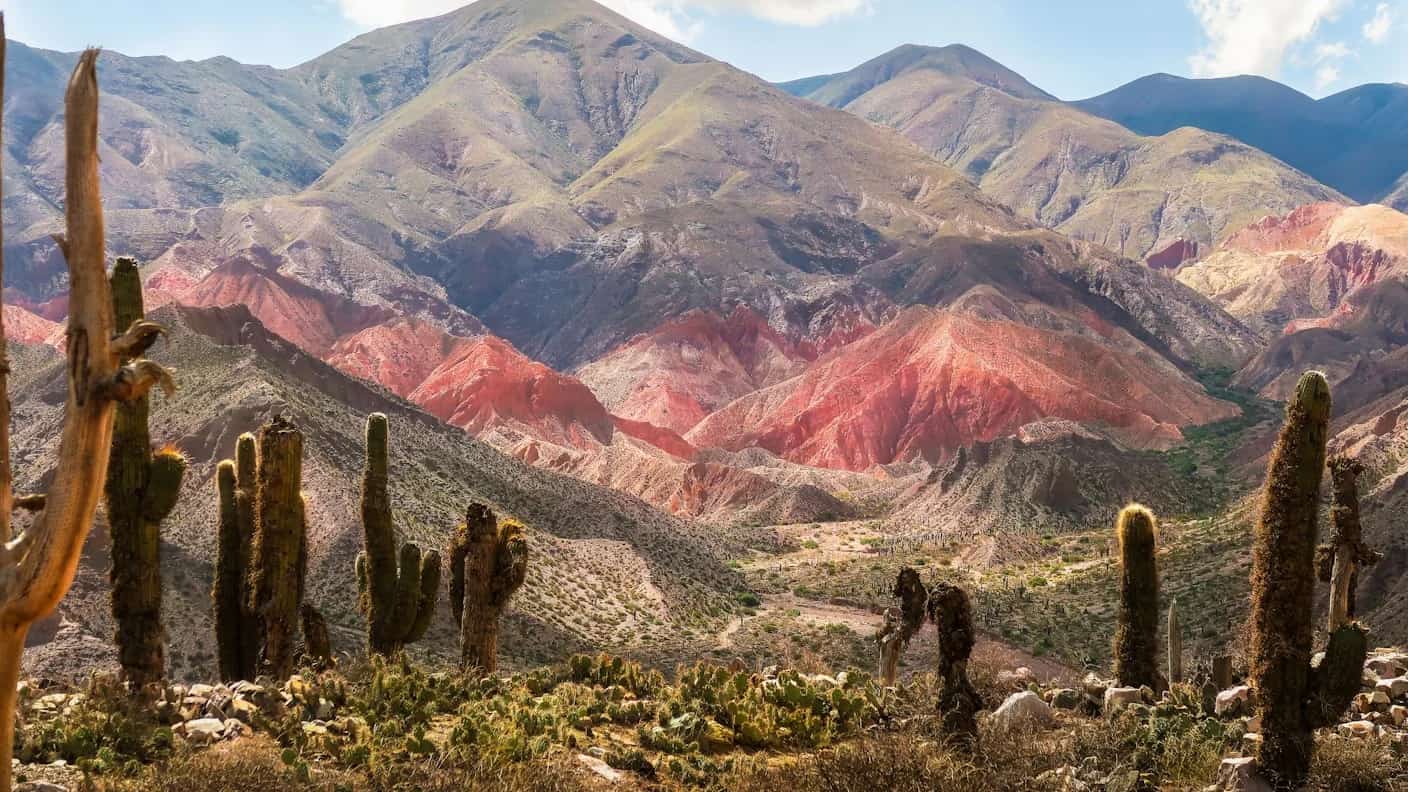
Everything you need to pick the right Argentina eSIM in 2026: how Personal, Claro and Movistar compare, 5G coverage in Buenos Aires, what to expect in Patagonia and at Iguazu, and how much data a typical trip actually needs.
 Dimitri Morvan
Looking for the best eSIM for Argentina? This guide compares the top providers, plans and prices. Argentina rewards travelers who arrive online. From navigating the Buenos Aires Subte and checking a taxi fare against Uber, to translating a parrilla menu in Palermo or watching the live blue-dollar rate before you change money, your trip runs on mobile data. An Argentina eSIM gets you a working local line the second you clear customs at Ezeiza, without hunting for a Personal or Claro kiosk in a country where activating a prepaid line as a foreigner can be slow and paperwork-heavy. This guide covers which network to choose, how coverage works across Buenos Aires, Patagonia, Mendoza and Iguazu, and how much data a typical trip needs.
An Argentina eSIM replaces the traditional habit of buying a prepaid chip at an Ezeiza kiosk or a Personal store on Avenida Corrientes. It downloads to your phone as a digital profile, sits alongside your home line in a separate slot, and switches on the moment you land. You keep your home number active for two-factor codes from your bank while the Argentine line handles data, maps and messaging. For most travelers this is faster, cheaper and considerably less stressful than a physical SIM — especially in a country where activating a local prepaid line as a foreigner can require a DNI substitute, a local address or a long wait in line.
The trade-off is that your phone must support eSIM and be carrier-unlocked. Most iPhones from the XS onward, Samsung Galaxy S20 and newer, Google Pixel 3a and newer, and recent Motorola, Xiaomi and Oppo flagships qualify. If you bought your phone through a US carrier, note that recent iPhone models sold in the United States are eSIM-only, which actually makes them ideal for Argentina. If you're unsure, check your phone's cellular settings for an "Add eSIM" or "Add Cellular Plan" option before you fly.
Travelers arriving in Argentina typically weigh three options: a travel eSIM, a physical prepaid SIM from a Personal, Claro or Movistar kiosk, and international roaming from their home carrier. A local physical SIM can be the cheapest per-gigabyte option once you're set up, but activation for foreigners is inconsistent — some kiosks require an Argentine identification number, and top-up apps often only accept local payment cards. International roaming from a US or European carrier is the simplest option but the most expensive, with day passes that can top ten dollars per day and slower data speeds throttled after a small quota. A travel eSIM sits between the two: cheaper than roaming, faster to set up than a local SIM, and predictable in price.
Argentina's mobile market is dominated by three carriers: Personal (Telecom Argentina), Claro (America Movil) and Movistar (Telefonica). All three run mature 4G LTE networks and have deployed 5G in Buenos Aires and select provincial capitals since the 2023 spectrum auction. Personal and Claro generally trade the top positions in independent speed and coverage tests, with Movistar close behind. The difference matters most in Patagonia, where each carrier has slightly different rural footprints. A quality travel eSIM connects to the strongest available signal from any of the three.
The right plan depends on trip length and data habits. A short business trip to Buenos Aires or a weekend in Mendoza will usually fit inside a 3 to 5 GB plan. A standard 10-day trip mixing Buenos Aires with Iguazu and Bariloche is comfortable on 10 to 20 GB if you use hotel Wi-Fi in the evenings. Long multi-week itineraries down through Patagonia — El Calafate, El Chalten, Ushuaia — reward an unlimited plan, both because you rely on maps for the long-distance buses and because Wi-Fi in remote lodges is often slow or nonexistent.
A quick rule of thumb: standard-definition streaming uses about 700 MB per hour, HD video roughly 1.5 GB per hour, and a video call around 900 MB per hour. Google Maps navigation is surprisingly light — around 5 MB per hour of active use. Messaging apps, translation, ride-hailing and social scrolling add up to about 1 to 2 GB per day for an active traveler. If you plan to work from a Palermo cafe, tether a laptop from the Buenos Aires airport, or watch matches from Argentina's Liga Profesional over cellular, budget generously.
Trip length also matters. Argentina travel eSIMs typically come in fixed durations — commonly 3, 5, 7, 10, 15 or 30 days — and validity usually starts on first connection to an Argentine network, not on purchase. That means you can safely install and configure the plan on your home Wi-Fi days before departure, and only the countdown to expiry begins when you land at Ezeiza. If your itinerary extends beyond 30 days, most providers let you stack a second plan back-to-back rather than forcing you into a new profile.
Buenos Aires is one of the best-covered cities in South America. The Subte has continuous 4G LTE in every underground station and tunnel, 5G is widely available across Palermo, Recoleta, Puerto Madero, Belgrano, San Telmo and the microcentro, and outdoor coverage remains solid in less touristy neighborhoods like Almagro, Villa Crespo and La Boca. Gran Buenos Aires is also thoroughly covered, so a day trip to Tigre or a football match in Avellaneda will not drop you off the grid. Cordoba, Rosario, Mendoza and Mar del Plata all follow the same pattern: strong 4G everywhere and 5G in the central districts.
Outside the main urban corridors, coverage stays usable but becomes uneven. In Patagonia, expect strong signal in Bariloche, San Martin de los Andes, El Calafate and Ushuaia town centers, and weaker or absent coverage on the long stretches of Ruta 40, on the Perito Moreno approach road, in the town of El Chalten (which historically has had limited cellular infrastructure), and along most trekking trails in Los Glaciares and Torres del Paine's Argentine side. In the north, Salta and Jujuy provincial capitals are well covered, but signal thins out on the Ruta 40 loop past Cachi and on the Quebrada de Humahuaca back roads. Iguazu Falls has reliable 4G at the visitor center and hotel zone; the actual trails and jungle circuits can drop to slower LTE or no service, so download offline maps before you go.
Here is a comparison of the main Argentina eSIM plans against the leading international providers. Simsima offers competitive pricing thanks to direct deals with local carriers.
On the configurations shown above, Simsima delivers the most competitive rates against the leading international providers. You also benefit from instant activation and reliable network coverage in Argentina.
Installation takes about three minutes and is best done at home on your regular Wi-Fi, before you fly. After purchase, Simsima sends a QR code and a set of manual activation credentials by email. On iPhone, open Settings, tap Cellular (or Mobile Data on some regions), then "Add eSIM" and scan the QR code from your laptop or another screen. On Android, open Settings, Network and internet, and add a mobile network from the eSIM section. Label the new line clearly — for example "Argentina Travel" — so you can toggle it on when you land and off when you leave. Keep your home line active for calls and SMS from your bank, and set the Argentine line as your default for cellular data.
If your line shows "No Service" after landing at Ezeiza or Aeroparque, run through this checklist before contacting support. First, confirm the Argentina line is toggled on in your cellular settings and set as the data line. Second, enable data roaming for that specific line — travel eSIMs technically roam onto local networks, so with roaming off the profile will not register. Third, try a manual network selection: go into carrier settings, disable automatic, and pick Personal, Claro or Movistar by hand to force a fresh registration. Airplane mode toggled off and on, or a full restart, resolves the vast majority of remaining cases. If service is still not restored after ten minutes, contact Simsima support from your home line or Wi-Fi with your order number.
A few apps turn a solid data plan into a better trip. Google Maps handles navigation, Subte routing and finding a parrilla for lunch. WhatsApp is the default channel for everything in Argentina — restaurants, tour operators, hotels and even doctors expect you to reach them there, so keep it installed and logged in. Uber and Cabify operate in Buenos Aires, Cordoba, Rosario and Mendoza; both let you pay in cash, which is often the practical choice given card fees and the parallel exchange rate. For live blue-dollar and MEP rates, DolarHoy and Ambito Financiero are the standard references. For long-distance travel, Plataforma10 covers most bus routes.
Argentina has run a multi-tiered currency system for years, and reliable data is what lets travelers navigate it. The official ARS rate often trails the blue-dollar rate offered in exchange houses and informal channels by a meaningful margin, which changes the real cost of everything from a taxi ride to a hotel night. Card payments historically settled at less favorable rates than cash for foreigners, though recent reforms have narrowed the gap. Checking a rate app before you pay, and choosing between cash, card or a MEP-linked transfer, can shift your effective trip budget noticeably. On safety, Buenos Aires is broadly safe for tourists in Palermo, Recoleta, Puerto Madero and the microcentro during the day, but petty theft — especially phone snatching — is a real risk. Keep the phone out of sight on the street, use ride-hailing at night in less familiar neighborhoods, and enable Find My or Find My Device before you leave the hotel.
Argentina is increasingly popular with remote workers, and Buenos Aires has quietly become one of the most active digital nomad hubs in Latin America. The cost of living is competitive, the coffee scene in Palermo and Villa Crespo is excellent, and coworking spaces from WeWork in Puerto Madero to independent operators across Palermo cater to remote teams. A reliable eSIM keeps you online between sessions, in cabs and on weekend trips to Tigre, Colonia or Mar del Plata.
Argentina's most memorable trips almost always leave the capital. Mendoza and its wine region — Lujan de Cuyo, Maipu, the Uco Valley — have reliable 4G in town and around the main bodegas, dropping off on higher-altitude vineyard roads. Bariloche and the Lake District have solid urban coverage and increasingly good service along Ruta 40 between San Martin de los Andes and Villa La Angostura, with dead zones on remote Circuito Chico viewpoints. El Calafate has decent town coverage and even holds a signal at parts of the Perito Moreno viewpoint, while El Chalten has historically been light on connectivity — download offline maps for Laguna de los Tres and Laguna Torre before you set out. Ushuaia has strong service in town and the port, with drops on Tierra del Fuego trails. In the north, Iguazu, Salta and Jujuy all offer good urban coverage and weaker service on remote roads.
For travelers combining Argentina with a neighboring country — a few days in Santiago, a Uruguay side trip to Colonia or Montevideo, an Iguazu circuit into Brazil, or a swing through Chilean Patagonia — check whether a regional South America eSIM covers all your countries in one profile. It is often cheaper and less fiddly than buying a separate eSIM per border crossing.
eSIM for Latin America: One Plan From Mexico to Patagonia
Argentina eSIMs route through one of the three national carriers — Personal, Claro or Movistar. Personal and Claro generally rank at the top for overall speed and coverage in independent 2025 tests, with Movistar close behind. Simsima's Argentina plans use the strongest available local network in each area so you get coverage equivalent to a domestic SIM.
Yes, your phone must be carrier-unlocked. Devices bought directly from Apple, Samsung or Google are typically unlocked by default. If you bought your phone through a home-country carrier, request an unlock before your trip — most carriers process this within a few days at no charge.
iPhone XS and later, Samsung Galaxy S20 and later, Google Pixel 3a and later, and many recent Motorola, Xiaomi and Oppo models all support eSIM. Recent iPhone models sold in the United States are eSIM-only, which makes activating an Argentina eSIM particularly straightforward on those devices.
For a standard leisure trip with maps, messaging, social media and rideshare, 10 GB is comfortable over 7 to 10 days when you use hotel Wi-Fi at night. If you plan on tethering a laptop or heading deep into Patagonia where Wi-Fi is scarce, choose 20 GB or an unlimited plan.
It will work wherever any of the three carriers has coverage, which includes all major towns — Bariloche, El Calafate, Ushuaia, San Martin de los Andes — and most of the paved Ruta 40 corridor. Expect gaps on remote trails, in El Chalten and on isolated stretches between towns. Download offline maps before long drives or treks.
Yes. That is one of the main practical reasons to arrive in Argentina already online. Rate apps like DolarHoy update through the day, Uber and Cabify let you request rides and pay in cash, and WhatsApp is the default communication channel for restaurants, tour operators and even some hotels. All of this needs a working data connection from the moment you land.
Get a multi-country plan and save on your mobile data.
Argentina eSIM plans — Browse and compare all available Argentina eSIM plans on Simsima
eSIM-supported devices — Check whether your phone supports eSIM before you buy an Argentina plan
How Simsima works — Learn how to buy, install and activate an eSIM in a few minutes

Founder of Simsima. A passionate traveler based in Barcelona, he helps travelers stay connected without breaking the bank on roaming fees.
LinkedIn Destinations
 Destinations
 Destinations