-5% on your 1st eSIM
WELCOME5
Loading...
Latin America is the classic overland region. Routes are measured in months and borders, which is exactly the pattern where buying one plan per country falls apart.
 Dimitri MorvanAugust 27, 20267 min
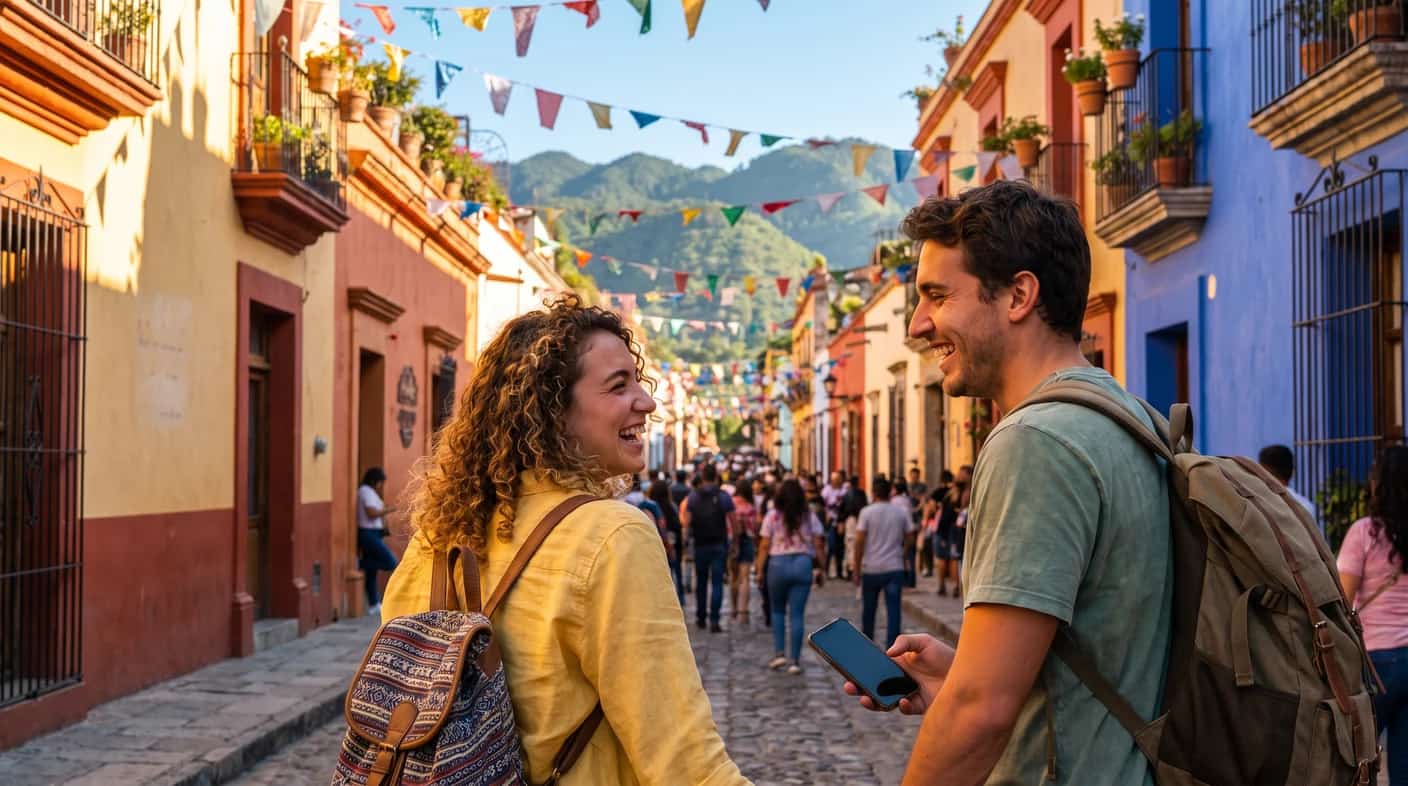
For a trip through several Latin American countries, one regional eSIM covering seventeen of them, from Mexico to Argentina, usually beats buying a plan at each border. Check the list against your route: Belize, Cuba, the Dominican Republic, Guyana, Suriname and French Guiana are not on Simsima's Latin America plan in October 2026.
Simsima's Latin America plan covers Mexico; Guatemala, El Salvador, Honduras, Nicaragua, Costa Rica and Panama in Central America; and Colombia, Venezuela, Ecuador, Peru, Bolivia, Brazil, Paraguay, Uruguay, Chile and Argentina in South America. The list in the plan details is the one that applies, and it can change over time.
The gaps sit at the edges. Belize is not on it, so the Ruta Maya loop from Tulum through Belize to Tikal needs a Belize plan for that leg. Guyana and French Guiana belong to Simsima's Caribbean plan instead, Suriname is on neither, and Cuba and the Dominican Republic are not covered either. Panama appears on both the Latin America and the Caribbean plans.
On the last complete snapshot of the Simsima eSIM Price Index, on 3 September 2026, the regional median was around $3.06 per gigabyte, almost exactly the $3.11 global figure. Brazil sat near $2.22 and Mexico near $2.55, with Venezuela the outlier at roughly $7.47.
What sets the region apart is how people travel. A month here often means five countries by bus, and a country plan at each border means five minimum purchases, none of them used up. From three countries upward, the regional plan is usually the simpler choice; for one or two, compare the country plans with it.
how multi-country plans work at the border — and where the tipping point sits
The classic backpacker route south runs from Lima to Cusco and Machu Picchu, on to Puno and Lake Titicaca, across the border to Copacabana and La Paz, down to Uyuni for the three-day jeep tour, which can finish in San Pedro de Atacama in Chile, then over the Andes by bus to Salta in Argentina. Peru, Bolivia, Chile and Argentina are all on the plan, so the eSIM joins a new network after each crossing.
Coverage follows the towns. Cusco, Puno, La Paz and the town of Uyuni have 4G. Signal thins out soon after the boats leave Puno for the lake islands, and the Uyuni tour through the Eduardo Avaroa reserve is offline for most of its length, with occasional signal near the overnight villages. Overnight buses between towns spend hours without service.
Plan on about 1 GB a day in the cities and very little on tour and bus days, which puts a month on this route at around 12 to 15 GB. Download offline maps, bus tickets and tour details before each leg.
Several countries in the region check the phones used with local SIM cards. In Chile, a foreign phone used with a Chilean SIM for more than 30 days has to be registered, but SUBTEL's Multibanda FAQ states that phones used in roaming or on Wi-Fi need no registration. Peru's regulator OSIPTEL says the same in a September 2024 press note: tourists roaming with their foreign operator's SIM need no procedure, while buying a Peruvian chip means registering the phone with that operator.
In Colombia, a 2022 opinion from the regulator CRC explains that operators text the user of a phone not approved for Colombia and block it after 45 days unless it is approved online; the opinion deals with local lines. In Brazil, Anatel's prepaid rules require a CPF, the national taxpayer number, to activate a prepaid line, which most visitors do not have. Mexico has required every Mexican line to be registered to an ID or passport since January 2026.
A travel eSIM sits on the roaming side of the Chilean and Peruvian rules, as both regulators state, and it is neither a Brazilian nor a Mexican line. On a short trip, that spares you the counter, the CPF problem and the phone paperwork.
Travel plans are priced for moving around. Once you settle in one city for a few months, for Spanish classes in Antigua or remote work in Medellín, a local prepaid line usually costs less and brings a number, with the registration steps above.
what breaks on a prepaid plan past 30 days — expiry, top-ups and network reselection
what to check on a data plan when you live abroad — tethering, throttling and remote renewal
Simsima regional plans cover multi-country routes on a single profile, with no swapping at borders.
One that lists every country on your route. Simsima's Latin America plan covers all of South America except Guyana, Suriname and French Guiana, plus Mexico and Central America except Belize, from one profile installed before you leave. For a single country, a country plan usually costs less.
It carries data only, so there is no local number for drivers or hostels and no access to local wallets. Your phone must be compatible and unlocked, and no plan has signal on the Uyuni tour, deep in the Amazon or on remote Patagonian roads.
In and near towns, yes; between them, often not. Andean passes, the Amazon routes and long stretches of the Pan-American Highway have hours without coverage, so download what you need before the bus leaves.
In large cities of countries such as Brazil, Uruguay and Costa Rica, yes, while 4G remains the norm elsewhere. Whether you get 5G on a travel plan depends on the plan, your phone and the local network.
Yes. WhatsApp stays tied to the number you registered it with, so it keeps working on your home number while the eSIM provides the data. Your home SIM stays in the phone for calls and SMS.
Yes. You top up the eSIM already installed on your phone, without installing a new one, so the profile and settings stay the same.
Founder of Simsima. A passionate traveler based in Barcelona, he helps travelers stay connected without breaking the bank on roaming fees.
LinkedIn