-5% on your 1st eSIM
WELCOME5
Loading...
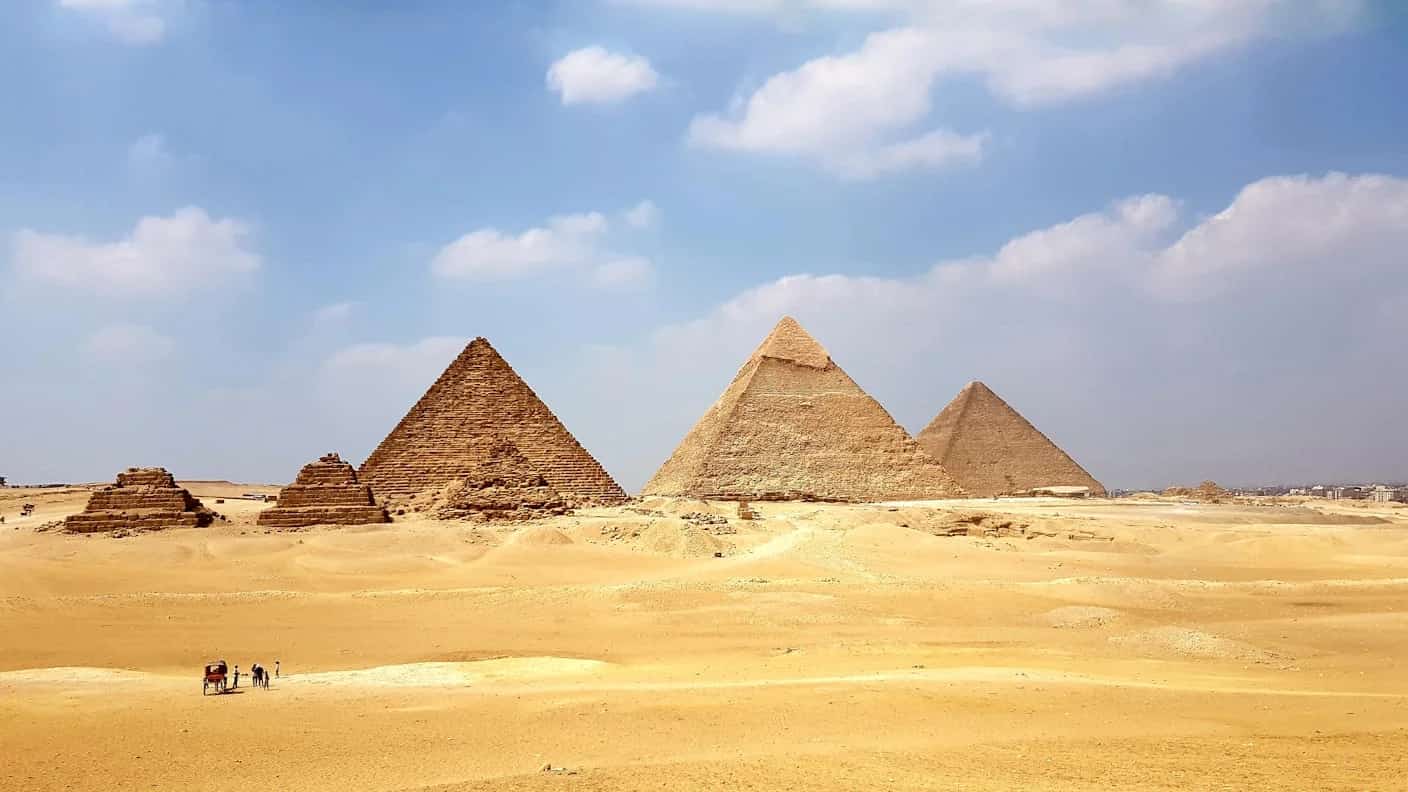
Activate an Egypt eSIM before you land, skip the passport-required local SIM process, and stay online from the Pyramids to Hurghada with reliable coverage.
 Dimitri Morvan
Looking for the best eSIM for Egypt? This guide compares the top providers, plans and prices. Buying a local SIM card in Egypt requires presenting your passport at a Vodafone, Orange, Etisalat, or WE store — a step many travelers prefer to skip after a long flight. An Egypt eSIM from Simsima installs on your phone before you leave home, activates the moment you connect to a Cairo tower, and gives you working data without paperwork, queues, or a trip into the city.
An eSIM is a digital SIM profile stored inside your phone's eSIM chip. Instead of inserting a plastic card, you download a profile from the provider and it joins a partner network the moment you arrive in Egypt. Your home SIM stays in place, so you keep your regular number for calls and two-factor authentication codes while your travel data runs on the eSIM.
Simsima sends your Egypt profile by email as a Smart Link. You tap the link on your iPhone or Android device, confirm the install prompt, and the eSIM is ready — no QR code scanning, no APN setup, no app download. If you want to check whether your phone supports eSIM before buying, use the device compatibility checker.
Most travelers install the profile a day or two before the flight, then leave it dormant. The Egypt eSIM only starts consuming data once you arrive and the phone latches onto a Vodafone Egypt, Orange Egypt, Etisalat Misr, or WE tower. There's no activation deadline you need to hit at the airport, no countdown that begins the second you tap the Smart Link.
I landed at Cairo at midnight, opened my Uber app while still on the jet bridge, and the Egypt eSIM was already connected. No queue at the airport SIM kiosk, no scanning a passport for a 30-minute registration.
Egypt's local mobile market is built around in-person registration. Vodafone Egypt, Orange Egypt, Etisalat Misr, and WE all require your passport to issue a prepaid SIM, and the kiosks at Cairo International Airport are often understaffed late at night when most long-haul flights land. An Egypt eSIM bypasses that step entirely.
According to nPerf's 2025 mobile barometer, Vodafone Egypt is the top-performing carrier in the country, leading on download speed, upload speed, and overall reliability. Orange Egypt and Etisalat Misr follow, with WE (Telecom Egypt's mobile arm) rounding out the four-operator market. Most travel eSIM providers, including Simsima, roam onto Vodafone Egypt or one of its competitors, so you benefit from the same networks Egyptian residents use day to day.
4G is the dominant standard. 5G has been deployed by Vodafone Egypt in selected districts of Cairo, Giza, and Alexandria, but the rollout is limited and most travelers will spend the trip on 4G. The good news is that Egyptian 4G is genuinely fast in dense areas — speed tests in central Cairo routinely return more than enough for video calls and HD streaming.
Coverage drops off once you head into the Western Desert, the high Sinai interior, or far stretches of the Red Sea coast between resort towns. Plan for offline maps in those areas. In Cairo, Giza, Alexandria, Hurghada, Sharm el-Sheikh, Dahab, Luxor, and Aswan, expect strong 4G suitable for streaming, video calls, and navigation.
One Egyptian quirk worth knowing: VoIP calling apps like WhatsApp voice, FaceTime audio, and Skype have historically faced restrictions on Egyptian networks. Most travelers find that WhatsApp text and media messaging works without issue, but voice and video calls over WhatsApp can be unreliable. A travel eSIM does not change this — you are still routing traffic through Egyptian carriers — so plan to use Wi-Fi calling from your hotel for important calls home.
Set up your eSIM before you fly. Egyptian Wi-Fi at the airport works, but you want the install done on a network you trust. The process below takes about three minutes.
Match the plan to your travel style. A short city break in Cairo running on hotel Wi-Fi at night needs far less data than a two-week journey where you depend on Maps, ride-hailing apps like Uber and Careem, video calls home, and uploading photos to social media.
If you're unsure, the data usage calculator gives you a per-day estimate based on how you actually use your phone. Plans come in fixed-duration windows — 7 days, 15 days, 30 days — so pick a window that covers your full trip with a small buffer. Topping up mid-trip is possible, but it's cleaner to overshoot slightly than to run out on a temple day.
Every Simsima Egypt purchase also earns 4% back in SimCoins (100 SimCoins = 1 EUR, no expiry). If you travel more than once a year, those balances build up and can cover later trips to Jordan, Turkey, or anywhere else in the catalog.
Here is a comparison of the main Egypt eSIM plans against the leading international providers. Simsima offers competitive pricing thanks to direct deals with local carriers.
On the configurations shown above, Simsima delivers the most competitive rates against the leading international providers. You also benefit from instant activation and reliable network coverage in Egypt.
Most Egypt itineraries pair Cairo and Giza with one of three add-ons: a Nile leg through Luxor and Aswan, a Red Sea beach break in Hurghada or Sharm el-Sheikh, or a desert excursion into the Western Desert oases. Each one has its own connectivity profile, and an Egypt eSIM keeps a single profile working across all of them — no need to swap providers between regions.
If your trip extends to Jordan, Morocco, or Turkey, a single Egypt plan won't cover those legs. Look at Simsima's trip packs for multi-country options that bundle several destinations under one eSIM — useful when you're flying Cairo to Petra or finishing in Istanbul.
Nile cruises typically sail south from Luxor to Aswan over three to seven nights, stopping at Edfu, Kom Ombo, and Esna. The cruise ship itself does not provide cellular signal — your data comes from shore-based Vodafone Egypt, Orange, or Etisalat Misr towers, which means coverage strengthens as you approach a town and fades on the long stretches in between. Most cruisers find they have enough signal in the evening to message family and check email, and lose it during midday sailing.
Hurghada and Sharm el-Sheikh resort zones have strong 4G across hotel strips, restaurants, and the airport corridors. Dive boats heading to Tiran Island, Ras Mohammed, or the offshore reefs lose signal once they leave the marina — your phone will pick up service again as you return to port. Pre-download dive site briefings and any logbook apps you use before boarding.
The Pyramids of Giza, the Egyptian Museum, the Karnak and Luxor temples, Abu Simbel, and the Valley of the Kings all see strong tourist traffic — and with traffic comes congested cell towers, mounted phone tour guides, and a constant need to look things up. A few habits keep your data working when you need it most.
Cash is still king in Egypt for tips, taxis, and small shops, but apps are now part of the trip: Uber, Careem, InDrive, Google Translate, Currency XE, and WhatsApp for tour operator coordination. Keeping data live during the day matters more here than in a country where credit cards work everywhere.
Physical SIM cards from Vodafone Egypt, Orange Egypt, and Etisalat Misr are sold at Cairo, Hurghada, and Sharm el-Sheikh airports as well as at carrier shops in city centers. Prices are low in local currency, but the process is slow: you queue at the kiosk, present your passport, wait for your details to be entered into the carrier's registration system, and choose a prepaid bundle from a menu that may not be in English. After a long flight, this is rarely how travelers want to spend their first 45 minutes in the country.
An eSIM removes that whole step. You arrive with data already working, your home number still receiving SMS verification codes, and a digital receipt for the plan stored in your email. The trade-off is that local SIMs sometimes include domestic calling minutes, which a data-only travel eSIM does not — but most travelers in Egypt rely on WhatsApp, hotel landlines, and tour-operator coordination via text, so the calling minutes go unused anyway.
One detail specific to Egypt: arriving travelers need to purchase a tourist visa on arrival (currently issued as a sticker at major airports) before clearing immigration. Many travelers like to have data the moment they land so they can pay the visa fee electronically, check the visa price, or message family that they've arrived safely. With a pre-installed Egypt eSIM, the phone connects to a Vodafone Egypt or Orange tower as soon as the plane reaches the gate — meaning you can handle visa logistics before you even reach the immigration counter.
Egyptian customs officers do not ask about phones, SIMs, or eSIMs at the airport. There is no registration step, no declaration form, and no fee associated with bringing a travel eSIM into the country. The whole process is invisible — your phone simply connects, and you go on with your trip.
Cairo and Luxor days often run twelve hours: temples in the morning, museums in the afternoon, dinner in a Nile-side neighborhood at night. If you're navigating, translating menus, photographing every column at Karnak, and posting to friends back home, data adds up faster than you'd think. A few light-touch habits stretch a 5 GB plan across a full ten-day itinerary.
eSIM for Africa: Coverage, Costs and What to Expect
eSIM for the Middle East: Cheap Data, Restricted Calls
No. Local Egyptian SIM cards from Vodafone, Orange, Etisalat, or WE require your passport at the point of sale, but a travel eSIM from Simsima does not. You buy online, install via Smart Link, and connect to a partner network the moment you arrive.
Travel eSIMs roam onto Egypt's main carriers — most commonly Vodafone Egypt, which nPerf ranked as the top-performing network in 2025. The exact partner depends on your provider and on the strongest signal in your location at any given moment.
Yes. The Giza Pyramids, the Egyptian Museum in Cairo, the Karnak and Luxor Temples, and Aswan all sit in well-covered 4G zones. Expect occasional weak signal at the entrance gates of remote tombs in the Valley of the Kings.
Around 5 GB covers a typical one-week trip combining Cairo with Luxor or the Red Sea — enough for Maps, messaging, ride-hailing, photo sharing, and casual social media. Heavy video calls or streaming push you toward 10 GB or an unlimited plan.
Yes, when the cruise ship is near towns and docks. Coverage is strong in Luxor, Esna, Edfu, Kom Ombo, and Aswan, and drops on the stretches between them. You'll have signal at most stops and intermittent connectivity while sailing.
Simsima offers free unlimited eSIM reinstallation. If you accidentally delete the profile from your phone, contact support through the chat widget and they'll resend the Smart Link so you can reinstall it in one tap.
Egypt eSIM plans — Browse all available Simsima eSIM plans for Egypt
Multi-country trip packs — Pair Egypt with Jordan, Morocco, Turkey, or the Gulf under a single eSIM
Best eSIM for Morocco — Headed across North Africa? Compare Morocco's mobile networks and plans

Founder of Simsima. A passionate traveler based in Barcelona, he helps travelers stay connected without breaking the bank on roaming fees.
LinkedIn Destinations
 Destinations
 Destinations