-5% on your 1st eSIM
WELCOME5
Loading...
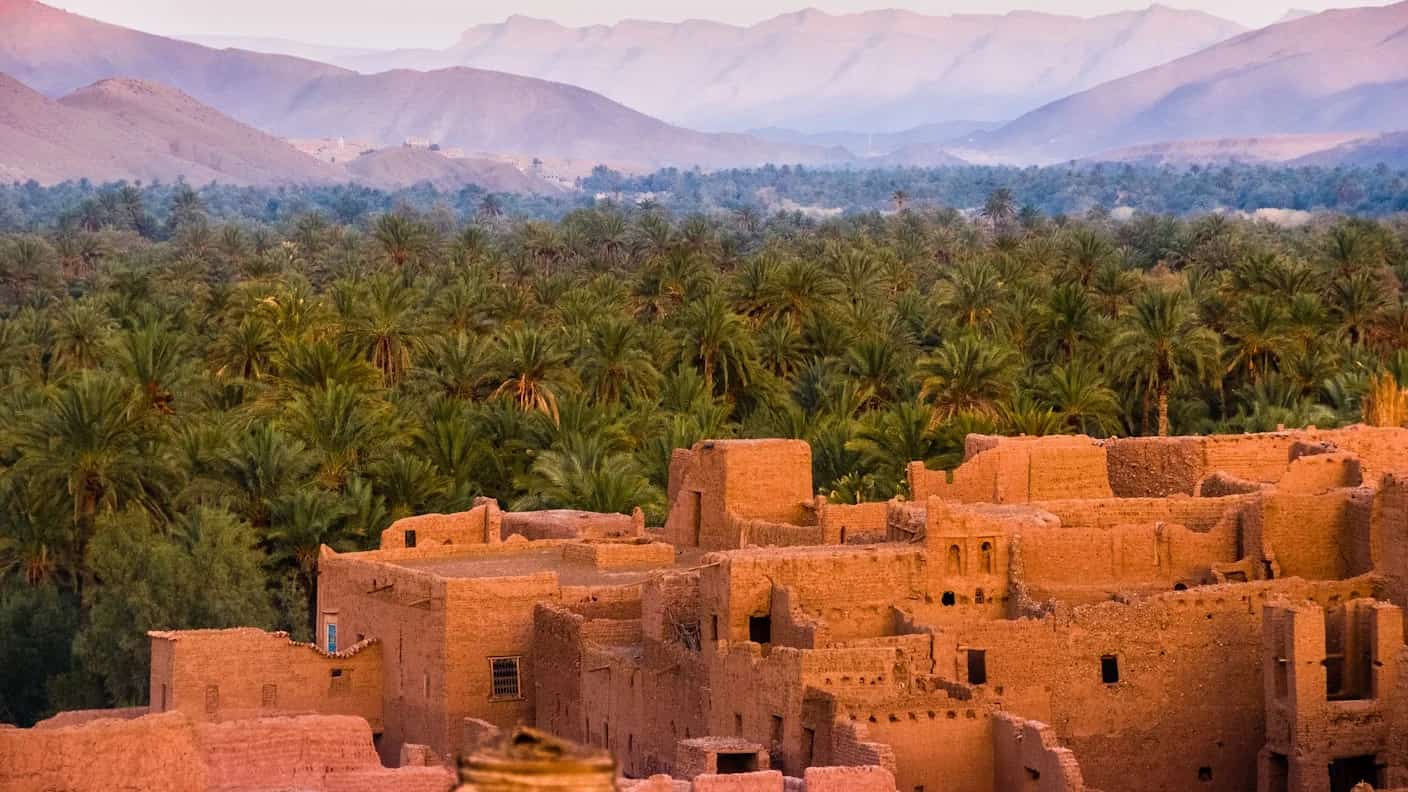
Compare the best Morocco eSIMs in 2026: real prices, Orange Morocco coverage, 5-minute activation, and practical tips to stay connected from Marrakech to the Sahara.
 Dimitri Morvan
Looking for the best eSIM for Morocco? This guide compares the top providers, plans and prices. According to nPerf's 2025 mobile barometer, Orange is the best-performing operator in Morocco for speed and coverage, ahead of Maroc Telecom and Inwi. For travelers, this changes everything: choosing a Morocco eSIM that uses this network guarantees a reliable connection from Tangier to Marrakech, all the way to the gates of the Sahara. This guide compares the real prices of several providers, details step-by-step activation, and helps you choose the right data plan size for your stay.
An eSIM (embedded SIM) is a digital SIM card integrated directly into your smartphone's chip. Unlike a physical SIM card, you don't need to buy anything in a store or insert it into a tray: the operator profile is downloaded directly to your device. For Morocco, this means you can prepare your data line from your couch before you leave, then activate it when you land in Casablanca, Marrakech, or Rabat.
Technically, a prepaid Morocco eSIM for travelers works like a secondary data line. It complements your existing plan — your French number remains active on the physical SIM or the first eSIM, and the new Moroccan eSIM handles internet access via local networks. This way, you keep your calls, texts, and two-factor authentication for banking apps uninterrupted.
The other essential point to understand: a travel eSIM purchased from an international provider like Simsima does not give you a Moroccan number. It's a pure data plan, ideal for Google Maps, WhatsApp, Instagram, emails, and streaming. If you need a local Moroccan number to rent a car or receive a text from a riad, a travel eSIM won't replace it — but for 95% of tourist uses, it's more than enough.
The traditional reflex — buying a physical SIM card at Mohammed V Airport in Casablanca or Marrakech-Menara — has long been the norm. But things have changed: since the ANRT circular requiring nominative registration of each mobile line, purchasing a Moroccan SIM for tourists now requires presenting a passport and a registration period in-store. It's doable, but it costs you 30 to 60 minutes upon arrival when you want to hop in a taxi to the medina.
A travel eSIM avoids all that. You arrive with your plan already installed, you activate mobile data as soon as you get off the plane, and Google Maps guides you to your riad without needing airport Wi-Fi. It's also more economical for short stays: a long weekend in Marrakech or a week on the Atlantic coast can be covered with a plan for a few euros, whereas classic European roaming does not apply to Morocco.
Morocco has three main mobile operators: Maroc Telecom (Itissalat Al-Maghrib), Orange Morocco, and Inwi. All three provide extensive 3G and 4G coverage across the territory and are gradually deploying 5G in major cities. Coverage is very good throughout the Tangier-Rabat-Casablanca-Marrakech-Agadir axis, as well as in tourist areas like Essaouira, Fes, Meknes, and Chefchaouen.
According to the nPerf 2025 mobile barometer, Orange Morocco wins the overall ranking thanks to the combination of high 4G speeds and good coverage on the main roads and tourist routes. Maroc Telecom remains the historic operator with the widest coverage in rural areas and the South of the country, making it a benchmark for off-the-beaten-path itineraries — Draa Valley, Erg Chebbi, Middle Atlas. Inwi offers competitive 4G speeds in urban areas.
Most travel eSIMs for Morocco use Maroc Telecom or Orange Morocco depending on the provider. 5G works on compatible eSIMs in covered areas, but 4G remains the reliable standard for travel. In deep Atlas valleys or at the desert's edge, the signal may weaken — this is normal and applies to all SIM cards, local or travel.
To position Morocco eSIM plans against the competition, here's a comparison based on current public prices from major providers (in USD, for reference). The market has become more dense: Airalo and Saily remain the best-known brands, but players like Yoho Mobile, MTX Connect, or Esim4Travel offer more aggressive pricing on certain configurations.
For the configurations compared above, Simsima offers the most competitive prices against major international market players (Airalo, Saily, Nomad, Alosim, Ubigi). In addition, there's instant activation and the use of Orange Morocco's 5G network, an operator recognized for the best national coverage by the 2025 nPerf barometer.
Installing a Morocco eSIM takes about five minutes and is done from your smartphone, with no outside assistance. The method varies slightly between iPhone and Android, but the logic remains the same: install the eSIM profile before departure, then activate it as a data line once you arrive. Here's the complete procedure.
Handy tip: install your eSIM at least 48 hours before departure. This gives you time to test the setup and contact support if anything doesn't go as planned. The line won't consume your plan until you connect to a Moroccan network — activation occurs upon the first network connection on Moroccan soil.
The right plan essentially depends on the duration of your stay and your usage. For a three-day weekend in Marrakech, a modest allowance is sufficient: Google Maps uses about 5 to 10 MB per hour of active use, WhatsApp and iMessage less than 50 MB per day, and Instagram uses around 100 to 300 MB per hour depending on video viewing. For a week of travel across the country, it's better to plan for more.
The real heavy data consumers are video streaming (YouTube in standard quality = about 700 MB per hour), FaceTime or WhatsApp video calls (200 to 400 MB for 30 minutes), and tethering to a laptop. If you're working remotely from Essaouira or Taghazout, opt for a 5 GB plan or a daily 1 GB/day plan.
Morocco isn't just Marrakech and Casablanca. A large part of the journey happens on the road — Tichka Pass to Ouarzazate, Draa and Dades Valleys, Merzouga Dunes, the Kasbah Road, hiking to the Ouzoud Waterfalls. On these routes, mobile coverage becomes spotty, and it's useful to know this before you go.
Practically speaking, you'll maintain good 4G coverage up to the stopover towns (Ouarzazate, Zagora, Erfoud, Merzouga, Imlil, Azilal). Between stops, 3G takes over on the main roads, and the signal may disappear completely in gorges, deep valleys, and certain parts of the High Atlas. In the heart of the Sahara — bivouacs in Erg Chebbi or Erg Chigaga — there's generally no network at all, and that's a good thing: it's also what you come there to find.
Beyond choosing the right plan, a few simple habits will help you get the most out of your Morocco eSIM, especially if you're traveling to multiple regions or have a tight data budget.
eSIM for the Middle East: Cheap Data, Restricted Calls
The best Morocco eSIM is one that combines a good network (Orange Morocco or Maroc Telecom depending on the provider), activation without registration, and a price suitable for your stay duration. Simsima offers Morocco plans starting from a few dollars with one-click installation via Smart Link, without requiring ID or an in-store visit.
A Morocco eSIM is a digital SIM card downloaded directly to your smartphone. You purchase the plan online, receive a Smart Link or QR code via email, install it in seconds, and the line activates automatically as soon as you land in Morocco and your phone connects to a local network.
iPhones from XS (2018) onwards are all eSIM compatible. On Android, Samsung Galaxy S20 and newer, Google Pixel phones from 3 onwards, high-end Motorola devices, and most high-end smartphones since 2020 support eSIM. Your phone must also be unlocked.
No, not for an international travel eSIM. Providers like Simsima do not ask for a passport or ID — you purchase, receive the Smart Link, and install. Only for eSIMs from local Moroccan operators (Maroc Telecom, Orange Morocco, Inwi) is nominative registration in-store mandatory.
According to the 2025 nPerf barometer, Orange Morocco wins the overall ranking combining speed and coverage. Maroc Telecom maintains an advantage in rural areas and the South (Sahara, Atlas). Travel eSIMs use one or the other depending on the provider.
For typical usage (Google Maps, WhatsApp, Instagram, emails, a few shared photos), 3 to 5 GB is sufficient for a week. If you stream video, share your connection, or work remotely, plan for 10 GB or a daily 1 GB/day plan.
Yes. Dual SIM (your main line + the Morocco eSIM) works on all modern smartphones. Your French number remains active to receive calls, texts, and two-factor authentication codes for banking, while the Morocco eSIM handles mobile data at local rates.
Morocco eSIM Plans — Browse all Simsima eSIM plans available for Morocco with instant activation via Smart Link
Multi-Country Travel Packs — Combine Morocco with other destinations in a single eSIM if your itinerary crosses borders
Best eSIM for Spain — Combining Morocco and Andalusia? Compare eSIM plans for Spain before your crossing

Founder of Simsima. A passionate traveler based in Barcelona, he helps travelers stay connected without breaking the bank on roaming fees.
LinkedIn Destinations
 Destinations
 Destinations