-5% on your 1st eSIM
WELCOME5
Loading...
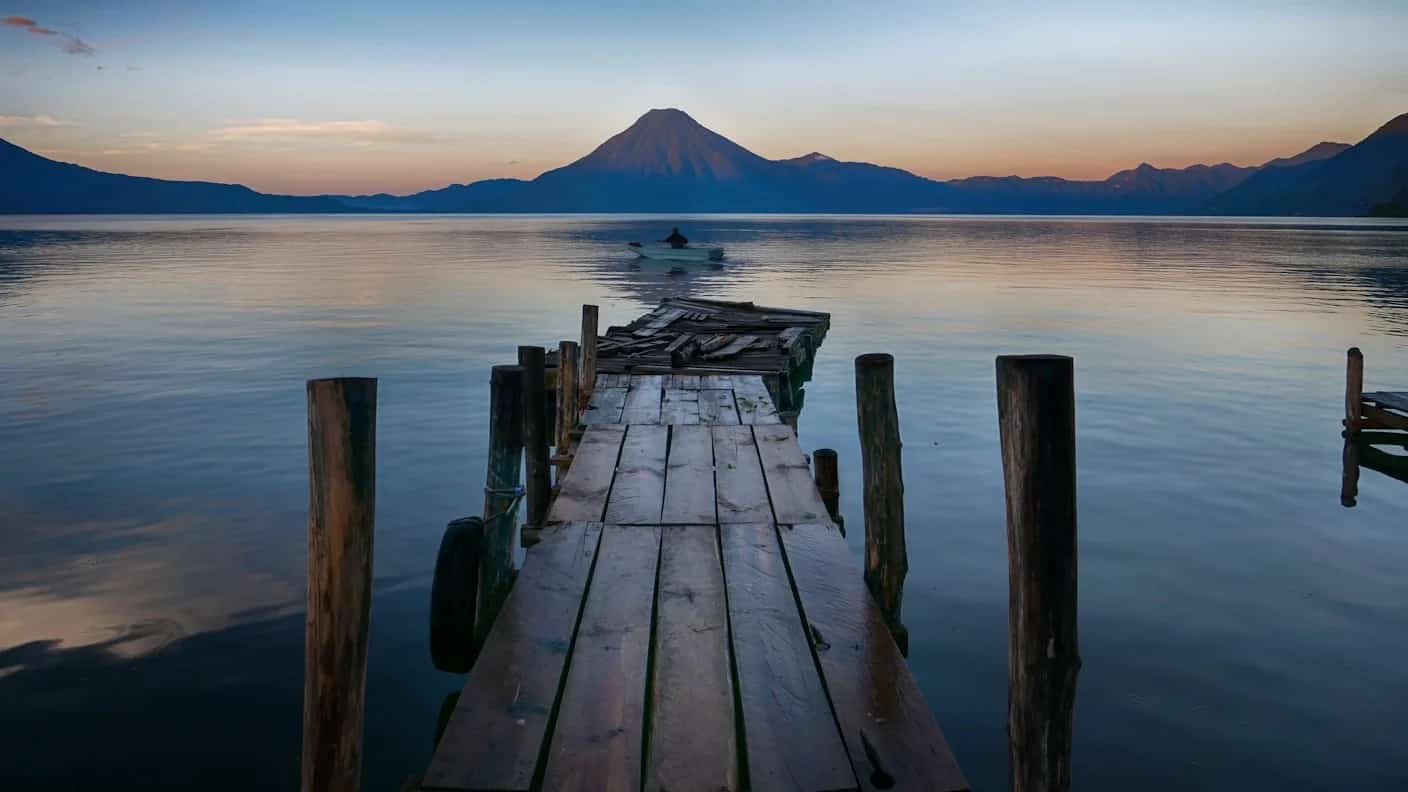
Compare the best Guatemala eSIM plans for 2026: Tigo and Claro coverage, 4G reach, install steps, and picks for Antigua, Lake Atitlan and Tikal trips.
 Dimitri Morvan
Looking for the best eSIM for Guatemala? This guide compares the top providers, plans and prices. Guatemala rewards travelers who arrive ready to move. From navigating the cobblestone grid of Antigua and hopping shuttle vans around Lake Atitlan to reading trail notes on the Acatenango volcano hike or double-checking a bus time out of Xela, your trip runs smoother when your phone just works. An eSIM is the easiest way to get there: install the profile before you fly, land at La Aurora International, and you are online the moment your phone locks onto a Guatemalan network. No SIM tray, no passport photocopy, no counter queue. This guide compares the best eSIM options for Guatemala, explains what Tigo and Claro bring to the table, and helps you choose the right plan for a week of markets and volcanoes or a longer stay learning Spanish in Antigua.
A Guatemala eSIM replaces a small pile of trip-day friction. Buying a local prepaid SIM at a Tigo or Claro shop in Guatemala City or Antigua usually means presenting your passport, waiting for the clerk to register the line under national rules, and losing your home number unless your phone runs dual-SIM. An eSIM downloads to your phone as a digital profile, sits alongside your home line in a separate slot, and switches on the moment you land at La Aurora International or cross the land border from Mexico or Belize. For most travelers, this saves an hour on arrival day and skips the SIM registration paperwork entirely.
The trade-off is that your phone must support eSIM and be carrier-unlocked. Most iPhones from the XS onward, Samsung Galaxy S20 and newer, Google Pixel 3a and newer, and recent Motorola, Xiaomi and Oppo flagships qualify. If you bought your phone directly from Apple, Samsung or Google it is almost certainly unlocked. Phones purchased through a home-country carrier may need an unlock request before the trip.
Travelers arriving in Guatemala usually weigh three connectivity options: a travel eSIM, a physical prepaid SIM from Tigo or Claro, and a rental pocket Wi-Fi device. Physical SIMs are cheap once you factor in local top-ups and they give you a Guatemalan number, but the registration step under national ID rules is a real hurdle for foreigners — expect to show your passport and wait while the clerk enters your details. Pocket Wi-Fi rentals cover multiple devices, which is handy for families, but they add a battery to keep charged, a device to carry over volcano hikes and lake crossings, and a return step at the end of the trip. eSIMs sit in the middle: the same underlying Tigo or Claro connection, no counter queue, no ID registration, and you keep your home number active for banking apps and two-factor codes. For solo travelers, couples and small groups, an eSIM is almost always the cleanest trade-off.
Guatemala's mobile market is dominated by two carriers: Tigo (owned by Millicom) and Claro (owned by America Movil). Both operate mature 4G LTE networks that cover the capital, the main tourist corridor and the department capitals, and both have begun limited 5G rollouts in Guatemala City. According to nPerf's recent barometer for Guatemala, Tigo leads on overall network quality — combining download speed, upload speed and successful connection rates — with Claro close behind and often ahead in specific rural pockets. When you buy an eSIM for Guatemala, you are usually connecting to one of these two networks under the hood, with the exact carrier depending on the provider's roaming agreement. Simsima's Guatemala plans route through the strongest available local network so you get the coverage you would expect from a top-tier domestic SIM, without the registration paperwork.
Set expectations around 4G LTE rather than 5G in Guatemala. Both Tigo and Claro have launched 5G in parts of Guatemala City and a handful of secondary sites, but nationwide 5G availability is still limited compared to North America, East Asia or Europe. In practice, 4G LTE in Antigua, Panajachel, Xela and Flores is more than fast enough for maps, messaging, video calls, streaming music and reasonable YouTube. Do not budget your trip around gigabit 5G speeds; budget around reliable 4G that reaches most of the places tourists actually go.
The right plan depends on trip length and data habits. Short trips built around Antigua and a day at Lake Atitlan usually need 3 to 5 GB. Standard 7 to 10-day itineraries — Antigua, Atitlan, Tikal and maybe Semuc Champey — comfortably fit into a 10 to 20 GB plan if you rely on hotel or cafe Wi-Fi in the evenings. Spanish school students in Antigua or Xela, digital nomads based in Panajachel, and travelers streaming a lot of video or tethering a laptop should look at higher-cap or unlimited plans for peace of mind. Simsima aggregates offers from multiple providers so you can compare capped GB packs and longer plans side by side in a single view, filter by trip length, and pick the plan that matches your budget.
A quick rule of thumb: streaming a standard-definition video uses about 700 MB per hour, HD video roughly 1.5 GB per hour, and a Zoom call around 900 MB per hour. Google Maps navigation is surprisingly light — roughly 5 MB per hour of active routing — so heavy map use is rarely what drains a plan. What burns data on a Guatemala trip is usually Instagram Reels or TikTok on long shuttle rides between Antigua, Panajachel and Lanquin, YouTube or Netflix in the evenings without hooking up to hotel Wi-Fi, and tethering a laptop for work from a Panajachel cafe. If you know you will do those things, upgrade to a larger plan rather than topping up mid-trip.
Trip length also matters. Many Guatemala travel eSIMs come in fixed durations — commonly 3, 5, 7, 10, 15 or 30 days — and validity typically starts on first connection to a Guatemalan network, not on purchase. That means you can safely install the profile a week before departure and the clock will only start when you land at La Aurora or cross a land border. If your itinerary crosses over into Belize for the reefs, Honduras for Copan or southern Mexico, a multi-country regional plan is often more economical than stacking two single-country eSIMs back to back.
Guatemala City has essentially universal 4G LTE coverage from both Tigo and Claro, including Zona 1's historic centre, Zona 10 (Zona Viva) and around La Aurora International. Antigua Guatemala, about an hour west, is fully covered on both networks — expect strong signal across the central square, along 5a Avenida and up to Cerro de la Cruz. Quetzaltenango (Xela), the country's second city and a popular Spanish-school base, has solid coverage across the centre and the surrounding valley. In the Peten, Flores and Santa Elena — the launch pad for Tikal — have reliable 4G, and coverage stretches partway along the road to the Tikal National Park entrance before thinning inside the jungle itself.
Lake Atitlan is more nuanced. Panajachel has excellent LTE from both carriers, and the lake boats stay in signal range along the main crossings. San Pedro La Laguna, San Marcos and Santiago Atitlan are well covered in the village cores, dropping to slower service as you climb the hillsides or hike toward the Indian Nose viewpoint at dawn. Semuc Champey and Lanquin, tucked into the karst jungle of Alta Verapaz, are one of the country's real coverage gaps: expect intermittent signal in Lanquin, very little at the pools themselves, and long stretches with no data on the road in from Coban. Chichicastenango is well covered on Thursday and Sunday market days.
For volcano hikes — Acatenango and Fuego from Antigua, Pacaya from the south, Santa Maria and Santiaguito from Xela, San Pedro from Lake Atitlan — signal is usually solid in the town of departure, holds along the lower forest sections, and weakens or drops entirely near the summits. That is normal for high mountain terrain anywhere in the world; download offline maps and any weather forecasts before you leave the trailhead.
Here is a comparison of the main Guatemala eSIM plans against the leading international providers. Simsima offers competitive pricing thanks to direct deals with local carriers.
On the configurations shown above, Simsima delivers the most competitive rates against the leading international providers. You also benefit from instant activation and reliable network coverage in Guatemala.
Installation takes about three minutes and is best done at home on your regular Wi-Fi, before you fly. After purchase, Simsima sends a QR code and a set of manual activation credentials by email. On iPhone, open Settings, tap Cellular (or Mobile Data), then Add Cellular Plan or Add eSIM, and scan the QR code with the phone's camera. On Android, the path is similar: Settings, Connections or Network, SIM manager, Add eSIM. Once the profile downloads, label it something like "Guatemala" so you can find it easily, and leave it turned off until you land.
If your line shows "No Service" after landing at La Aurora, run through this checklist before contacting support. First, confirm the Guatemala line is toggled ON in your cellular settings and set as the data line. Second, enable data roaming for that specific line — this is required on most travel eSIMs even though you are physically in the destination country. Third, restart the phone: a reboot forces a fresh network scan and resolves most first-connection failures. Fourth, in Settings, manually select a network operator (Tigo or Claro) instead of Automatic. If none of that works, uninstall the profile and reinstall it using the manual credentials from your email; almost every activation issue clears at that stage.
A few apps turn a solid data plan into a genuinely better trip. Google Maps is the default for navigation and finding food, though bus and shuttle timings are often better confirmed in person at your hostel or with a local tour operator. Uber operates in Guatemala City and, to a lesser extent, Antigua; elsewhere you will use registered taxis or booked shuttle vans. For Spanish practice, Google Translate helps with menus and market conversations, and offline dictionaries are worth downloading before you head into the Highlands. Cash in Guatemalan quetzales still dominates outside the capital and Antigua, so a currency conversion app that works offline is genuinely useful.
Guatemala rewards travelers who stay informed. Most visitors spend their trip on a well-trodden circuit — Antigua, Lake Atitlan, Semuc Champey, Tikal — and move safely with normal precautions. That said, conditions can shift by neighborhood in Guatemala City, by road segment on long-distance drives, and by protest or landslide during rainy season. An active local data plan lets you check embassy advisories, message your accommodation about pickup logistics, and stay in touch with a Spanish school or trekking company in real time.
The country is also increasingly on the digital nomad map. Antigua's cafe scene — around 5a Avenida and the arch — has adapted to remote workers, and Panajachel on Lake Atitlan has a growing pocket of long-stay travelers combining coworking with Spanish lessons and lake life. If you are scoping the country before a longer stay, a bigger data plan removes the friction of hunting for reliable Wi-Fi during a working week.
Guatemala is one of the world's top destinations for immersive Spanish study, thanks to a clear accent, low costs and a dense concentration of accredited schools in Antigua, Xela and around Lake Atitlan (San Pedro La Laguna is the main hub). Programs typically pair four to five hours of one-on-one classes per weekday with a homestay, so students need data for two things at once: coordinating with the school over WhatsApp and keeping normal life going at home. A longer-duration eSIM plan matches that rhythm better than a short travel pack, and skipping the local SIM registration step is helpful when you are already juggling homestay paperwork and enrollment forms.
Many travelers stitch Guatemala into a longer Central American trip: north into Chiapas and the Yucatan, east into Belize for reef diving and Caye Caulker, or south into Honduras for Copan's Maya ruins, El Salvador's surf coast and beyond to Nicaragua and Costa Rica. Your Guatemala-only eSIM will stop working as soon as you cross the border, so plan the handover in advance. For itineraries that include two or more Central American countries, a regional eSIM covering the whole area in one profile is usually cheaper and simpler than stacking single-country plans back to back, and it means you only configure your dual-line phone setup once for the whole trip. Simsima's regional plans and single-country plans sit side by side in the same listing, so you can compare a 15-day Guatemala-only pack against a 15-day multi-country pack at a glance.
eSIM for Latin America: One Plan From Mexico to Patagonia
Most Guatemala eSIMs route through one of the two national carriers — Tigo or Claro. Tigo is ranked first for overall network quality in nPerf's recent Guatemala barometer, and Simsima's Guatemala plans use the strongest available local network so you get equivalent coverage to a domestic SIM without the ID registration step.
Yes, your phone must be carrier-unlocked. Devices bought directly from Apple, Samsung or Google are typically unlocked by default. If you bought your phone through a home-country carrier, request an unlock before your trip — most carriers process this within a few days.
iPhone XS and later, Samsung Galaxy S20 and later, Google Pixel 3a and later, and many recent Motorola, Xiaomi and Oppo models all support eSIM. Check your phone's cellular settings for an "Add eSIM" or "Add Cellular Plan" option to confirm compatibility.
For a standard 7 to 10-day trip covering Antigua, Lake Atitlan and maybe Tikal, with maps, messaging, social media and the occasional video call, 10 GB is comfortable if you use hotel or hostel Wi-Fi in the evenings. If you stream a lot of video on shuttle rides or work remotely from a Panajachel cafe, plan for 20 GB or a larger plan.
Most travel eSIMs for Guatemala are data-only, which is enough for WhatsApp, iMessage and Signal, plus video calls over Wi-Fi or data. If you specifically need a local Guatemalan number for SMS-based verification, that usually requires a physical Tigo or Claro SIM with passport-based registration — something eSIM travel plans do not currently replicate.
Yes for the main tourist points: Panajachel, San Pedro La Laguna, San Marcos, Santiago Atitlan and the lake boats have solid 4G. Around Tikal, expect reliable coverage in Flores and Santa Elena, thinning as you head into the park itself. Download offline maps for the jungle sections.
Install the eSIM profile at home on Wi-Fi before you fly, but leave the line switched OFF. Activation and validity typically start on first connection to a Guatemalan network, so wait until you land at La Aurora (or cross the land border from Mexico, Belize or Honduras), then enable the line and turn on data roaming for it.
5G rollout is still limited. Both Tigo and Claro have launched 5G in parts of Guatemala City and a handful of other sites, but nationwide availability is thin. In practice you will spend most of your trip on 4G LTE, which is more than fast enough for maps, messaging, streaming and video calls across the main tourist corridor.
Get a Central America multi-country plan and save on your mobile data.
Guatemala eSIM plans — Browse and compare all available Guatemala eSIM plans on Simsima
eSIM-supported devices — Check whether your phone supports eSIM before you buy a Guatemala plan
How Simsima works — Learn how to buy, install and activate an eSIM in a few minutes

Founder of Simsima. A passionate traveler based in Barcelona, he helps travelers stay connected without breaking the bank on roaming fees.
LinkedIn Destinations
 Destinations
 Destinations