-5% on your 1st eSIMuntil October 31
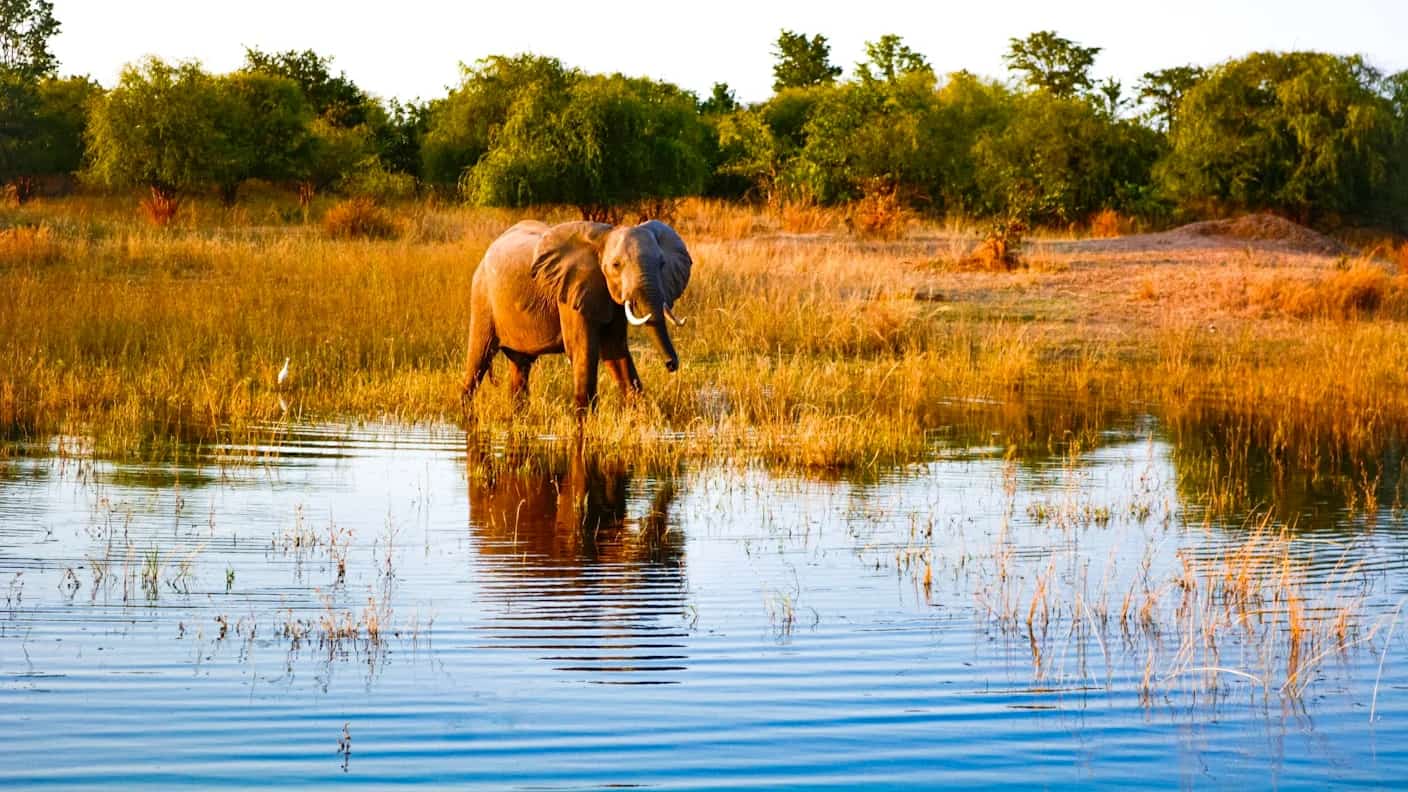
Econet is by far Zimbabwe's largest mobile operator and its 4G covers Harare, Bulawayo and Victoria Falls town, but Hwange and Mana Pools are largely offline and data costs more here than in neighboring markets. Zimbabwe is a highlight of southern Africa, from the thundering Victoria Falls to the elephants of Hwange, the balancing rocks of Matobo and the capital Harare. Staying connected between transfers and game drives runs on good data, and an eSIM is a clean way to get it, avoiding a local SIM purchase. Install before you fly, land at Victoria Falls or Harare, and your phone connects when it finds a local network.
Key takeaways
- Zimbabwe's largest network is Econet, followed by NetOne and Telecel, all running 4G in the covered areas
- Coverage is good in Harare, Bulawayo and Victoria Falls town, but game parks and remote areas go offline
- Simsima offers a Zimbabwe data plan on the local networks, and pricing here runs higher than in many markets
- Coverage is reliable in the main towns and around Victoria Falls; Hwange, Mana Pools and remote parks are largely offline
- A travel eSIM means you arrive connected without arranging a local SIM
Econet, NetOne and Telecel: who covers what
Zimbabwe has three mobile operators. Econet Wireless is by far the largest, with the widest 4G footprint in Harare, Bulawayo, Victoria Falls town and along the main highways. NetOne, the state-owned operator, and Telecel are smaller, with reach concentrated in towns. A travel eSIM connects to one of them, often Econet, and the network for each Simsima plan is listed in its details.
Outside towns and the main roads, the choice of network matters less than the landscape: national parks and remote areas are largely offline on all three.
Econet's own eSIM, and data priced in dollars or ZiG
Econet sells its own eSIM: according to its eSIM page, you check that your phone shows an EID, scan the QR code to download the profile, then complete a registration step to activate the line. That gets you a Zimbabwean number and access to EcoCash, the mobile money service most Zimbabweans use. Econet sells data in two currencies, with separate US dollar data offers and offers in ZiG, the local currency.
A local line means visiting an Econet shop or completing registration on arrival, and paying in dollars or ZiG. A travel eSIM is installed at home, connects when you land at Victoria Falls or Harare, and carries data only. The table below shows the travel eSIM options, which are fewer for Zimbabwe than for its neighbors.
Victoria Falls, Hwange and Mana Pools: plan around lodge Wi-Fi
Victoria Falls town has good 4G, including around the rainforest entrance to the falls and along Park Way, and Harare and Bulawayo are well covered. Along the main highways, signal follows the towns. Inside the rainforest paths at the falls, the spray and the gorge can weaken reception.
Hwange National Park, Mana Pools, Matusadona on Lake Kariba, Gonarezhou and much of the Eastern Highlands around Nyanga and Chimanimani have little or no coverage beyond the main camps, which usually offer Wi-Fi in the lodge area. Download offline maps, save your transfer times and lodge contacts, and send your itinerary to someone at home before leaving town.
Before you fly: eVisa and offline preparation
Zimbabwe runs an official eVisa platform where visitors can apply for a visa online before traveling and track the application. Check whether your nationality needs one, and do the application at home, on Wi-Fi, at the same time as you install your eSIM.
Print or save the approval, your lodge bookings and flight details offline, as you may be asked for them at the airport in Victoria Falls or Harare before you have a signal.
Victoria Falls and Hwange in a week: data you'll use
A typical week spends three nights in Victoria Falls for the falls, a sunset cruise on the Zambezi and perhaps a day trip to Chobe, then three nights on safari in Hwange. Data use is concentrated in town: maps, WhatsApp with tour operators and drivers, photo uploads and video calls home. In Hwange, you are on lodge Wi-Fi or offline.
Two to three GB is usually enough for that week, so a small capped plan from the table fits. If you work remotely from Harare or stay longer, size up.
The downsides of an eSIM in Zimbabwe
- No Zimbabwean number and no access to EcoCash, which many small businesses use for payments
- Fewer travel eSIM providers cover Zimbabwe, so there is less choice of data and duration
- Sharing data with a laptop or a second phone in Victoria Falls depends on the plan's hotspot terms
- National parks and remote areas are offline on every network
Crossing to Zambia and Botswana from Victoria Falls
Victoria Falls sits on two borders. The Victoria Falls Bridge leads to Livingstone in Zambia, and Kasane in Botswana, the gateway to Chobe, is about an hour's drive away. A Zimbabwe plan stops working at the border, so for a trip that includes Zambia or Botswana, add a plan for each country or compare a regional plan that covers all three.
Best eSIM plans for Zimbabwe
Zimbabwe is a smaller, higher-cost data market than some of its neighbors, so options are more limited and prices run higher. Here is Simsima's Zimbabwe plan pricing:
- SimsimaBest price1 GB · 7 days$8.33
- Gigsky1 GB · 7 days$11.49
- Saily1 GB · 7 days$11.99
- Nomad1 GB · 7 days$12.18
- SimsimaBest price3 GB · 30 days$17.80
- Nomad3 GB · 30 days$17.80
- SimsimaBest price5 GB · 30 days$30.59
- Gigsky5 GB · 30 days$40.99
- Airalo5 GB · 30 days$44.63
- SimsimaBest price10 GB · 30 days$51.99
- Gigsky10 GB · 30 days$51.99
Prices last updated: October 19, 2026
Because Zimbabwe's data market is pricier and less competitive than neighboring South Africa, plan sizes are more modest here. Pick the allowance that matches your trip and lean on lodge and hotel Wi-Fi, which most safari camps and town hotels provide, for bigger downloads.
How to install your Zimbabwe eSIM
Installation takes a couple of minutes and is best done at home on Wi-Fi before you fly. The plan activates on its own when it connects to a local network on arrival, so the validity window does not start early.
- Buy your Zimbabwe plan on Simsima and open the confirmation with your QR code
- On your phone, go to Settings, then Mobile or Cellular Data, and choose Add eSIM
- Scan the QR code or use the one-tap install link, then label the plan Zimbabwe
- Keep your home line as default for calls and texts, and set the eSIM for data
- Turn on data roaming for the eSIM line only, then land in Zimbabwe and go online
Frequently Asked Questions
The plan whose data and duration fit your trip, ideally on Econet, which has the widest coverage. Each Simsima plan lists its network in the details, and the table above compares the providers that cover Zimbabwe.
Yes. Travel eSIMs work in Zimbabwe, and Econet also sells its own eSIM, which you register to activate. Get your phone unlocked and check it supports eSIM before flying to Victoria Falls
Econet's eSIM page does not list a price; it explains the download and registration steps. Ask at an Econet shop or check its channels for the current fee and data offers.
Local operators sell data in US dollars and in ZiG; Econet, for example, publishes separate offers in each currency. Travel eSIM plans for Zimbabwe are listed in the table above.
No. A Zimbabwe plan only works in Zimbabwe. For Livingstone or Chobe, add a plan for that country or choose a regional plan that includes it.
It carries data only, so you get no Zimbabwean number and no EcoCash. Fewer providers cover Zimbabwe, hotspot use depends on the plan, and national parks are offline whatever SIM you use.
Traveling beyond Zimbabwe?
Get a multi-country plan and save on your mobile data.


Zimbabwe eSIM plans — Browse and compare all available Zimbabwe eSIM plans on Simsima
eSIM-supported devices — Check whether your phone supports eSIM before you buy a Zimbabwe plan
How Simsima works — Learn how to buy and install an eSIM in a few minutes, and how it activates on arrival
#Zimbabwe#Africa#Travel#eSIM

Dimitri MorvanFounder
Founder of Simsima. A passionate traveler based in Barcelona, he helps travelers stay connected without breaking the bank on roaming fees.
LinkedIn