-5% on your order in the app

Your flight tabs are open, your hotel shortlist is growing, and you're deciding whether Bangkok or the beach comes first. Before you book another transfer, sort out what happens when you land at Suvarnabhumi: your phone needs data, your ride app needs a working account, and your hotel confirmation needs to be accessible without Wi-Fi.
The most useful Thailand travel tips are tasks you can finish at home. Check your paperwork weeks ahead, prepare payments and transport apps in the days before departure, and use the flight to review your arrival details rather than discover what's missing.
Start with these passport and visa preparation tips, then build an offline travel folder containing your bookings, insurance details, and arrival documents. You don't need to plan every meal or sightseeing stop. You do need a reliable way to reach your accommodation, pay for it, and contact someone if your original plan falls through.
1. Confirm Entry Requirements and Digital Arrival Paperwork
Weeks before departure, check the rules for your passport and itinerary, not the rules a friend used on a previous trip. Visa eligibility depends on nationality, purpose, length of stay, and how you enter Thailand, as the UK government's Thailand entry guidance explains.
Check Thai Immigration's official website for current visa information and whether the Thailand Digital Arrival Card, or TDAC, applies to your arrival. Follow the submission window shown there rather than an old screenshot or a travel forum post.
A tourist exemption also shouldn't be treated as permission for every activity. If your itinerary includes work, study, meetings, or an extended stay, verify the appropriate authorization before booking nonrefundable arrangements.
Build an offline arrival folder
- Passport readiness: Check validity and blank-page requirements against current official guidance.
- Travel evidence: Save your onward or return booking and accommodation confirmation.
- Arrival paperwork: Download confirmation of any required submission.
- Name matching: Make sure flight and accommodation records use the name shown in your passport.
Say you're flying into Bangkok and continuing to an island. Save the Bangkok accommodation details separately from the later resort booking so you can quickly show where you'll stay first.
Keep a secure backup outside your phone, too. A phone with a flat battery isn't a useful document folder, and airport Wi-Fi shouldn't be your only way to retrieve an essential confirmation.
2. Plan a Payment Setup That Works Cash-Light and Card-Backup
Days before departure, prepare for both digital payments and cash. Hotels and larger urban businesses may accept cards, while a street-food stall, small ferry operator, or market vendor may need baht.
The Bank of Thailand and Visa payment update describes extensive card and QR acceptance alongside gaps among smaller merchants and rural businesses. A QR code on the counter doesn't necessarily mean your overseas banking app can pay it.
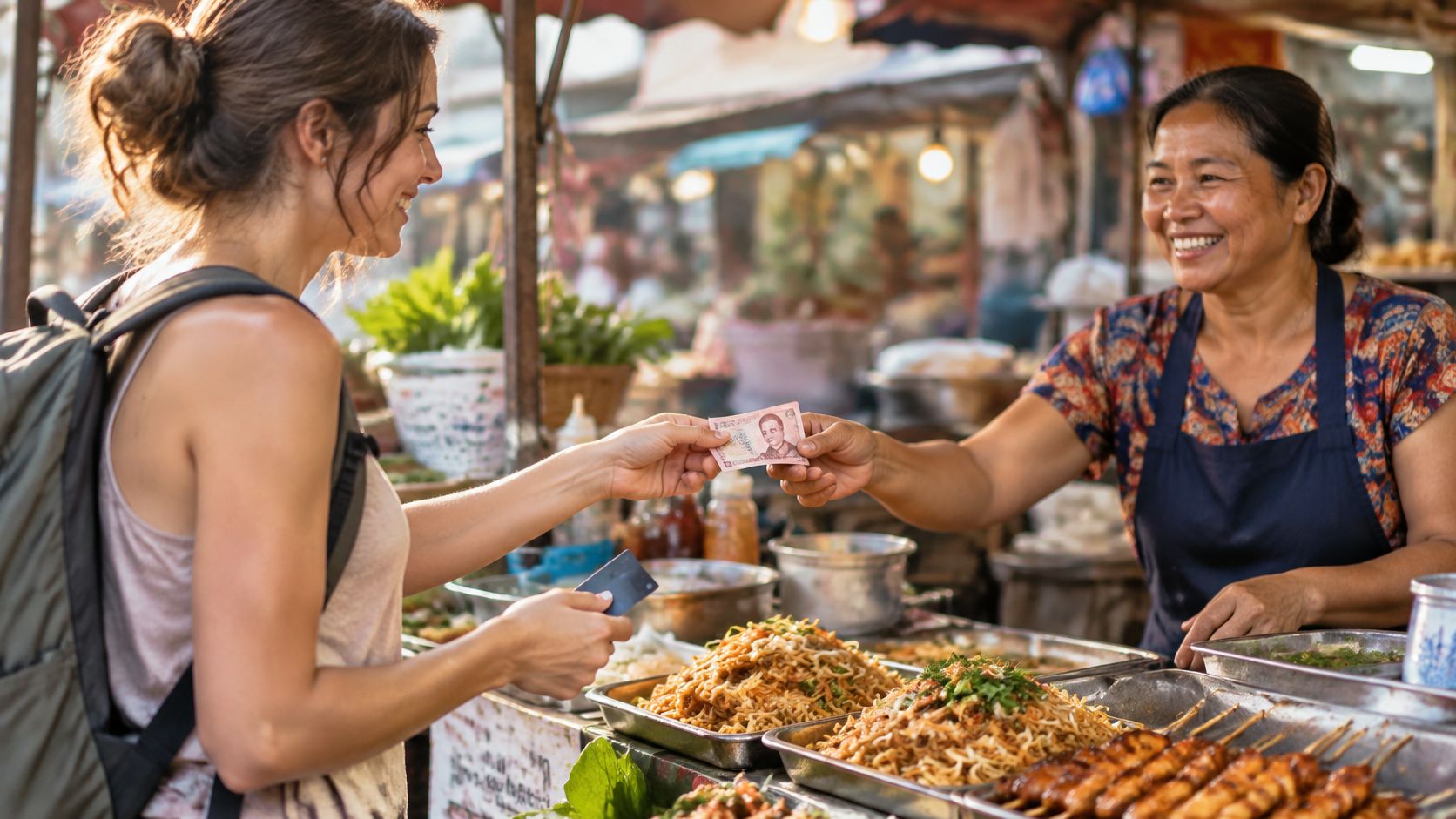
Prepare a primary card, a backup stored separately, and access to local cash. Check your issuer's foreign-transaction policy and whether it wants travel notification before you leave.
- Small notes: Keep modest denominations available for food, local transport, and small purchases.
- ATM choice: Prefer a machine attached to a bank branch when practical.
- Currency selection: Choose Thai baht rather than accepting a terminal's home-currency conversion.
- Account access: Make sure banking authentication works while you're abroad.
For example, paying for your hotel by card doesn't solve dinner if the nearby market accepts only cash. Withdraw before you're hungry, tired, and dependent on whichever ATM happens to be closest.
Practical rule: Cash-light works. Cash-free leaves you with fewer options when a card, app, or merchant terminal fails.
3. Set Up Ride-Hailing Apps Before You Land
An airport pickup is a poor time to discover that your ride app wants a verification code sent to a number you've switched off. Install Grab, create your account, and add your payment method while you still have dependable Wi-Fi at home.
Check which services are available at your destination rather than assuming city coverage extends to every island or rural accommodation. Ride apps can make pickup details and trip records easier to manage, but they don't eliminate traffic or confusing airport meeting points.
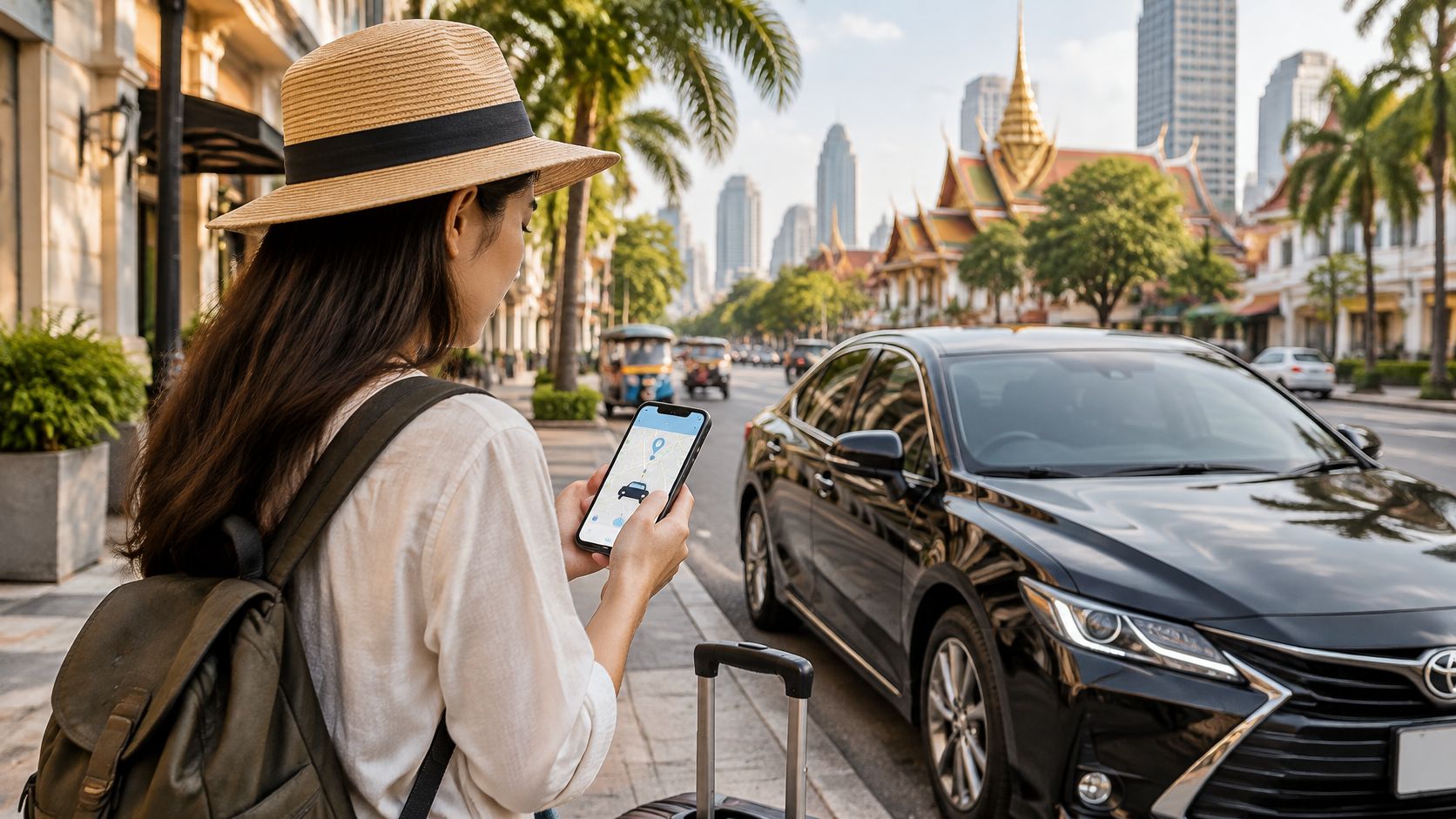
A data-only eSIM cannot receive ordinary SMS verification codes. Keep access to the number registered with the app, and confirm your home carrier's roaming arrangements before departure.
Save your hotel's map pin and its address in both English and Thai. The Royal Thai Embassy in Nairobi's entry and arrival guidance is also useful for checking official preparation requirements before traveling.
Rehearse your arrival
Open the app, locate your hotel, and confirm that your account and payment method are ready. Review how much data GPS uses, then download offline maps as a backup.
At pickup, match the plate and vehicle to the app before getting in. For an evening arrival, arrange discreet check-ins during late-night rides with someone you trust, and keep an official airport or hotel-arranged transfer as your fallback.
4. Learn Temple (Wat) Etiquette Before Your First Visit
Pack a temple-ready outfit before you pack another beach outfit. Covered shoulders and knees are the sensible starting point, but individual temples can have stricter clothing and access requirements.
Choose lightweight trousers or a longer skirt and a shirt that properly covers your shoulders. A scarf or sarong is useful backup, not a guarantee that every site will accept your outfit.
Use this video as an introduction, then follow the signs and staff instructions at the temple you visit.
Temples are places of worship, not just photo locations. Speak softly, remove shoes where required, and check whether photography is permitted before lifting your phone.
- Feet: Don't point your feet toward Buddha images, sacred objects, or people.
- Religious objects: Never climb statues or structures, or touch objects for a photo.
- Monks: Avoid physical contact and leave space rather than assuming close seating or a posed photograph is welcome.
- Visitors and worshippers: Don't block prayers, entrances, or walkways while taking pictures.
Say you're planning a temple visit followed by lunch and shopping. Wear your respectful clothing from the start rather than relying on finding a cover-up at the entrance.
Treat the posted rules as the minimum, and take your cue from worshippers rather than other tourists.
Check the temple's own visitor information before leaving your accommodation. Comfortable shoes that are easy to remove make repeated entries less awkward, while a bag lets you put away sunglasses, hats, and other loose items without juggling them inside.
5. Understand Thai Royal and Cultural Norms
Before departure, read your government's current advice on local laws and customs. Thailand protects the monarchy through strict laws, and insulting the royal family can have serious legal consequences.
Don't post, share, or repeat insulting material, even as a joke. Social media isn't separate from your conduct while traveling, and a casual comment isn't worth a legal problem.
Royal portraits and symbols deserve respectful treatment in public settings. If you encounter a royal anthem, stand respectfully and follow the conduct expected in that setting.
Keep everyday behavior respectful
- Currency: Don't step on or deface banknotes bearing royal images.
- Disagreements: Keep your voice controlled instead of escalating a misunderstanding.
- Public settings: Observe local behavior before acting, particularly at ceremonies and religious sites.
- Online activity: Avoid sharing provocative material about the monarchy.
For example, if a banknote blows away, retrieve it with your hand rather than stamping on it with your shoe. If an anthem begins while you're in a public venue, pause what you're doing and respond respectfully.
You don't need to memorize every cultural convention to be a considerate visitor. You do need to notice when a setting calls for restraint and avoid treating unfamiliar customs as entertainment.
If you're unsure whether a gesture, photograph, or comment is appropriate, leave it out. Asking a staff member a quiet question is more useful than copying another traveler who may be equally unfamiliar with the situation.
6. Prepare Basic Health Measures and Travel Insurance
Weeks before flying, review your itinerary with a clinician or travel-health service. Bring details of where you'll go and what you'll do, including island stays, hiking, diving, or remote travel.
Pack prescription medicines in their original packaging with supporting documents. Check restrictions for controlled medicines before departure; carrying a prescription doesn't automatically mean a medicine is permitted.
The Royal Thai Embassy in Fukuoka's health and entry guidance explains that yellow-fever documentation can depend on where you've traveled or transited. Check your full route, not just the country printed on your passport.
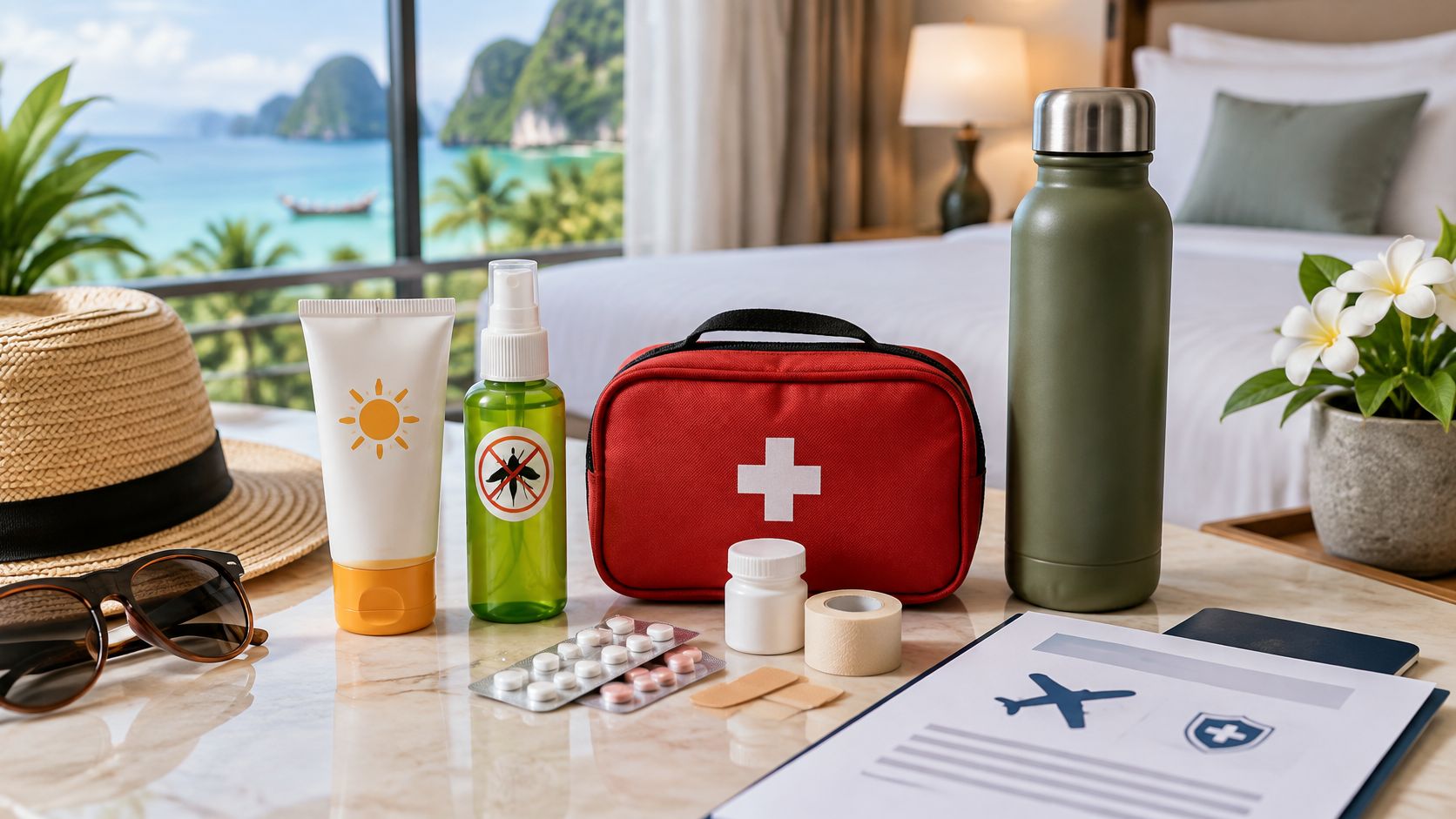
Read insurance exclusions before buying. Look specifically at medical treatment, evacuation, preexisting conditions, and activities you might book after arrival.
- Motorbikes: Check licensing, helmet, and activity conditions instead of assuming rental availability means insurance coverage.
- Heat: Plan water breaks, shade, and slower sightseeing during uncomfortable conditions.
- Mosquitoes: Pack repellent and clothing that provides coverage, with this guide to skincare and mosquito protection for Thailand as a packing reference.
- Medication: Keep essential supplies in your carry-on rather than checked luggage.
For a Bangkok-and-island itinerary, consider how you'd obtain care away from a major city. Save your insurer's assistance details offline and understand whether you must contact it before arranging treatment.
The Royal Thai Embassy in Washington's health guidance provides another official checkpoint for medicine and vaccination-document preparation.
7. Save Emergency Numbers and Register With Your Embassy
Your emergency plan should work when you're stressed, offline, or handing your phone to someone helping you. Days before departure, save contacts in an easy-to-find note, not only in an email thread.
Include Thailand's emergency contacts: 191 for police, 1669 for medical emergencies, and 1155 for Tourist Police. Confirm them against current official travel guidance before flying.
Add your embassy or consulate's contact details, your insurer's assistance contact, and your accommodation's telephone number. Keep a paper copy somewhere separate from your phone.
Make the note useful to someone else
- Location: Include your hotel's full address in Thai and English.
- Medical essentials: Record relevant allergies and essential medication information.
- Trusted contact: Add someone at home who knows your itinerary.
- Insurance: Save the policy reference and assistance procedure.
If your government offers traveler registration or an alert service, enroll before departure. Check what the service provides rather than assuming registration guarantees evacuation or immediate consular assistance.
Say you become unwell while staying somewhere unfamiliar. A saved hotel address lets another person describe your location without trying to interpret a booking platform's abbreviated listing.
Offline backup: Store emergency details where you can open them without mobile data, and make sure your travel companion knows where they are.
Don't make every critical account depend on the same device. A lost phone shouldn't also mean losing your insurance reference, accommodation address, and every route to contacting home.
8. Check Device Compatibility and Set Up a Travel eSIM Before You Leave
Before buying data, confirm that your phone supports eSIM and is unlocked where necessary. Check the exact device model and region with the manufacturer, and ask your current carrier about unlocking and home-line roaming.
At the point of choosing data, review the Simsima Thailand eSIM page. Our travel eSIMs are data-only, with no local phone number, ordinary calls, or SMS; the networks used are those listed in each plan's details, not a promised carrier partnership.
Install over Wi-Fi before departure. Smart Link supports one-tap installation on iPhone running iOS 17.4 or later and Android, with a QR code available otherwise.
Install at home, connect in Thailand
Leave the travel line off until arrival, then follow its setup instructions. It activates automatically when it first connects to a local network at the destination, so installing it at home isn't the same as activation.
- Home line: Keep it available if you need calls or verification texts, subject to your carrier's terms.
- Data settings: Select the travel line for mobile data and disable automatic switching to the home line.
- Backups: Save setup instructions and your confirmation offline.
- Account access: Keep login and recovery details somewhere secure.
For example, you can install at home, land in Bangkok, enable the travel line, and open your hotel map once it connects. Don't try to prove destination connectivity before you've reached Thailand.
For remote work, test tethering and your actual connection at the accommodation. The Ookla Thailand connectivity report distinguishes network performance from the coverage you can expect at a particular beach, mountain road, or island.
9. Know When a Local SIM, Wi-Fi, or Carrier Roaming Is the Better Choice
A travel eSIM isn't automatically the right choice. Choose around the tasks you need to complete, especially whether you need a Thai number or just internet access.
A local SIM makes sense when local calls, SMS, or a Thai contact number matter. Confirm documentation requirements and purchase conditions through the operator's official channels before deciding where to buy.
Carrier roaming can suit a short trip when your existing allowance covers Thailand and you value keeping your familiar setup. Check the included destination, allowance, and activation conditions rather than assuming an international feature covers every country.
- Local SIM: Useful for local-number access, subject to each service's verification requirements.
- Wi-Fi: Practical for limited use near your accommodation, but not a dependable street-navigation plan.
- Carrier roaming: Convenient when the terms fit your trip.
- Travel data: Useful when you want a separate connection for maps, messaging, and bookings.
For a city break spent mostly around a hotel, Wi-Fi plus offline maps may be enough. For a route involving ferries, changing accommodation, and road transfers, relying only on cafés means you'll lose access exactly when plans change.
The eSIM versus SIM card guide can help you weigh setup convenience against local-number needs. On public Wi-Fi, avoid sensitive logins when possible and use trusted security tools.
Download translation packs and maps before leaving a reliable connection. Regardless of the option you choose, keep reservation details accessible offline and don't assume any network will work throughout a remote transfer.
10. Pack for Heat, Rain, and Local Conditions
In the final days before flying, check forecasts for your actual destinations. Bangkok, northern provinces, and different island coasts shouldn't be treated as one weather forecast.
Use the Thai Meteorological Department's current forecasts when reviewing your route. Recheck before regional transfers, particularly when your plans depend on boats or exposed outdoor activities.
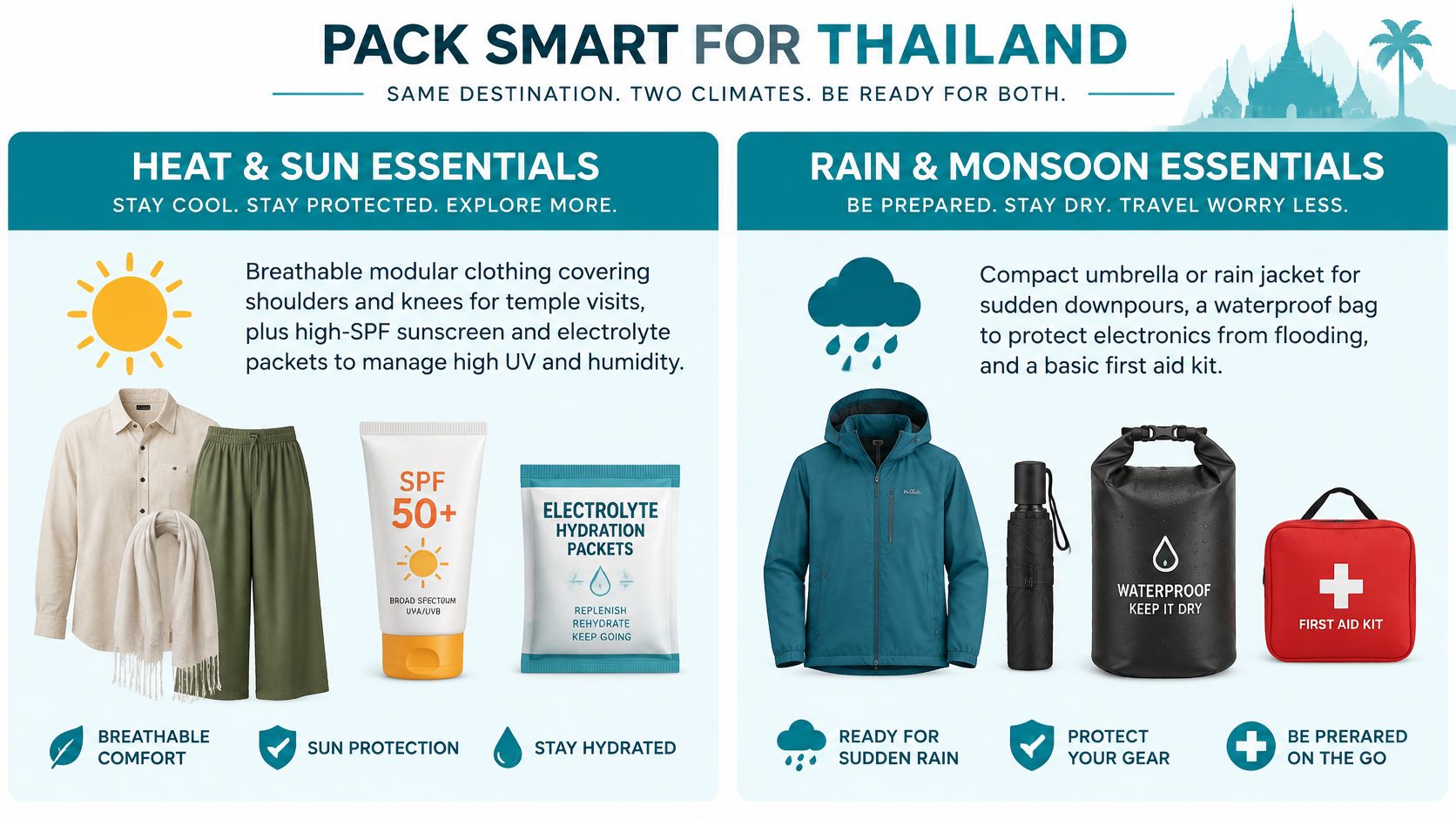
Pack breathable clothing that can also cover shoulders and knees. Add a compact umbrella or rain jacket, sunscreen, repellent, electrolyte packets, and a basic first-aid kit.
Keep arrival essentials within reach
- Electronics: Put your phone, power bank, and cables in a waterproof pouch.
- Documents: Keep your passport and essential paperwork protected but accessible.
- Clothing: Carry a light layer for air-conditioned transport.
- Medication: Keep regular medicines and supporting paperwork in your cabin bag.
Say your flight arrives during a downpour and your transfer involves a short outdoor walk. A rain layer buried in checked luggage won't help; put it where you can reach it before leaving the terminal.
On the plane, review rather than rebuild your setup. Open the hotel address, check your offline documents, and confirm which SIM will handle mobile data after landing.
Keep the travel line disabled until you reach Thailand, and make sure your home line won't automatically take over data use. That final check is more useful than squeezing another sightseeing reservation into your itinerary while boarding.
Thailand Pre-Trip Checklist at a Glance
| Task | When to Do It | Key Tools or Sources | Main Benefit |
|---|---|---|---|
| Confirm Entry Requirements and Digital Arrival Paperwork | Before booking and again within a few weeks of departure | Thai immigration and tourism sites; government travel advisory; passport and travel documents | Reduces the risk of entry delays or being turned away |
| Plan a Payment Setup That Works Cash-Light and Card-Backup | Before departure | Thai baht cash; bank cards; bank or card issuer policies; Bank of Thailand | Provides backup payment options and helps avoid payment problems |
| Set Up Ride-Hailing Apps Before You Land | Before departure, while you have stable Wi-Fi | Grab or Bolt; phone number and payment method; offline maps | Makes rides easier to arrange with visible fares and trip details |
| Learn Temple (Wat) Etiquette Before Your First Visit | Before packing and visiting temples | Tourism Authority of Thailand; travel advisory; scarf or sarong | Helps you dress and behave respectfully and avoid being refused entry |
| Understand Thai Royal and Cultural Norms | Before travel and when sharing content online | Tourism Authority of Thailand; government travel advice | Helps avoid legal trouble and cultural misunderstandings |
| Prepare Basic Health Measures and Travel Insurance | Ideally 4 to 6 weeks before departure | Travel health clinic or doctor; CDC travel health notices; insurance policy | Helps prepare for health needs and unexpected medical costs |
| Save Emergency Numbers and Register With Your Embassy | Before departure | Thai emergency numbers; embassy or consulate contacts; government traveler registration program | Speeds access to help and safety updates in an emergency |
| Check Device Compatibility and Set Up a Travel eSIM Before You Leave | Before departure, using stable Wi-Fi | Device manufacturer and carrier; eSIM provider; support resources | Helps you get mobile data on arrival without visiting a SIM shop |
| Know When a Local SIM, Wi-Fi, or Carrier Roaming Is the Better Choice | Before departure, based on trip length and phone needs | Local SIM providers; home carrier plan; hotel and public Wi-Fi | Helps match connectivity to your needs and manage data costs |
| Pack for Heat, Rain, and Local Conditions | Before packing; check regional forecasts before travel | Thai Meteorological Department; weather forecast; rain gear and sun protection | Improves comfort and helps prepare for heat, rain, and disruptions |
Lock In the Checklist, Then Book the Flight
The important things to know before going to Thailand are mostly practical: which documents apply to you, how you'll pay, how you'll reach your accommodation, and whether your phone will work when you need it. Finish those tasks early enough to fix a problem without airport pressure.
Weeks ahead, verify entry requirements, discuss health preparation, and read insurance exclusions. Days ahead, prepare banking access, ride apps, emergency contacts, and your data setup.
Keep an arrival fallback
Save your hotel details offline and decide what you'll do if your first payment method or transport option fails. Leave room between arrival and anything expensive or difficult to rearrange.
For mobile data, use the Thailand page linked above to check what fits your route, then consult our guide to choosing an eSIM for Thailand if you need more detail. Choose a local-number option instead if ordinary Thai calls or SMS are essential.
Short FAQ
Can I keep my home number active?
Yes, if your phone supports the required SIM configuration and your home service remains active. Home-line calls, texts, and roaming remain subject to your carrier's terms.
Does installing the eSIM start it?
No. Activation happens when it first connects to a destination network; an unactivated eSIM may qualify for a refund requested within 14 days.
How do I add data or get help?
Top-ups are made through your Simsima account. Support replies within 24 hours, so send predeparture questions while you still have time to act on the answer.
Before closing your suitcase, open your travel folder without Wi-Fi. If you can retrieve the essentials and explain your airport-to-hotel plan, you've handled the preparation that matters most.
Simsima offers data-only travel eSIMs for Thailand and 190+ destinations, so you can arrange mobile internet before leaving home. Visit Simsima to review your destination options, check compatibility, and install over Wi-Fi before your flight.
#thailand travel tips#thailand trip checklist#travel esim thailand#temple etiquette#bangkok travel

Dimitri MorvanFounder
Founder of Simsima. A passionate traveler based in Barcelona, he helps travelers stay connected without breaking the bank on roaming fees.
LinkedIn