-5% on your 1st eSIM
WELCOME5
Loading...
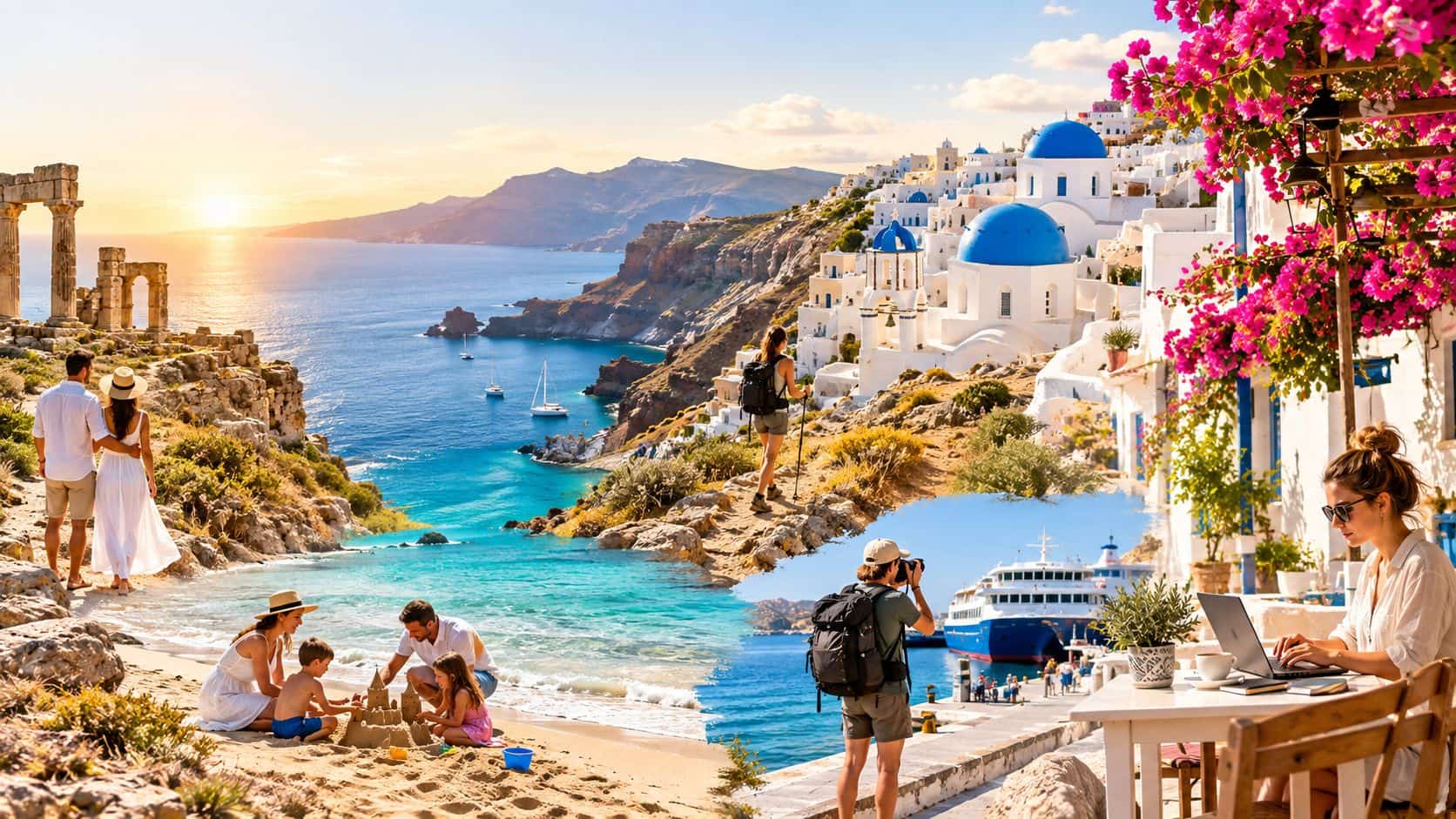
When to visit Greece: month-by-month timing for islands, Athens, and Crete, plus crowd, cost, and event tradeoffs for every traveler.
 Dimitri Morvan
You're probably staring at a calendar with a simple question that isn't simple at all: should you book Greece in July because the islands are fully alive, or wait for May or September and trade guaranteed summer energy for easier days? The wrong choice can mean standing in a ferry queue under hard sun, paying peak rates for a small room, or arriving on a quiet island after half the tavernas have closed.
The better question is when to visit Greece for the trip you want. A honeymoon, a family holiday, a hiking route through the mainland, and a winter city break all have different winning windows. Greece's season now stretches well beyond July and August, but the islands, mainland, and southern regions don't offer the same experience at the same time.
A traveler once described the moment their carefully planned July island holiday went sideways. Their Santorini ferry left them stranded on a crowded pier, two sunburned children needed shade, and the room they found for the night cost €180. The problem wasn't that Greece had failed to deliver summer. The problem was choosing the most demanding part of the season for a family that needed flexibility, shade, and dependable logistics.
That trap sits behind almost every search for the “best time” to visit Greece. A honeymooner may happily pay for a caldera room in July to catch the island at full intensity. A family may prefer late June or early September, when the sea is inviting but the pressure on ferries and accommodation is easier to manage. A backpacker watching every euro has a different answer again, especially if island nightlife isn't the priority.
The useful question isn't “Which month is best?” It's “Which month makes my preferred version of Greece easiest?”
The broad consensus from travel guidance is clear. April through June and September through October usually provide the strongest balance of warmth, sunshine, sightseeing comfort, and lighter crowds, with May and September repeatedly identified as especially dependable choices (Wilderness Travel's Greece timing guide). July and August win for travelers who want maximum beach-club activity, the fullest choice of seasonal businesses, and the classic high-summer atmosphere. They lose for anyone who dislikes heat, queues, inflated rates, or tightly booked ferries.
This traveler-first approach also prevents a common planning mistake: treating Greece like a single resort. Athens has a longer cultural season than a small Cycladic island. Crete stays useful later into autumn. Northern Greece can offer superb walking conditions when the southern islands feel too hot. Travelers comparing Mediterranean destinations may also find broader regional planning help in resources such as these tourist guides for Abu Dhabi, but Greece demands its own regional calendar.
Put every possible Greece itinerary into one of three practical windows before you compare flights or hotels. The boundaries overlap, but the vocabulary helps you understand what you're buying.
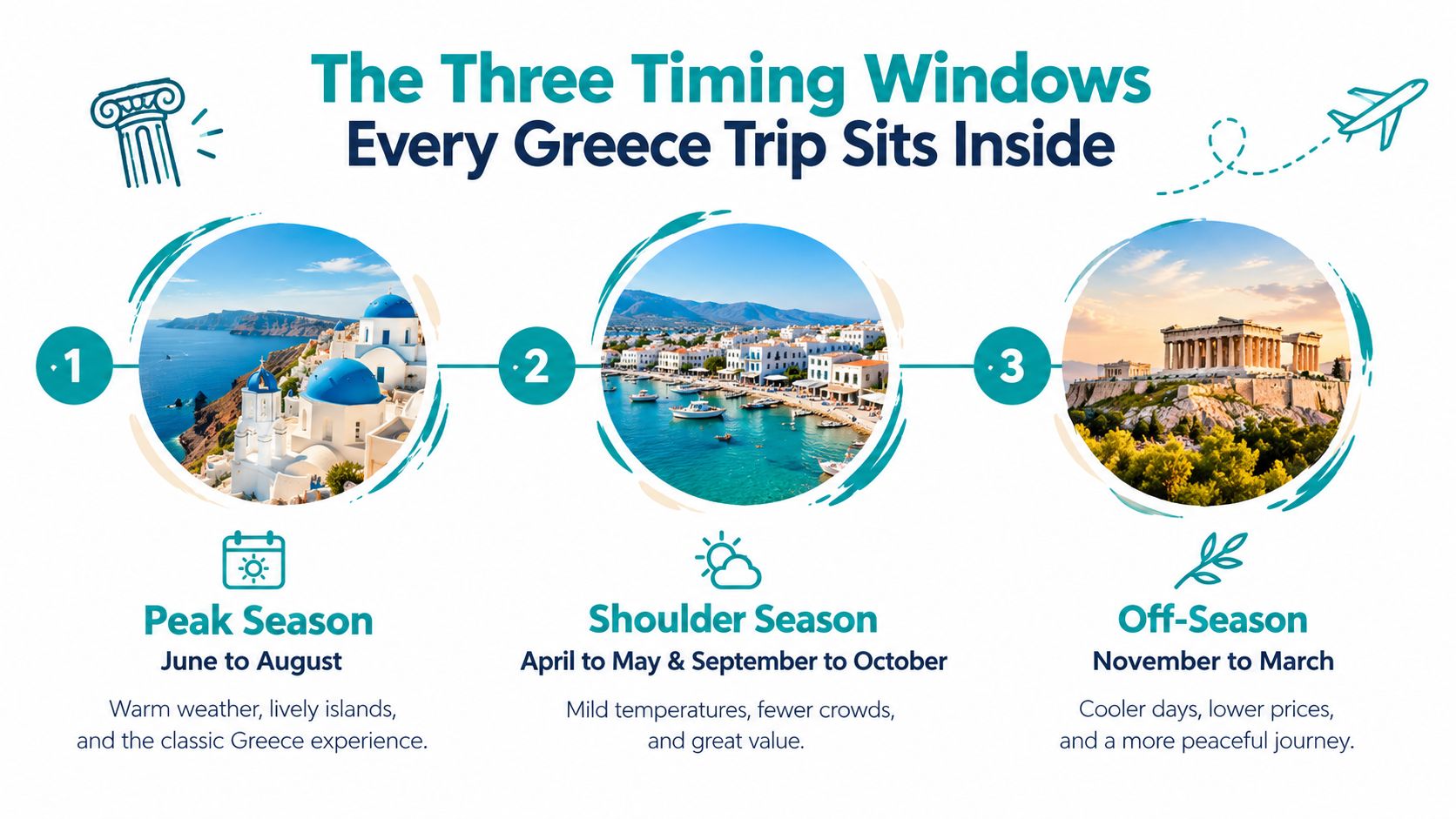
Peak summer runs roughly from mid-June to early September, with July and August carrying the heaviest demand. Daytime heat is strongest, the major islands offer their fullest service, and ferries and flights operate at their most useful seasonal frequency. Tourist arrivals rise sharply as summer deepens. Greece recorded 4.922 million tourist arrivals in June 2026, compared with 3.329 million in May 2026, a 47.9% month-over-month increase, according to the market data summarized by Lonely Planet's Greece timing advice.
The attraction is obvious. Beach clubs are operating, excursions run frequently, and almost every popular taverna has its summer rhythm. The cost is equally obvious: busier ports, fuller hotels, hotter sightseeing, and more pressure on iconic places such as Santorini and Mykonos.
Shoulder season has two personalities. The first stretches from mid-April into mid-June. It's greener, especially in the north and on the Ionian islands, and it's excellent for ruins, cities, road trips, and walking. The sea can feel cool in spring, and some beach businesses are still preparing for summer.
The second shoulder window runs from September into mid-October. It's the stronger choice for swimming because the sea has held summer warmth, while the mainland and islands begin to breathe again. Travel guidance consistently places May, September, and mid-September through mid-October among the best conditions for combining sightseeing with beach time (Skyscanner's Greece travel timing guide).
November through early April is the quiet window, with important exceptions. Athens, Thessaloniki, Crete, and larger southern destinations remain active, while small resort islands can lose ferry frequency and see hotels, beach clubs, and seasonal tavernas close.
This is the right season for museums, food, neighborhood life, and lower accommodation costs. It's the wrong season for a smooth island-hopping holiday unless you've checked every route and opening date.
The final practical distinction is economic. Shoulder-season rates are commonly reported at 20–40% below July and August peak pricing, while some island accommodation discounts reach 50–70% compared with peak summer, as outlined by Travel With Save's off-season Greece analysis. Those savings matter only if the transport and businesses you need are still operating.
The best overall compromise is May, mid-September, and early October. These months sit where warm days, manageable sightseeing, usable ferry networks, and less intense demand overlap. They aren't identical, though. May is better for flowers, walking, and mainland touring. September is better for warm water and a fully operating island scene.
| Season | Weather in Athens and the islands | Crowd level | Relative hotel price | Best for |
|---|---|---|---|---|
| Spring, mid-March to May | Mild to warm, increasingly sunny, cooler sea | Low to moderate | Below peak | Archaeology, road trips, hiking, city breaks |
| High summer, June to August | Hot, dry, and often windy in the Aegean | Highest | Highest | Beach clubs, nightlife, full seasonal access |
| Early autumn, September to October | Warm, with sea temperatures strongest after summer | Moderate, easing later | Often below peak | Swimming, islands, couples, mixed itineraries |
| Winter, November to March | Cool and changeable, but active in major cities and Crete | Low | Lowest in many locations | Museums, food, remote work, cultural travel |
By May, daytime conditions are comfortable enough for exposed archaeological sites and long city walks. Wilderness Travel's guidance highlights May and the period from mid-September to mid-October as particularly strong for sightseeing because temperatures stay moderate while beaches and island routes remain viable.
Spring is best when the itinerary matters more than guaranteed swimming. Athens, the Peloponnese, Zagori, and northern Greece become easier to explore without the oppressive heat of July. The trade-off is that some smaller island businesses may not yet be running at full capacity.
July and August are the hottest, busiest, and most expensive months. They're excellent for travelers who define Greece through beach parties, late dinners, boat trips, and a lively social scene. They're poor value for a culture-first visitor who wants to linger at the Acropolis, walk through Oia, or move between islands without advance planning.
The meltemi, a strong northerly Aegean wind, can cool beaches while complicating ferry crossings. Hot, dry conditions also increase wildfire concerns, so rural excursions require attention to local alerts and restrictions. Peak demand brings another cost that hotel comparisons often miss: Greece's Climate Resilience Fee can reach €15 per night for higher-end stays in peak season, while it can fall to €3 per night in low season, according to Greek Trip Planner's 2025 tourism coverage.
September keeps the water warm after summer and usually preserves enough ferry and hotel activity for a smooth first trip. Early October remains attractive, particularly in Crete and Athens, but smaller resort islands can begin closing seasonal businesses.
Winter isn't a dead season. Athens and Thessaloniki keep their museums, restaurants, and neighborhood culture active, while Crete offers a more local, less resort-driven experience. You'll sacrifice reliable beach days and broad island connectivity, but you gain quieter monuments and lower total costs.
Greece rewards travelers who choose the destination and month together. The Cyclades, Crete, Corfu, Athens, and northern Greece don't follow one shared timetable.
| Region | Prime window | Peak stretch | Shoulder sweet spot | Notes |
|---|---|---|---|---|
| Athens | April to May, September to October | July and August | May and late September | Excellent for museums and ruins outside peak heat |
| Cyclades | May and late September | July and August | Mid-May and late September | Meltemi winds, ferry pressure, seasonal closures |
| Crete | May to June, September to October | July and August | Late September to October | Longer warm season, strong choice for late autumn |
| Ionian Islands | May to June, September | July and August | Late May and September | Greener, milder feel, good for driving and town visits |
| Northern Greece | May to June, September to October | July and August | June and September | Mountains, vineyards, and hiking benefit from cooler conditions |
Athens is the easiest Greek destination to recommend outside summer. April and May make the Acropolis, ancient sites, and neighborhoods more comfortable to explore, while September and October offer warm evenings with less punishing afternoon heat. The Peloponnese also works beautifully in spring and autumn, especially for travelers combining Nafplio, Mycenae, Epidaurus, and the Mani.
If your trip is primarily cultural, don't force an island into it just because Greece is associated with beaches. Athens has the infrastructure and year-round life that smaller islands lack.
Santorini, Mykonos, Naxos, and Paros are at their most commercially complete in summer, but mid-May and late September are better for most visitors. The islands remain lively, yet restaurant reservations, narrow lanes, and ferry ports feel less punishing.
July and August suit party travelers and those who insist on the full beach-club calendar. Strong meltemi conditions can affect exposed Aegean routes, so avoid building an itinerary with fragile same-day connections. By late October, check whether the hotel, ferry route, and restaurants you want still operate.
Crete is the safest late-season island choice. Its size, cities, roads, archaeological sites, and year-round communities mean you can still build a substantial trip in October. Heraklion works for Knossos and eastern access, while Chania is a strong base for western beaches and mountain excursions.
The Ionian islands, including Corfu and Kefalonia, feel greener and generally milder than the Aegean. Corfu suits travelers who want a substantial town and cultural texture alongside beaches. Kefalonia is better for a driving holiday built around coves and mountain roads.
Travelers planning a nearby regional extension can also compare timing with the best time to visit Turkey, but don't assume the same month serves every Greek region equally.
Once you've chosen the window, turn it into a booking sequence. Greece is flexible in shoulder season and much less forgiving in July and August.
Flight access usually concentrates around Athens, Heraklion, and Thessaloniki. For a multi-region itinerary, compare the cost and time of returning through Athens against flying directly into Crete or Thessaloniki. Ferries become thinner between November and April, so an inexpensive island room may create an expensive transfer problem.
Practical rule: Never treat a low hotel rate as a saving until you've priced the transport needed to reach it.
May and October call for layers, comfortable walking shoes, and a light shell for wind or rain. June through September demands breathable clothing, serious sun protection, and a light evening layer for exposed waterfronts. Winter in Athens, Thessaloniki, and Crete needs a proper jacket and shoes suited to wet streets, not resort sandals.
Event weeks can shift availability quickly. August 15 brings major domestic travel and religious celebrations, while Orthodox Easter can fill rooms around important Holy Week destinations. Check the dates before booking, particularly if your route depends on ferries or a small village hotel.
If you're driving between archaeological sites, beaches, and mountain villages, review practical guidance on Greece driving rules for US visitors. For complex routes, a multi-stop planning framework such as how to plan a multi-destination trip can help you avoid stacking short stays around unreliable transfers.
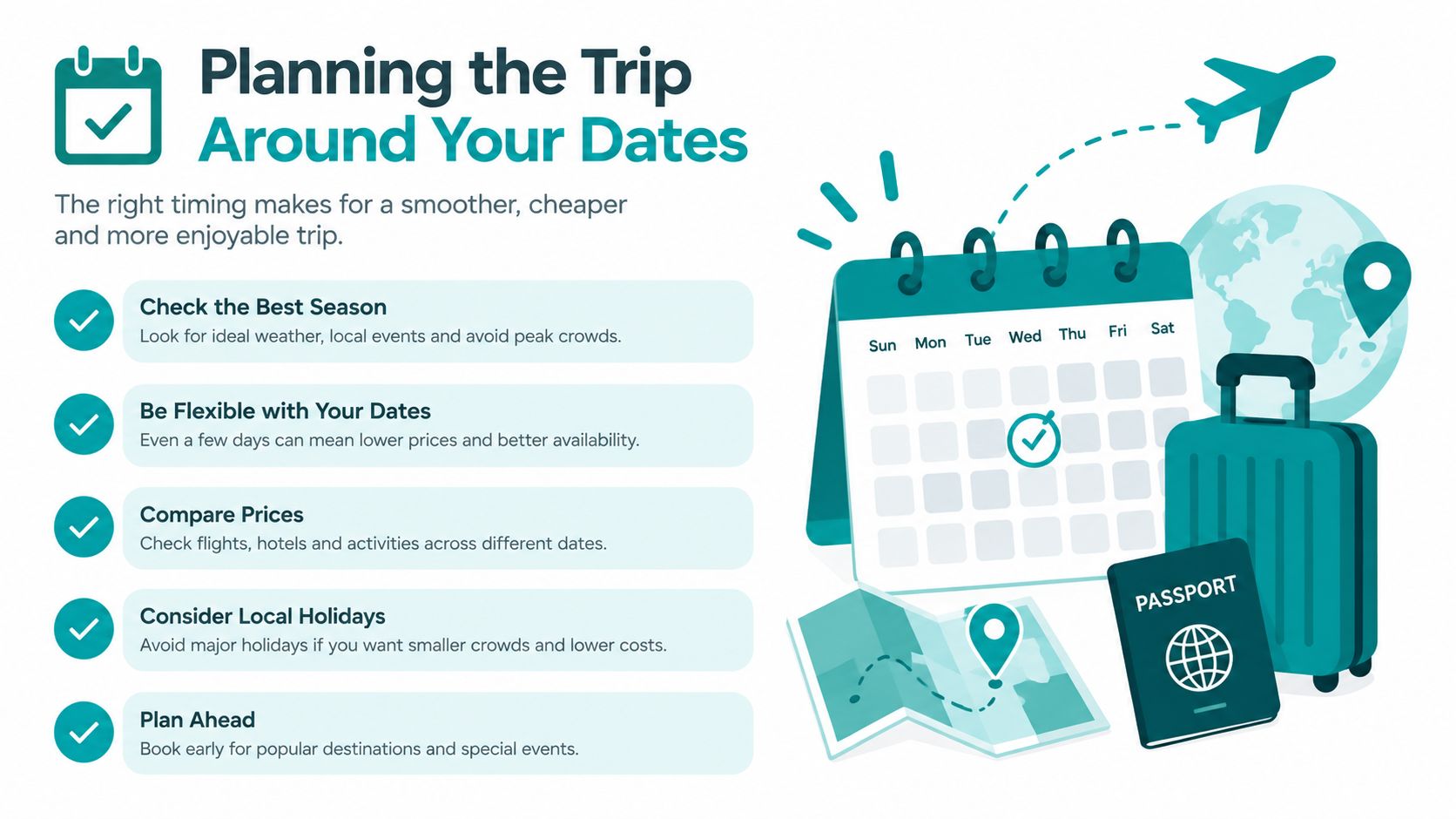
The right month depends less on a universal weather ranking than on what you refuse to compromise. Families need reliable operations. Honeymooners need atmosphere without friction. Hikers need manageable exposure, and budget travelers need more than a cheap airfare.
| Traveler type | Best window | Backup window | Recommended region |
|---|---|---|---|
| Families | Late June or early September | May | Crete or a larger Cycladic island |
| Honeymooners | Late May or late September | Early October | Santorini, Naxos, or Crete |
| Budget travelers | November or February | May or October | Athens, Thessaloniki, or Crete |
| Hikers | May or October | September | Zagori, Pindos, or Crete |
| Digital nomads | Athens in winter or Crete in spring | October | Athens or Chania |
| Culture-first travelers | April, May, or October | Orthodox Easter period | Athens and the mainland |
Late June offers full seasonal infrastructure before the most intense part of summer. Early September is even better for many families because the sea has warmed, the main routes remain useful, and demand starts to ease. Choose Crete if you want fewer ferry transfers, or stay on one larger Cycladic island rather than trying to connect several smaller ones.
Late May gives you long days, flowers, and comfortable walks. Late September offers warmer water and a more established beach season. Santorini delivers the iconic views, but Naxos or Crete gives couples more room to combine beaches, villages, food, and relaxed driving.
Travelers comparing seasonal leisure planning more broadly may appreciate the how, when, and why of ski vacations, but Greece's winning strategy is usually to avoid forcing every activity into the hottest part of the calendar.
May and October are strong hiking months for Zagori, the Pindos mountains, and Crete's higher routes. Check local trail conditions rather than assuming a clear forecast guarantees safe access, especially in mountain terrain.
Digital nomads should base themselves in Athens during winter or in Chania during spring. You'll find more dependable year-round services in cities and larger towns than on small resort islands that depend heavily on summer visitors. Culture-first travelers should prioritize April, May, and October, when museums, ruins, and neighborhoods are easier to enjoy at walking pace.
Timing decisions become practical problems once you're on the ground. A ferry schedule may change, a weather alert may alter a boat trip, and a last-minute room or translation request may depend on mobile data. August also brings congested networks in popular destinations, while ferries can create signal gaps between islands.
| Option | Setup | Cost control | Practical fit |
|---|---|---|---|
| Home-plan roaming | Usually immediate | Depends on your carrier | Convenient, but terms vary |
| Local SIM | Requires purchase and installation | Often predictable | Useful if your phone accepts physical SIMs |
| Prepaid eSIM | Install before departure | Fixed plan cost | Convenient for compatible unlocked phones |
A prepaid eSIM avoids the airport kiosk scramble and lets you activate data before reaching the first port. Simsima offers Greece destination plans delivered digitally by QR code or one-tap Smart Link, with no physical SIM or app required. Check that your phone supports eSIM and that the device is not carrier-locked before purchase.
Save the essentials twice: Keep ferry tickets, hotel addresses, and booking confirmations in offline files as well as in your email.
Download offline maps for Athens, island roads, and hiking areas. Screenshot ferry e-tickets, accommodation directions, and emergency information before boarding. If you're using a regional Europe plan for a longer route, confirm that Greece is included rather than assuming every European destination shares the same coverage.
A data plan also supports the timing strategy itself. You can check ferry operator updates when the meltemi rises, follow local weather warnings, use translation tools at a village taverna, and reroute around a closed road. For a broader preparation guide, see how to avoid roaming charges, then verify your own carrier's rules before departure.
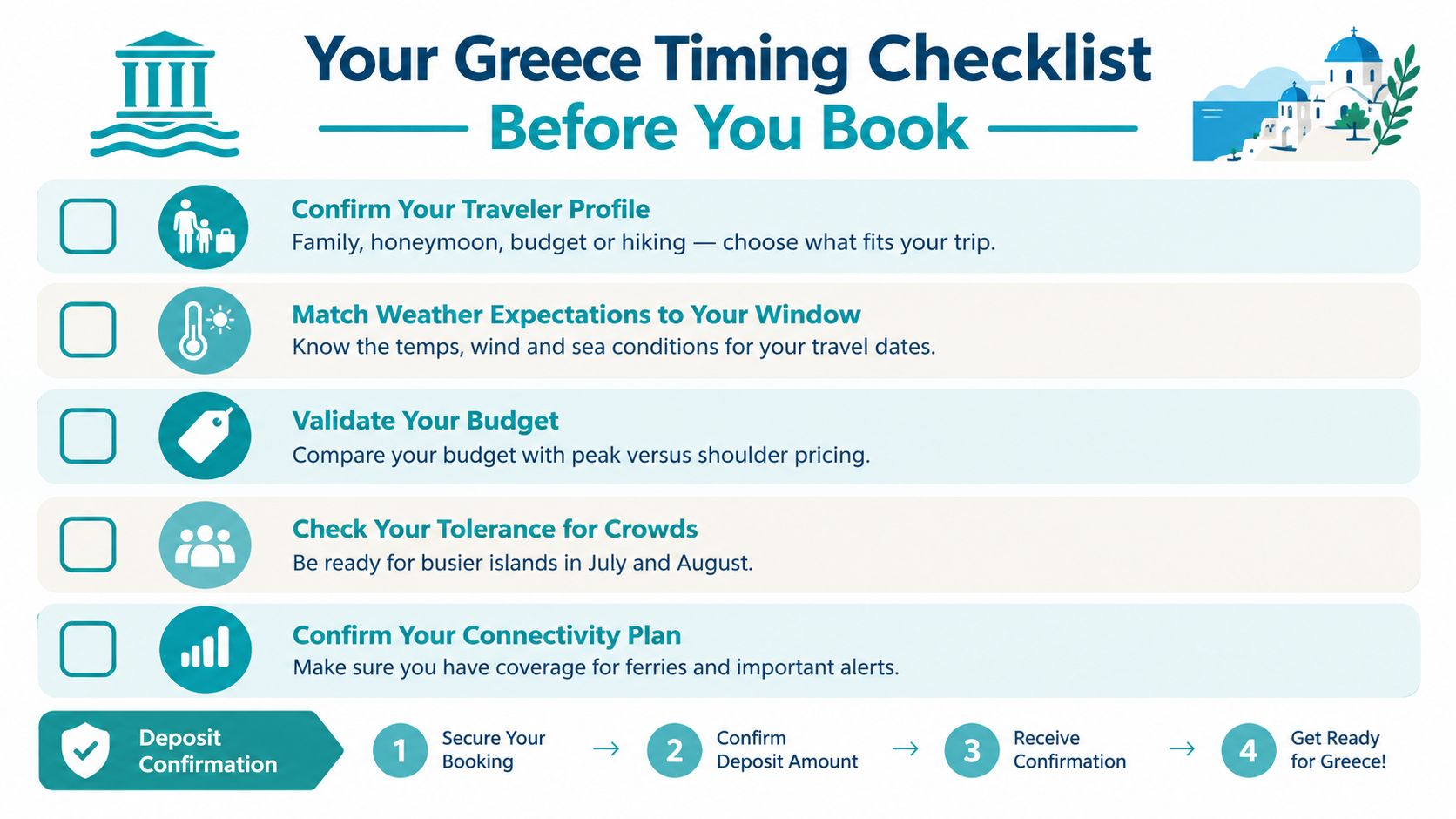
Before you pay a deposit, test your dates against three filters: traveler type, regional priorities, and event conflicts. If you're a family seeking easy swimming, a July party calendar shouldn't dictate your booking. If you're a culture-first traveler, a cool April day in Athens may be more valuable than a hotter island week.
Pack according to the actual month. May and October call for layers and a light shell. July and August call for reef-safe sunscreen, a brimmed hat, breathable clothing, and shoes that can handle uneven stone. September needs summer clothing plus one layer for breezy evenings and ferry decks.
The country's widening seasonality curve gives you more choices, not one new universal answer. July wins if you want Greece at maximum volume and don't mind paying for it. May wins for movement, ruins, and comfort. September is the strongest all-round island recommendation. Winter wins for Athens, Thessaloniki, Crete, and travelers who value local rhythm over swimming.
If Greece is on your calendar, browse Simsima for a prepaid Greece eSIM you can install before departure and use for ferry updates, maps, weather alerts, and booking confirmations. Choose your timing first, then arrange connectivity that keeps the itinerary flexible once you arrive.

Founder of Simsima. A passionate traveler based in Barcelona, he helps travelers stay connected without breaking the bank on roaming fees.
LinkedIn