-5% on your 1st eSIM
WELCOME5
Loading...
Learn when to visit Vietnam with month-by-month guidance, regional climate breakdowns, festival dates, and packing tips for north, central, and south trips.
 Dimitri Morvan
Most advice about when to visit Vietnam is too neat to be useful. It treats the country like one weather system with one perfect month, which is the wrong way to plan a trip. Vietnam works better as a routing problem, because the north, central coast, and south all reward different dates, and the shoulder months often beat the glossy peak-season window that gets pushed in generic guides.
If you want a clean answer, here it is. March to April is the strongest all-round window for a north-to-south trip, because it lines up the country's driest overlap for the north, central coast, and south (Vietnam Travel weather and climate overview). If you're not crossing the whole country, the right month changes fast, and the mistake is choosing a calendar date before choosing your route.
Vietnam has three weather realities, and the right month depends on your route. The north is strongest in March to April and September to November, the central coast usually works best from February to May, and the south is most reliable in the dry season from December to April. For a broad overview of those patterns, see Vietnam Travel weather and climate overview. A single “best month” chart flattens all of that into something less useful than the trip you want.
Pick the route first, then the month.
If Hanoi and Ha Long Bay are on your list, avoid planning around the north's heaviest rain in July to August. If Hoi An and Hue are the priority, skip the central coast's storm window in October to November. Vietnam tourism rainy-season planning guide is clear on the monsoon risks, but the common mistake is choosing dates before you choose regions.
The smarter move is to build around the overlap. Late September to early November and March to April are the windows that usually give you the most workable itinerary across multiple regions. That matters more than chasing a glossy peak season that only suits one stretch of the country.
In Hoi An in late September, you can still get usable beach mornings, then move inland or continue south without fighting the peak crowds that hit during the Tet period. That kind of tradeoff is the point. You are not buying one perfect weather day, you are buying a trip that works across stops.
Shoulder months cut the worst weather and the worst crowding at the same time. Rooms are easier to find, transfers are less painful, and you are not paying top rates just to spend half the day waiting out rain. That is the better deal for most travellers.
Ignore the idea that one month solves Vietnam. Decide which two regions matter most, then book the window that fits both.
The Annamite Range strips moisture from the northeast monsoon, and that is why Hue can flood while Da Nang, 80 km south, stays dry. Vietnam's weather changes by region, but the main divider is how mountains, coastlines, and monsoon winds interact. That is the mechanism that matters for trip planning.
The north, from Hanoi to Sapa and Ha Long Bay, is the clearest four-season zone. Spring and autumn are the cleanest bets for comfort and visibility, while July to August brings the heaviest rain, a stretch I would avoid for a north-focused trip. Vietnam weather by month and by region
The central coast, from Hue through Da Nang and Hoi An down toward Nha Trang, is the most volatile strip on the map. It has a drier run from February to May, then a storm-prone period that peaks in September to November. One town can stay usable while another gets hammered, so do not plan this coast from a single headline or a broad country summary.
The south, from Ho Chi Minh City to the Mekong Delta and Phu Quoc, is the easiest region to read. The dry season from December to April is the cleanest window, and the wet season usually means short afternoon downpours rather than day-long rainouts. Vietnam weather and climate overview
Weather systems do more than shift temperature. They change the whole shape of the trip. The north can feel cool and misty while the south stays beach-friendly, and the central coast can be calm in one place and storm-hit a short drive away. Route timing matters more than national timing.
| Vietnam's Three Climate Regions at a Glance | ||||
|---|---|---|---|---|
| Region | Dry Window | Wet Window | Avg Temp Range | Key Travel Caution |
| North | March to April, September to November | July to August | Seasonal and variable | Avoid midsummer if Hanoi, Sapa, or Ha Long Bay matter most |
| Central Coast | February to May | September to November | Hotter and more changeable | Typhoon and flood risk can disrupt Hoi An and Hue |
| South | December to April | June to September | Warm most of the year | Afternoon downpours are common, but usually brief |
The rule is simple. Match the region to the season, not the other way around.
Treat the calendar as a routing tool, not a verdict on the whole country. Vietnam rewards smart combinations. Some months are strong for the south, some are best for the north, and some only work if you keep the central coast out of the core route. If you plan the wrong combination, a “good” month becomes a bad trip.
January is a practical month for the south and a mixed one for the north and central coast. Book it if Ho Chi Minh City, the Mekong Delta, or Phu Quoc are the main draw. If your route leans north or central, expect cooler or less stable conditions, so do not build a beach-first itinerary around this month.
February is better for the central coast and still comfortable in the south. It works well for a split trip that mixes cities and beaches without forcing you into the worst weather. March is the first month that works cleanly across regions, and April still performs well for the north, south, and much of central Vietnam (Vietnam weather and climate overview).
Best all-round move: book March to April if you want the fewest trade-offs on a multi-city itinerary.
May is the point where central Vietnam starts to look attractive for beach time, while the north turns hotter and the south begins to shift into wetter afternoons. June still works well in the south, but the north is already less pleasant for long outdoor days (Vietnam tourism rainy-season planning guide).
July and August are poor picks for a north-focused trip unless you are committed to one region and fine with heat or rain. The central coast can still work for beaches, but the south is firmly in its wetter stretch, so expect humidity and frequent showers rather than steady sunshine. Da Nang, Hoi An, and Nha Trang can still be usable, but only if you accept that weather will shape the trip.
September is one of the smartest months for the north and can still work in the south, while the central coast starts to become risky. October is split, useful for some northern and southern routes, but a bad choice for central Vietnam because storm exposure is at its worst there (Vietnam tourism rainy-season planning guide).
November starts improving for the south and north, while the central coast can still be unsettled. December is the clean reset for southern trips. Choose it if Phu Quoc, Ho Chi Minh City, or the Mekong Delta are your priorities.
| Month | North | Central | South | Sea Temperature | Typical Rainfall | Crowd Level | Verdict |
|---|---|---|---|---|---|---|---|
| January | Cool and workable | Often wet | Good | North cooler, south warm | North and central vary widely | Moderate | Best if your route leans south |
| February | Better | Improving | Good | Warm enough for coastal stops | More settled than January in many areas | Moderate | Good for mixed routes |
| March | Very good | Very good | Very good | Warm and comfortable in most regions | Lower in many popular route segments | High | Top all-round month |
| April | Very good | Good | Good | Warm to hot | Still manageable before heavier seasonal shifts | High | Strong coast-to-coast choice |
| May | Hotter | Good for beaches | Getting wetter | Warm sea conditions | Rising in the south, variable elsewhere | Moderate | Good for central coast focus |
| June | Less comfortable | Good for beaches | Wet afternoons start | Hot sea, humid conditions | Noticeably higher in the south | Moderate | South still works, north less so |
| July | Hot and wet | Beachy but hot | Rainier | Warm sea, but less pleasant onshore | High in the south, sticky in the north | Lower | Avoid for north-heavy trips |
| August | Hot and wet | Beachy but hot | Rainier | Warm sea, but humidity stays high | High in the south, still oppressive in the north | Lower | Best only for a single-region plan |
| September | Excellent | Risk rises | Improving | Warm coastal water | Falling in the north, rising risk central | Moderate | Strong for northern trips |
| October | Good | Risky | Improving | Warm sea, unsettled coast risk | Storm exposure stays high central | Moderate | Avoid central Vietnam |
| November | Good | Still unsettled | Better | Comfortable in the south | Improving south, variable elsewhere | Moderate | Good if the route avoids the central coast |
| December | Cool | Wet | Excellent | Warm south, cooler north | Best southern conditions of the year | High in the south | Best for southern itineraries |
My blunt verdict, March to April first, September to November second. Those windows do the most useful work for the widest range of Vietnam itineraries.
The usual advice says peak season is best, shoulder season is acceptable, and low season is a compromise. That is too lazy for Vietnam. Route choice matters more than the label on the calendar. Vietnam's 2025 arrivals held up outside the traditional peaks, with 12.2 million international tourists in the first 7 months of 2025, 14 million in the first 8 months of 2025, and July up 6.8% versus June despite being a typical low season month (Vietnam tourism 2025 demand update). Travellers are still moving because weather risk is only one part of the decision.
Peak season gives you the safest reputation, not always the best trip. Shoulder season gives you the best balance of weather and crowds. Low season gives you more breathing room, but only if you route around the wettest region at the time.
| Season | Months | Avg. Price Index | Crowd Level | Best Regions | Worst Regions |
|---|---|---|---|---|---|
| Peak | November to February in many guides | Highest | High | South in winter, some north travel | Central coast at the wrong moment |
| Shoulder | March to April, September to November | Lower than peak | Moderate | North and south in spring, north in autumn, central in late spring | Depends on route if you choose badly |
| Low | Mid-summer and rainier periods | Often lowest | Lower | South in short shower season, central beaches in early summer | North in midsummer, central coast in typhoon window |
Shoulder dates are usually the smart pick. March, April, and November often deliver near-peak weather without the same room pressure or crowd crush. If your route is fixed and your dates are flexible, that is where I would spend the planning effort.
Low season is not automatically a mistake. In the south, rain often comes in a burst and clears, so cities and islands can still work well. In the central coast, early summer can still be strong enough for beach time before storm risk rises later.
The actual mistake is choosing low season in the wrong region. A cheap room in a flooded city is still a bad deal.
Vietnam's biggest festivals can make a trip better or harder, depending on your tolerance for crowds, closures, and higher prices. Some events are worth chasing for atmosphere, while others are best avoided unless you've planned around them carefully.
Tet Nguyen Dan usually lands in late January or early February, and it changes the country fast. Many shops close for 3 to 5 days, and domestic flight prices can jump sharply, which is why I'd book well ahead if you insist on travelling through it. It can also give you rare photo opportunities in Hanoi and Ho Chi Minh City because the streets feel different, quieter, and more ceremonial.
Reunification Day on 30 April and Hue Festival in its biennial spring slot can add atmosphere to an itinerary without wrecking it, as long as you reserve early. Mid-Autumn Festival usually falls in September or October, and Hoi An is the place where it matters most because the lantern-lit streets become part of the experience. Lim Festival and major Buddhist holidays are worth checking if you like local culture and don't mind bigger crowds.
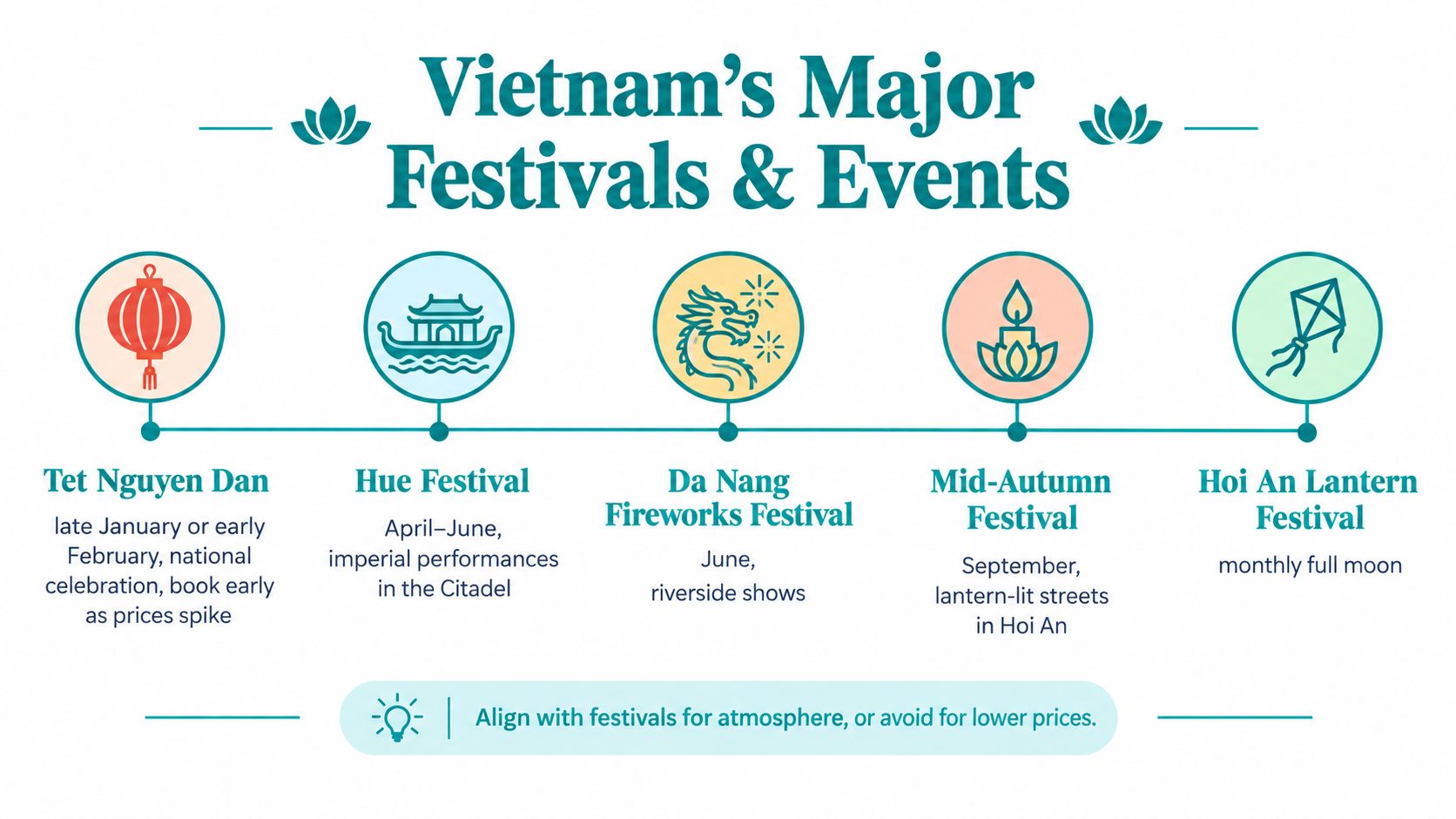
If you want the country to feel festive, align with Tet or Mid-Autumn and accept the pricing and availability hit. If you want clean logistics, skip the holiday spikes and travel just outside the public holiday window. That's the trade.
The only mistake is pretending festivals don't matter. In Vietnam, they absolutely do.
A good Vietnam itinerary isn't just a list of stops, it's a weather strategy. The same route can feel effortless in one month and frustrating in another, so the safest way to plan is to match the trip shape to the climate window.
If you want the classic north-to-south sweep, late February through April is the sweet spot. Start in Hanoi, work through Ha Long Bay, continue to Hue and Hoi An, then finish in Ho Chi Minh City or the Mekong Delta. That timing protects you from Tet closures and catches the central coast before the weather turns against it. For trip length and flow, use a planning framework like this two-week Vietnam route guide.
The route works because the weather layers line up. The north is comfortable, the central coast is still in a good phase, and the south hasn't yet moved into its rougher rainy stretch. It's the most efficient way to see the country without gambling on one region carrying the whole trip.
If you care most about Hoi An, Hue, Da Nang, and Phong Nha, go September or early October only if you're willing to watch the forecast closely. That window can deliver good value and warm sea conditions, but the central coast gets progressively riskier as the season moves on. Keep the trip tight and avoid stretching it into the late storm period.
For a south-only trip, January to February is the obvious choice, and June to August can also work if you're happy with short afternoon showers. Base yourself in Ho Chi Minh City, add the Mekong Delta, and finish with Phu Quoc if beach time matters. This is the easiest route when you want warmth, food, and low logistical stress.

To keep the route fluid, use a transport plan that fits your timing, not one that fights it. The right month changes which legs deserve flights, trains, or overland transfers. That's exactly why a timing decision belongs in the same conversation as itinerary design.
If you're building a route by hand, cross-check the shape against a broader trip structure like this multi-destination planning guide. The point isn't to overcomplicate it. The point is to stop booking a route that fights the calendar.
Good timing still needs solid logistics. Vietnam is easy when your packing, transport, booking lead times, and mobile data are sorted before you land. It gets irritating fast when you leave those details to chance.
Bring lightweight quick-dry layers for the north, because the weather can swing between comfortable and damp in the same day. Add a compact rain shell if you're anywhere near the central coast in September to November, and keep clothing modest for temple visits in any season. If Sapa is on your route, pack warmer layers than you would for the beach towns.
Domestic flights can fill fast around Tet and summer, so book early if your dates are fixed. Sleeper buses are usually fine year-round, but flooding can shut central highways, which makes timing a practical issue, not a theoretical one. The north-south rail line keeps running in most weather, though winter fog can slow it down.
Booking rule: if you're travelling during Tet, peak summer, or a festival window, don't leave major transport to the last minute.
Reserve popular rooms in Hanoi and Hoi An ahead of time if you're travelling in the periods people want, especially October to December and February to April. Phu Quoc tightens up fastest around Christmas and New Year, so don't assume island inventory will stay open.
For mobile data, travellers now have eSIM options from Airalo, Holafly, and Vinaphone's eSIM Tourist. For a full comparison of providers and plan sizes, see our guide to the best eSIM for Vietnam. Physical SIMs are still often cheaper at Hanoi and Ho Chi Minh City airport kiosks, but they require passport registration. Simsima offers instant Vietnam eSIM activation, which is useful if you land late and do not want to queue at a kiosk.
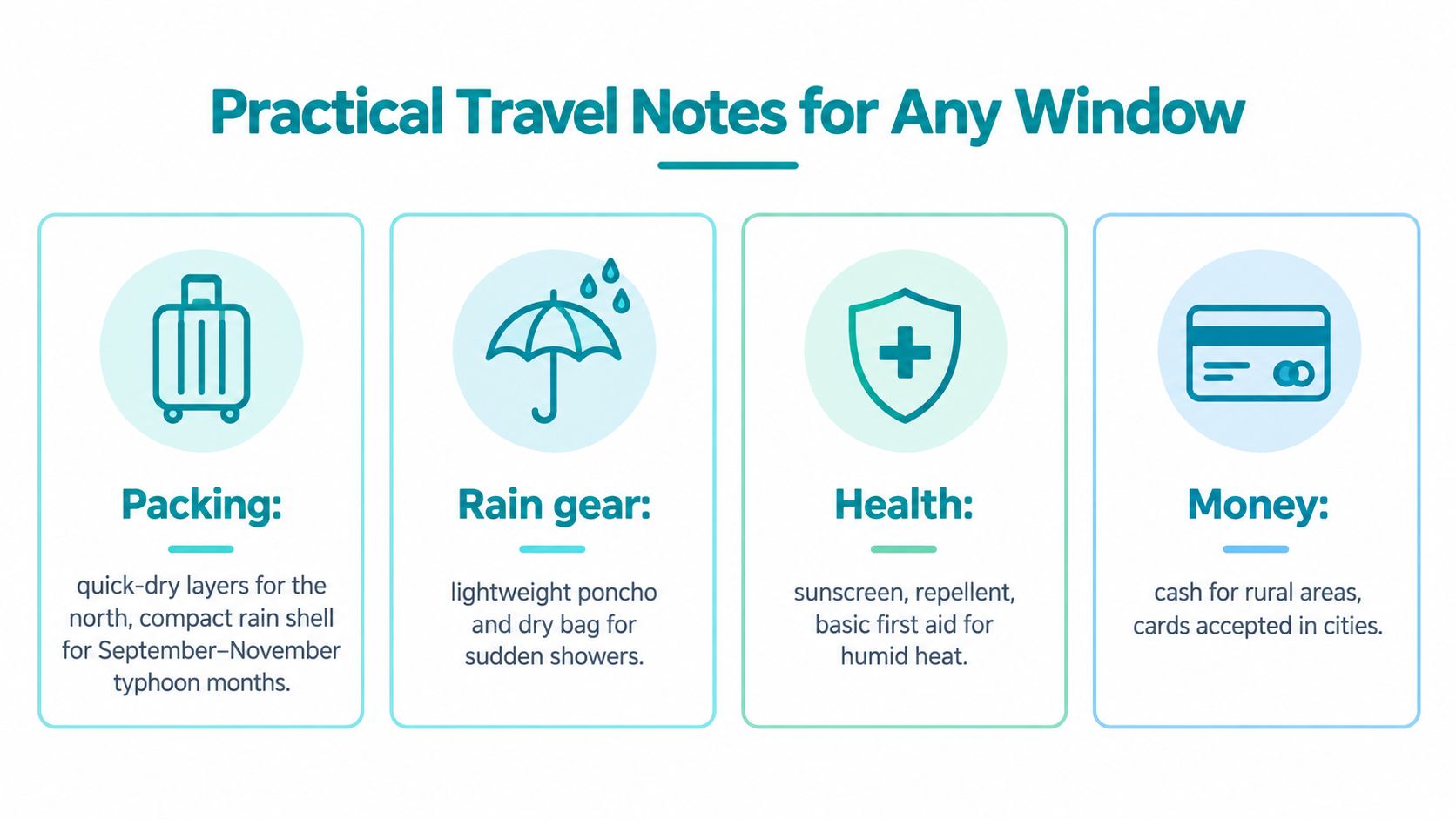
The cleanest setup is simple. Pack for the region, book transport before the pressure dates, and make sure your phone works the moment you land.
The right answer to when to visit Vietnam is always the same one: pick your regions first, then pick your month. If you start with the calendar, you'll end up forcing at least one part of the trip into the wrong weather window.
A first-time north-to-south sweep works best in March to April, because it avoids Tet closures and catches the broadest dry overlap. A beach-heavy central itinerary runs best from March through June, before the late-year weather turns hostile. A budget-conscious south and Phu Quoc trip is strongest in the wetter months when the rain is usually brief and room rates are easier to swallow. A photography-focused northern loop belongs in late September to November, when the light softens and the north comes into its best stretch.
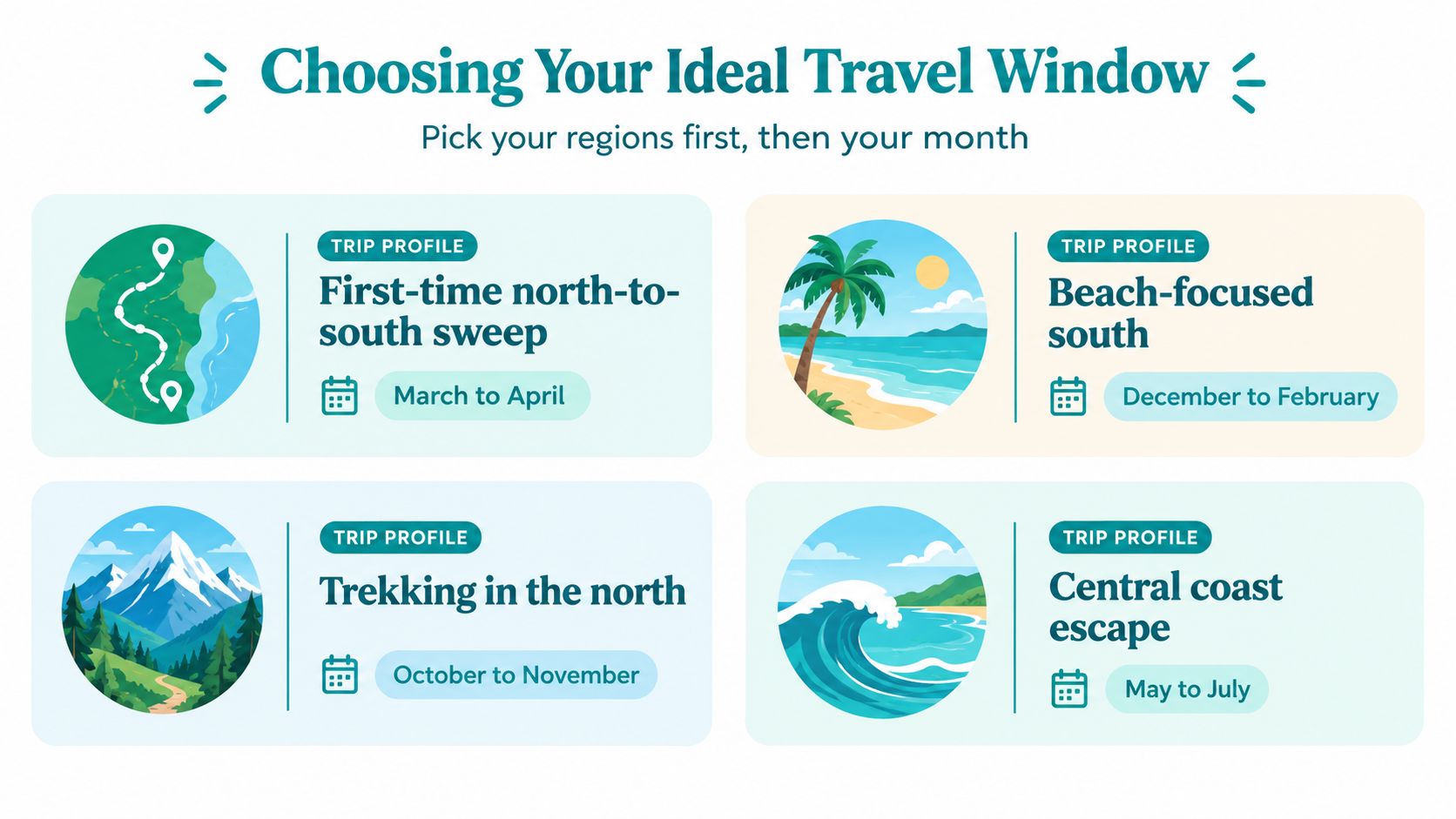
If you want the shortest shortcut possible, use this rule. List the two regions you care about most, find their shared dry overlap, and book 10 to 14 days inside that window.
If you want help turning your Vietnam dates into a route that works, use Simsima to sort your travel eSIM before you fly. It's a practical way to stay connected across city hops, island days, and long transfer legs without wasting time on arrival.

Founder of Simsima. A passionate traveler based in Barcelona, he helps travelers stay connected without breaking the bank on roaming fees.
LinkedIn