-5% on your 1st eSIM
WELCOME5
Loading...
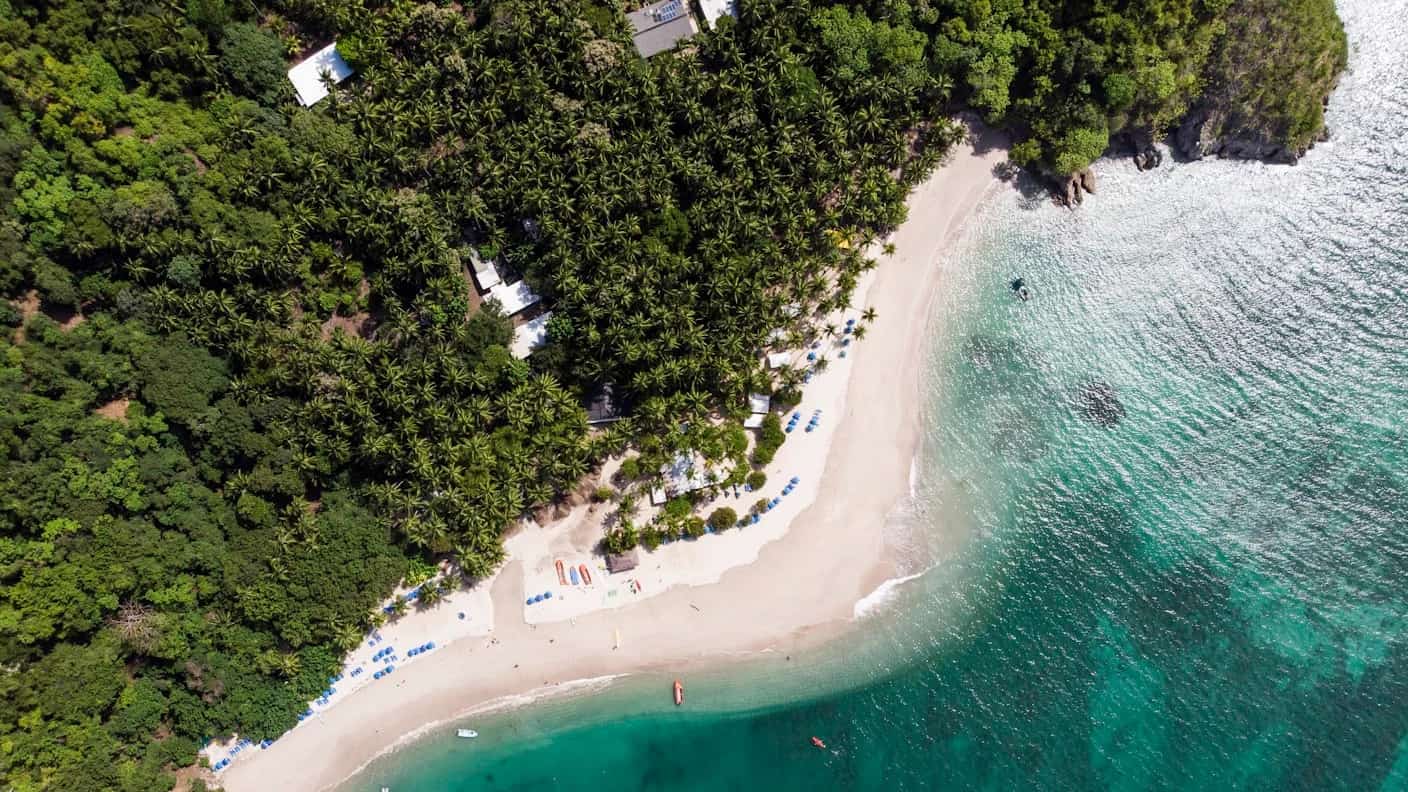
Everything you need to pick the right Costa Rica eSIM in 2026: how Kolbi, Claro and Movistar compare, coverage from San Jose to Guanacaste and Monteverde, install steps, and how much data a Pura Vida trip actually needs.
 Dimitri Morvan
Looking for the best eSIM for Costa Rica? This guide compares the top providers, plans and prices. Costa Rica runs on connection. Whether you are navigating the winding roads from San Jose to La Fortuna, coordinating a zip-line booking above the Monteverde cloud forest, checking surf reports for Tamarindo, or translating a soda menu at a roadside stop, your trip depends on a mobile signal that actually holds up. An eSIM is the cleanest way to get one: install it before you fly, land at Juan Santamaria or Liberia International, and you are online the moment your phone finds a network. No SIM tray, no queue at a carrier kiosk, no passport photocopies for a prepaid registration. This guide compares the best eSIM options for Costa Rica, explains what Kolbi, Claro and Movistar bring to the table, and helps you choose the right plan for your itinerary and data habits.
A Costa Rica eSIM replaces the old routine of finding a Kolbi kiosk at Juan Santamaria Airport, handing over your passport and waiting through a registration form in Spanish. It downloads to your phone as a digital profile, sits alongside your home line in a separate slot, and switches on the moment you land. For most travelers this saves an hour on arrival day and removes the risk of misplacing a tiny plastic SIM in a hotel room or an Airbnb in Escazu. It also lets you keep your home number active for two-factor codes, banking apps and family messages while the eSIM handles data.
The trade-off is that your phone must support eSIM and be carrier-unlocked. Most iPhones from the XS onward, Samsung Galaxy S20 and newer, Google Pixel 3a and newer, and recent Motorola, Xiaomi and Oppo flagships qualify. If you bought your phone directly from Apple, Samsung or Google it is almost certainly unlocked. Phones purchased through a home-country carrier may need an unlock request before the trip. There is also a practical benefit that first-time Costa Rica travelers underestimate: skipping the local registration step. Physical SIMs sold at the airport require your passport, a signature on a Spanish-language form, and, in some cases, a wait while the agent enters your data into the carrier's system. An eSIM sidesteps all of that, which is especially welcome after a long flight from North America or Europe.
Travelers arriving in Costa Rica have three connectivity options: a travel eSIM, a physical prepaid SIM from a Kolbi, Claro or Movistar counter, and a rental pocket Wi-Fi device. Physical SIMs are cheap and give you a local number, but they require passport registration, a wait in an airport queue, and you lose your home number unless your phone is dual-SIM. Pocket Wi-Fi rentals cover several devices at once, which is convenient for families in a rental villa, but they add a battery to charge, another device to carry, and a return step at the end of the trip. eSIMs sit in the middle: the same connection quality as a physical SIM, no counter queue, no extra hardware, and you keep your home number active for banking and SMS codes. For solo travelers, couples and small groups, an eSIM is almost always the best trade-off.
Costa Rica's mobile market is dominated by three carriers: Kolbi (operated by the state utility ICE), Claro and Movistar. All three run mature 4G LTE networks, and 5G has been rolled out selectively, primarily in San Jose, Heredia, Alajuela, Cartago and parts of Guanacaste. Kolbi has long held the strongest reputation for rural and mountain coverage thanks to inheriting ICE's national infrastructure, which is why lodges in Monteverde, the Nicoya Peninsula and along the Caribbean coast often default to it. Claro and Movistar are highly competitive in urban zones and along the main highways. When you buy an eSIM for Costa Rica, you are usually connecting to one of these three networks under the hood, with the specific carrier depending on the provider's roaming agreement. Simsima's Costa Rica plans route through the strongest available local network so you get the coverage you would expect from a top-tier domestic SIM.
The right plan depends on trip length and data habits. Short business trips or a quick surf weekend usually need 3 to 5 GB. Standard 7 to 10-day leisure trips comfortably fit into a 10 to 20 GB plan if you rely on hotel or cafe Wi-Fi at night. Digital nomads on a rentista visa, remote workers based in Santa Teresa or Nosara, and travelers streaming video, hopping between rental cars and using rideshare apps daily should look at unlimited plans for peace of mind. Simsima aggregates offers from multiple providers so you can compare capped GB packs and unlimited options side by side in a single view, filter by trip length, and pick the plan that matches your budget.
A quick rule of thumb: streaming standard-definition video uses about 700 MB per hour, HD video roughly 1.5 GB per hour, and a Zoom call around 900 MB per hour. Google Maps navigation is surprisingly light, roughly 5 MB per hour of active routing, so even long drives from San Jose to the Pacific coast rarely burn much data on maps alone. What tends to eat a plan on a Costa Rica trip is Instagram Reels or TikTok in the evenings, uploading GoPro footage of the surf or a canopy tour, and tethering a laptop for work from a beach cafe. If you know you will do those things, upgrade to unlimited rather than topping up mid-trip.
Trip length also matters. Many Costa Rica travel eSIMs come in fixed durations, commonly 3, 5, 7, 10, 15 or 30 days, and validity typically starts on first connection to a local network, not on purchase. That means you can safely install the profile a week before departure and the clock will only start when you land. If your itinerary crosses over into Panama, Nicaragua or Guatemala at either end, a multi-country Central America regional plan is often more economical than stacking two single-country eSIMs back to back. A common example: travelers who fly into San Jose, spend a week in the Central Valley and Guanacaste, then bus down to Bocas del Toro in Panama for a few days. A regional eSIM keeps the same profile running across both countries without needing to reconfigure anything at the border.
One more consideration for group travel. If two or three people are sharing a rental car and a beach house, only one traveler needs an unlimited plan set up as a hotspot for shared use during drives and evenings at the house. The others can run smaller capped plans, or rely on the hotspot entirely, which often reduces total spend versus giving every traveler an identical mid-size plan. Costa Rica's road trips between Arenal, Monteverde and the Pacific coast make this a particularly practical setup.
Costa Rica is well networked for a country of its size. In the Greater Metropolitan Area, San Jose, Heredia, Alajuela and Cartago all enjoy essentially universal coverage, with 5G available across many central neighborhoods and along the main highways connecting them. The route from Juan Santamaria Airport into downtown San Jose is fully covered, as is the drive out to popular Central Valley coffee towns like Grecia and Naranjo. Along the Pacific coast, Liberia and its surrounding Guanacaste beach towns, including Tamarindo, Playas del Coco, Nosara and Samara, get reliable 4G and often 5G near the town centers. Manuel Antonio and Quepos on the central Pacific coast are also well served, with only occasional drops on jungle trails inside the national park.
Beyond the main corridors, coverage stays usable but 5G disappears. La Fortuna and the Arenal Volcano area have strong 4G in town and around the main hotel road, tapering off toward the far shore of Lake Arenal. Monteverde and Santa Elena, high in the cloud forest, are patchy: expect signal in the villages themselves and near the reserve entrance, and offline maps on the hanging bridges and inside the primary forest. The southern Pacific coast around Uvita and Dominical is covered along the coastal highway, weaker on the beaches. The Osa Peninsula, including Puerto Jimenez and the approach to Corcovado National Park, has basic coverage in town and very limited signal deeper into the reserve, plan for offline maps and satellite messaging on multi-day hikes. The Caribbean side, Puerto Viejo, Cahuita and Manzanillo, has decent 4G in the main towns, with Kolbi generally the strongest choice in the surrounding jungle.
For road trippers, the coverage picture along the main routes is worth mapping out in advance. Ruta 27, the toll expressway from San Jose to the Pacific port of Caldera, has continuous signal end to end. The Interamericana north through Guanacaste toward the Nicaraguan border stays connected in and around each town, with occasional soft spots between them. The route from San Jose up to La Fortuna via Naranjo and Ciudad Quesada is well covered on the paved sections, and the classic mountain shortcut from La Fortuna to Monteverde around Lake Arenal is where most travelers first notice signal dropping. Renting a 4x4 for the Nicoya Peninsula gravel roads is common; download offline maps for the stretches between Samara, Malpais and Santa Teresa, where cell towers are spaced further apart and one wrong turn can leave you searching for signal in a coastal ravine.
Here is a comparison of the main Costa Rica eSIM plans against the leading international providers. Simsima offers competitive pricing thanks to direct deals with local carriers.
On the configurations shown above, Simsima delivers the most competitive rates against the leading international providers. You also benefit from instant activation and reliable network coverage in Costa Rica.
Installation takes about three minutes and is best done at home on your regular Wi-Fi, before you fly. After purchase, Simsima sends a QR code and a set of manual activation credentials by email. On iPhone, open Settings, tap Cellular (or Mobile Data), then Add Cellular Plan or Add eSIM, and scan the QR code with the phone's camera. On Android, the path is similar: Settings, Connections or Network, SIM manager, Add eSIM. Once the profile downloads, label it something like Costa Rica so you can find it easily, and leave it turned off until you land.
If your line shows No Service after landing, run through this checklist before contacting support. First, confirm the Costa Rica line is toggled ON in your cellular settings and set as the data line. Second, enable data roaming for that specific line, this is required on most travel eSIMs even though you are physically in the destination country. Third, restart the phone: a reboot forces a fresh network scan and resolves most first-connection failures. Fourth, in Settings, manually select a network operator (Kolbi, Claro or Movistar) instead of Automatic. If none of that works, uninstall the profile and reinstall it using the manual credentials from your email; almost every activation issue clears at that stage.
A few apps turn a solid data plan into a genuinely better trip. Google Maps is the default for driving between regions, though Waze is popular locally and often better at flagging traffic on the highway between San Jose and Jaco. For menus and signs, Google Translate's camera mode handles Spanish comfortably, useful when ordering at a soda or reading a small-town bus schedule. Uber operates in San Jose and parts of the Central Valley, while DiDi is available in most urban zones; outside the capital, licensed red taxis and hotel-arranged shuttles remain the norm. For food delivery, Uber Eats and Rappi cover the metropolitan area and many beach towns.
Costa Rica has two seasons: dry (roughly December to April) and green (May to November), with the heaviest rainfall typically from September through November on the Pacific side and a slightly different rhythm on the Caribbean coast. During the green season, afternoon storms can flood river crossings, close secondary roads and postpone canopy or rafting tours with only a few hours of notice. Being reachable on WhatsApp, refreshing the IMN forecast, and checking Waze for road closures can be the difference between a smooth day and a stranded one. A local eSIM also keeps you plugged into 9-1-1, the nationwide emergency number, and to your rental car company if you need roadside assistance on a rural stretch.
Costa Rica has also become one of Latin America's most popular remote-work destinations. The digital nomad visa, launched in 2022, grants qualifying remote workers residency for up to two years, and towns like Santa Teresa, Nosara, Tamarindo and Puerto Viejo have built out coworking spaces and reliable cafe Wi-Fi to match. If you are scoping the country before applying, or already working from a beach town, a longer eSIM plan with generous data, or an unlimited option, removes the friction of hopping between networks when the cafe router goes down. Locals sum up the mindset in two words: Pura Vida. It rewards patience with plans that shift, and staying connected without hunting for a router is the modern travel version of that same easygoing default.
A note on payments and ATMs while you are online. Costa Rica uses the colon, and while US dollars are widely accepted at tourist-facing businesses, exchange rates outside of banks tend to be poor. Most travelers withdraw colones from ATMs run by BAC Credomatic, Banco Nacional or Scotiabank, and confirm withdrawal fees on the spot. Data connectivity plays a quiet but real role here: bank apps often require an SMS or push notification to authorize a large card transaction abroad, and being online means those confirmations reach you in seconds rather than after the terminal has already timed out at a rental car counter or a hotel check-in.
If your itinerary extends beyond Costa Rica, your travel eSIM strategy changes. Crossing into Panama at Paso Canoas or Sixaola, or heading north into Nicaragua at Penas Blancas, will drop your Costa Rica plan the moment your phone attaches to a foreign tower. For these overland trips, a regional Central America eSIM that covers multiple countries in a single profile is almost always simpler and cheaper than buying separate eSIMs for each border crossing. The same logic applies if you are combining Costa Rica with Guatemala for volcano hiking, Belize for reef diving, or Mexico's Yucatan for a longer trip.
For travelers doing a shorter add-on, such as a weekend in Bocas del Toro or a quick jump to Granada in Nicaragua, check whether a regional Central America plan covers all your countries in one profile. It is usually cheaper and simpler than juggling one eSIM per country, and it means your phone number setup on each device only has to be configured once. Simsima's regional plans and single-country plans sit side by side in the same listing, so you can compare a 15-day Costa Rica-only pack against a 15-day multi-country pack at a glance. That comparison usually makes the choice obvious within a minute: single-country plans win for pure Costa Rica trips, and regional plans win the moment a second Central American country enters the itinerary, even briefly.
eSIM for Latin America: One Plan From Mexico to Patagonia
Most Costa Rica eSIMs route through one of the three national carriers: Kolbi, Claro or Movistar. Kolbi, operated by ICE, has the strongest reputation for rural and mountain coverage, while Claro and Movistar are highly competitive in urban zones. Simsima's Costa Rica plans use the strongest available local network so you get equivalent coverage to a domestic SIM.
Yes, your phone must be carrier-unlocked. Devices bought directly from Apple, Samsung or Google are typically unlocked by default. If you bought your phone through a home-country carrier, request an unlock before your trip, most carriers process this within a few days.
iPhone XS and later, Samsung Galaxy S20 and later, Google Pixel 3a and later, and many recent Motorola, Xiaomi and Oppo models all support eSIM. Check your phone's cellular settings for an Add eSIM or Add Cellular Plan option to confirm compatibility.
For a standard leisure trip with maps, messaging, social media, rideshare and the occasional video call, 10 GB is comfortable over 7 to 10 days when you use hotel or cafe Wi-Fi at night. If you stream video on the go, work remotely from a beach cafe or share hotspot with a laptop, choose 20 GB or an unlimited plan.
Most travel eSIMs for Costa Rica are data-only, which is enough for messaging apps like WhatsApp and iMessage, plus video calls over data. If you specifically need a local Costa Rica number for SMS-based verification, that usually requires a physical SIM from Kolbi, Claro or Movistar with passport registration, something eSIM travel plans do not currently replicate.
Coverage in these areas is real but uneven. Expect usable 4G in Santa Elena, Puerto Jimenez and other main towns, with signal dropping quickly on hiking trails inside Monteverde Cloud Forest Reserve or Corcovado National Park. Kolbi tends to hold on the longest in the deep forest, and offline maps are strongly recommended.
Install the eSIM profile at home on Wi-Fi before you fly, but leave the line switched OFF. Activation and validity typically start on first connection to a Costa Rica network, so wait until you land at Juan Santamaria or Liberia, then enable the line and turn on data roaming for it.
Yes, but it is limited. Kolbi, Claro and Movistar have all launched 5G in San Jose, parts of the Central Valley and some Guanacaste beach towns. Outside those zones you will typically fall back to fast 4G LTE, which is more than adequate for maps, streaming and video calls.
Get a multi-country plan and save on your mobile data.
Costa Rica eSIM plans — Browse and compare all available Costa Rica eSIM plans on Simsima
eSIM-supported devices — Check whether your phone supports eSIM before you buy a Costa Rica plan
How Simsima works — Learn how to buy, install and activate an eSIM in a few minutes

Founder of Simsima. A passionate traveler based in Barcelona, he helps travelers stay connected without breaking the bank on roaming fees.
LinkedIn Destinations
 Destinations
 Destinations