-5% with code
BACKTOSCHOOL
Loading...
Find cheap eSIM data plans with this buyer's guide. Compare price-per-GB, local vs regional options, and save on travel data with proven strategies.
 Dimitri Morvan
Wondering whether the cheapest eSIM data plan saves money, or just advertises a low price before throttling, expiry, and roaming costs catch up with you? The right buy is the plan that covers your real trip at a lower total cost than home roaming, with usable data, reliable coverage, and a validity window that matches your dates. Check current destination pricing in the Simsima eSIM Price Index, because rankings change frequently.
| What to compare | Why it matters | What to verify |
|---|---|---|
| Data volume | A larger allowance can reduce the effective cost per usable gigabyte | Whether all advertised data is high speed |
| Validity | Unused data may expire before your trip ends | Activation and expiry rules |
| Coverage | A low-cost plan is useless without service where you travel | Included countries and local networks |
| Network performance | Speed affects navigation, work, streaming, and hotspot use | 4G or 5G access and tethering rules |
A cheap eSIM data plan isn't the one with the lowest sticker price. It's the plan that minimizes the cost of the data you can use during your trip, while avoiding a return to expensive roaming when the allowance runs out.
Four variables decide whether a plan is cheap.
Start with the advertised allowance, then inspect the fine print. A plan may include a generous amount of data but throttle after a soft cap, restrict hotspot traffic, or apply separate rules to certain services. Effective price per usable gigabyte matters more than the headline price per gigabyte.
A plan that slows dramatically halfway through your trip can force you to buy a second plan. That turns an apparently cheap purchase into an expensive interruption.
A short-validity plan only makes sense when your itinerary is short. A 1GB plan valid for seven days isn't cheap for a fourteen-day trip if you need another purchase halfway through. Check whether validity begins at installation, activation, or first connection, then install early without accidentally starting the clock.
Coverage must extend beyond the airport and city center. Check the destination list for regional plans and look for the local network partners, especially if you're driving through rural areas or visiting islands. A plan that works only in major cities wastes money as soon as you leave them.
The installed base is expanding quickly. GSMA Intelligence reported that eSIM smartphone connections doubled in 2023 compared with 2022 and were expected to double again in 2024, with about 1 billion eSIM smartphone connections forecast globally by the end of 2025 and 6.9 billion by 2030 (GSMA Intelligence). That growth gives travelers more choice, but it doesn't remove the need to inspect each plan.

Finally, compare the total purchase with your home carrier's roaming option. Industry coverage cited by Alertify puts average travel eSIM spend at about $12 per trip, down from $16 in 2024, while traditional roaming outside RLAH regions averages about $46 per trip (Alertify's travel eSIM coverage). The meaningful saving is the difference between your complete trip bill and roaming, not a provider's lowest advertised unit price.
Practical rule: If a plan fails on validity, coverage, or usable data, it isn't cheap. It's just small.
Is the lowest advertised price really the cheapest choice? Start by dividing the plan price by its included data, then adjust for restrictions, expiry, and the amount of high-speed data you can use. The useful figure is the cost of data that supports your trip, compared with what roaming would cost, not just the provider's headline price.
Use this sequence:
Consider two patterns. A $9 plan with 5GB has a headline cost of $1.80 per gigabyte, but throttling after 2GB raises its usable high-speed cost to $4.50 per gigabyte. A $15 plan with 10GB costs $1.50 per gigabyte. If hotspot traffic counts normally, it can be the better buy despite the higher total price.
| Plan Pattern | Headline Price/GB | Hidden Limit | Effective Price/GB |
|---|---|---|---|
| $9 plan with 5GB | $1.80 | Throttles after 2GB | $4.50 based on usable high-speed data |
| $15 plan with 10GB | $1.50 | Hotspot counts normally | $1.50 |
| Small allowance with early expiry | Depends on current listing | Unused data expires | Calculate against usable data |
| Promotional plan | Depends on current listing | Credit may have conditions | Recalculate after checkout rules |
Do not trust an old comparison screenshot. Check the current Simsima eSIM Price Index, which provides prepaid travel eSIM pricing and plan-by-plan history across 239 countries, according to its published market-index information. Then estimate your trip's consumption with a mobile data usage calculator before you buy.
A median gives a clearer benchmark than a simple average when destination prices vary sharply. The index reports a current global median of $3.48 per GB, with plans below $3 per GB below that midpoint. Treat that figure as a screening tool, then verify validity, hotspot support, and the data you can use. A plan is cheap only when its final cost beats roaming without sacrificing the service your itinerary requires.
The plan type should follow your route. A local plan covers one country, a regional plan covers a defined group of countries, and a global plan covers a broad international list. Choosing the wrong category is one of the easiest ways to overpay.
| Plan Type | Typical Price/GB | Validity | Best For | Watch Out For |
|---|---|---|---|---|
| Local | Check live destination pricing | Often short, commonly aligned to a single trip | One-country itineraries | It won't follow you across borders |
| Regional | Check the current regional listing | Often suited to multi-country travel | Neighboring-country routes | Some stops may be excluded |
| Global | Check the live global listing | Designed for varied itineraries | Unpredictable, multi-continent travel | Usually costs more per gigabyte |
Local plans usually offer the strongest unit value because they focus on one destination. Pick one when you know your arrival and departure dates and won't cross a border. A traveler spending a week in Japan has no reason to pay for broad international coverage.
Regional plans earn their premium when they replace multiple purchases. They suit a Schengen loop, an ASEAN itinerary, or a road trip crossing national borders. The exact break-even point depends on live destination pricing, data volume, and how many countries you visit, so compare the regional listing with separate local listings before paying.
Global plans are insurance against uncertainty. They're useful when your route spans continents or may change, but they're poor value for a single-country holiday. A global plan used entirely in one country is usually paying for coverage you never need.
GSMA Intelligence found that 51% of eSIM users used eSIM while traveling abroad for leisure or personal reasons, while 28% of travel eSIM users bought service from a global roaming-connectivity provider (GSMA's eSIM market report). That supports regional and global use cases, but it doesn't make a broad plan automatically economical. Route first, category second, price third.
Start with the phone, not the checkout page. Common compatibility references include iPhone XS and newer, Samsung Galaxy S20 and newer, and Google Pixel 3a and newer models (eSIM-compatible device references). Your phone must also be carrier-free. A supported but locked handset may reject a travel profile.

If installation fails, don't delete the profile immediately. Recheck the QR code or app instructions, restart the phone, and contact support before attempting repeated downloads. Keep the confirmation email, because it contains the purchase record needed for refunds, troubleshooting, or top-ups. For a fuller walkthrough, follow this guide to buying an eSIM.
The cheapest listing often hides its cost in the rules. Read the plan details before you compare brands, because validity, throttling, network access, top-ups, and phone-number support can change the trip economics.
| Variable | Cheap Plan | What It Does | Effective Cost Impact |
|---|---|---|---|
| Validity | Short window | Expires even when data remains | You may need a second plan |
| High-speed cap | Soft limit | Slows service after heavy use | The advertised allowance overstates usable data |
| Network tier | 4G rather than 5G, where specified | Reduces peak speed | Fine for maps, less suitable for intensive work |
| Hotspot | Restricted or unsupported | Limits laptop tethering | Remote workers may need a larger plan |
| Top-up | Limited options | Forces a new purchase | Raises total trip spend |
| Country list | Narrow regional coverage | Excludes a stop on your route | Creates an unexpected local-plan purchase |
| Phone number | Data-only | Doesn't provide local calling or SMS | OTPs and local calls may require alternatives |
Short validity is the most common trap. A cheap plan that expires before your return flight can cost more overall than a larger plan with a longer window. The same problem appears with fair-use throttling. You may have data left, but navigation, video calls, or hotspot work becomes frustratingly slow.
Network performance also needs a realistic expectation. The stated trade-off on low-cost plans is often smaller caps or shorter validity, and sometimes 4G instead of 5G, while coverage can remain on Tier-1 networks. For maps, messaging, ride-hail apps, and ordinary browsing, 4G may be sufficient. For sustained laptop work, verify hotspot support before choosing the lowest-cost option.
Data-only service creates another hidden cost. These plans typically don't issue a local phone number, and that can matter for SMS verification, ride-hail registration, restaurant bookings, or local calls. In some countries, data-only travel eSIMs may also be treated differently from local SIM cards under identity-registration or KYC rules (eSIM identity requirements).
The right plan depends less on your phone model than on how you travel. A weekend tourist, a remote worker, and a border-hopping traveler have different failure points, so they shouldn't buy from the same checklist.
| Traveler Type | Trip Profile | Best Plan Category | Key Check Before Buying |
|---|---|---|---|
| Weekend tourist | Short city break in one country | Local plan | Validity and enough data for maps and messaging |
| Digital nomad | Month-long stay in one city | Large local bundle | Hotspot rules and top-up availability |
| Multi-country traveler | Several stops across a region | Regional plan | Every country on the route is included |
Choose a single-country plan sized for navigation, messaging, translation, and occasional social media. Don't buy global coverage for a tightly planned city break. Prioritize a validity window that starts when you connect, not when you install, and check whether your destination has strong urban coverage.
A month in one city calls for the largest practical local bundle, especially if your laptop depends on hotspot data. Data-only service often fits this traveler because calls and messages can run through Wi-Fi apps, but that logic fails if clients, landlords, or local services require a phone number.
Track usage during the first few days. If your work pattern changes, a supported top-up may be cheaper than buying an oversized plan from the start. Check current options on the relevant Simsima destination page rather than trusting a general travel recommendation.
A regional plan usually makes sense for a Schengen loop or Southeast Asia circuit, but country coverage is essential. A five-country trip with one excluded stop turns a regional bargain into a regional purchase plus an emergency local plan.
The cheapest route is often the one that prevents a second purchase, not the one with the lowest first checkout total.
Lowering the final bill takes more than hunting for a discount badge. Compare current listings, match the plan to the route, and avoid paying twice for data you could have covered in one deliberate purchase.

Don't assume the largest bundle wins. Sometimes a slightly larger plan has a better effective unit cost, but unused data still has no value after expiry. Run the expected trip length and usage through the data usage calculator, then compare the current destination listings.
The wider market is large enough to support meaningful competition. One industry report valued the travel eSIM market at US$2.24 billion in 2025 and forecast US$345.32 billion by 2035, implying a 65.5% CAGR for 2026 to 2035, while another forecast valued global travel eSIM revenue at US$1.8 billion in 2025 (DataM Intelligence's travel eSIM market report). Those forecasts differ, but both point to a category measured in billions, which can encourage more plan variety and price competition. Your job is still to compare the actual plan you can buy today.
| Question | Short answer | Why it matters |
|---|---|---|
| Why does price per gigabyte keep shifting? | Providers change destination plans, bundles, and promotions | A static ranking becomes stale |
| Can a cheap eSIM be worse than roaming? | Yes, if it expires early, throttles, or lacks needed coverage | Total trip cost beats headline price |
| What happens when data runs out? | You may need a top-up or a new plan | Running out can interrupt navigation and work |
| Do global plans cover every country? | No, always read the included-country list | “Global” is a category, not a guarantee |
Providers update destination plans, promotional terms, data volumes, and validity windows. Destination economics also vary sharply. A 2026 study covering 70,000-plus travel eSIM plans across more than 220 countries found the cheapest 1GB entry price ranged from $0.53 in Macau to $62.00 in the Falkland Islands, a 117-times spread, while the global average entry price was $3.35 (eSIM Advice's 2026 pricing research). Geography can matter more than brand.
Yes. It can be worse when the plan expires early, restricts hotspot use, or lacks coverage on part of your route. Compare the complete trip cost against roaming, then include the cost of a replacement plan if the allowance won't last.
You may be able to top up, but some plans require a new purchase. Check the provider's support rules and keep Wi-Fi access available for the transaction. If you work remotely, buy enough initial data to avoid relying on an airport connection or hotel network.
No plan label replaces the country list. Check every destination, including territories and unexpected stopovers, before paying. Open market reporting has highlighted wide regional variation, with Europe averaging $2.17 per GB and Oceania averaging $11.68 per GB in its 2026 comparison, showing why a global label can conceal very different destination economics (Counterpoint Research's travel eSIM analysis).
The live Simsima eSIM Price Index is the right place to check current rankings, because cheap eSIM data plans are a budgeting decision and every static list is only a snapshot.
Simsima offers prepaid travel eSIM plans for more than 190 countries, with local, regional, and global options delivered through one-tap installation or an emailed QR code. Compare your destination, validity, coverage, and real data needs, then visit Simsima to check the current plan options before you fly.

Founder of Simsima. A passionate traveler based in Barcelona, he helps travelers stay connected without breaking the bank on roaming fees.
LinkedIn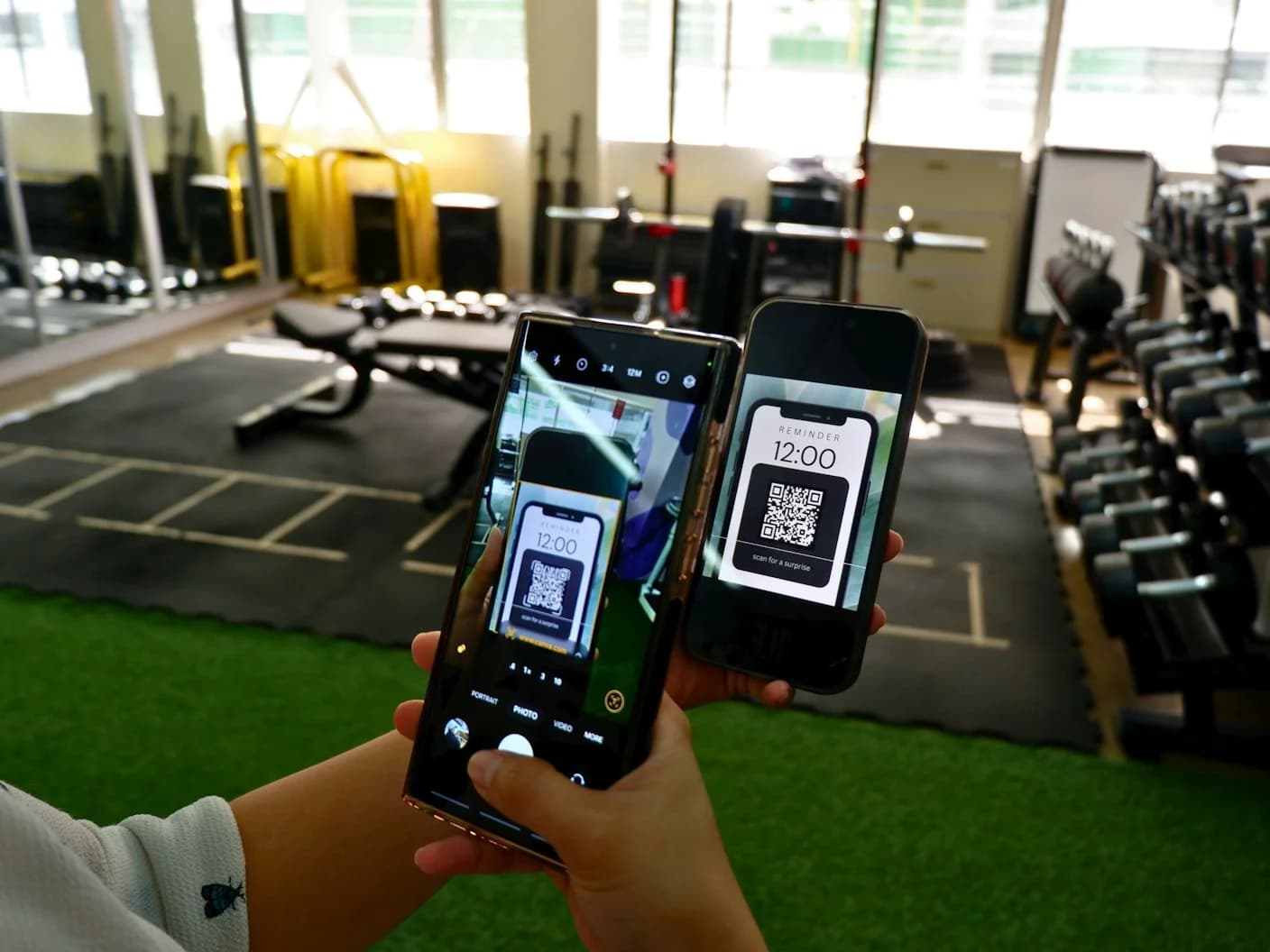 Guides
 Guides
 Guides