eSIM vs SIM Card: Which One Should Travelers Choose in 2026?
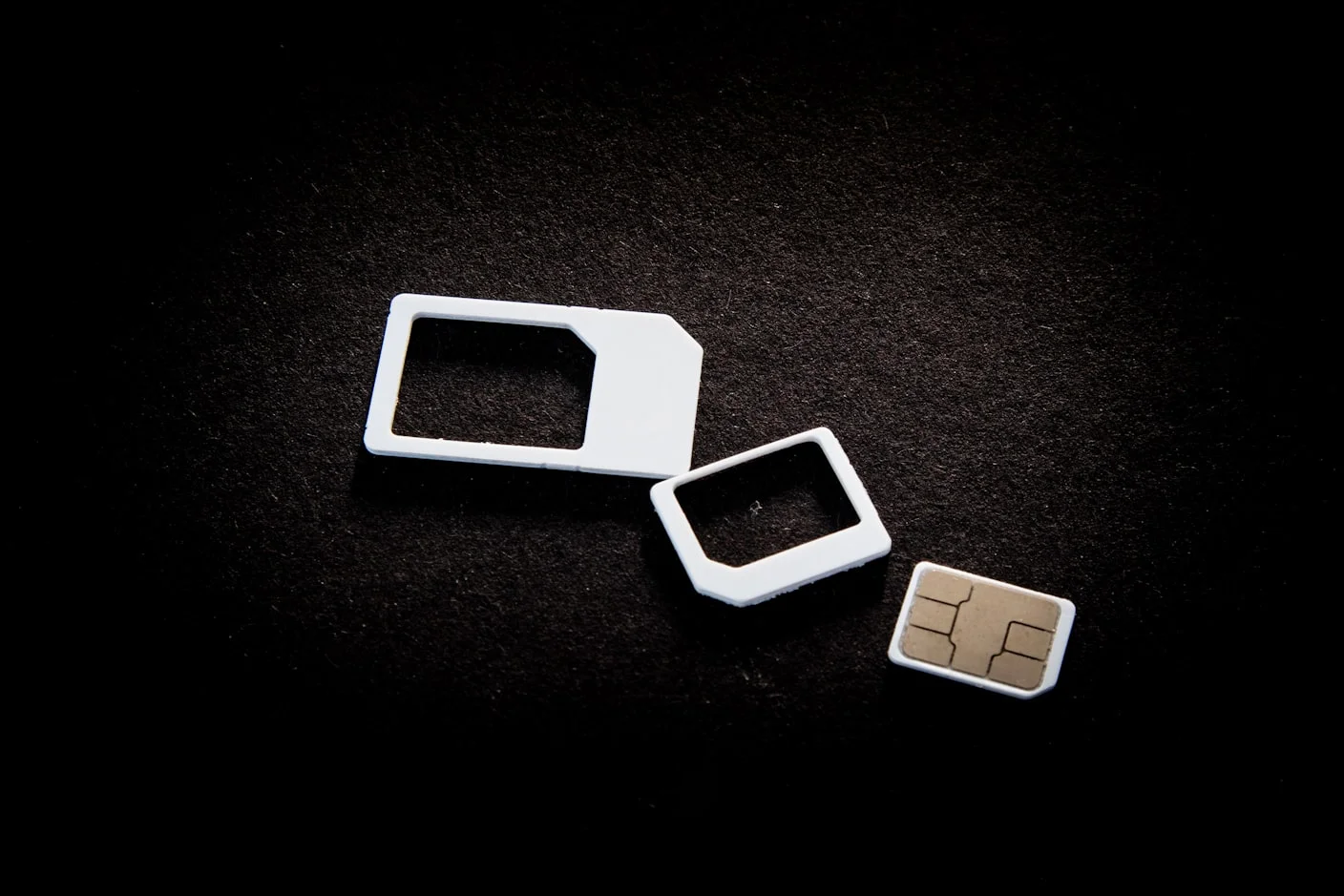
eSIM and physical SIM cards both connect you to mobile networks, but they work very differently. Compare activation, cost, security, and travel convenience to pick the right option.
 Dimitri Morvan
An eSIM is a chip soldered directly into your phone. A physical SIM is a small plastic card you slide into a tray. Both give you calls, texts, and data on the same networks at the same speeds — the difference is entirely in how you get connected and how flexible that connection is. If you travel internationally, that difference matters more than you might expect.
Key Takeaways
- eSIMs and physical SIMs deliver identical data speeds and network performance on the same plan
- eSIMs activate remotely in minutes — no store visit, no shipping, no swapping cards
- Most phones released since 2020 support eSIM, including all iPhones from the XS onward
- Physical SIMs remain essential for older devices and regions with limited eSIM carrier support
- Travelers benefit most from eSIM: install a data plan before departure and connect on landing
What Is the Actual Difference Between eSIM and SIM Card?
A traditional SIM card is a removable chip that stores your subscriber identity. To switch carriers or add a plan, you physically swap the card. An eSIM (embedded SIM) does the same job but is built into the device's hardware. Instead of swapping plastic, you download a digital profile — often by scanning a QR code or tapping a link. The result is the same: your phone authenticates to a carrier network and you get service.
The critical distinction is logistics. A physical SIM requires you to visit a store, order online and wait for delivery, or buy one at an airport kiosk. An eSIM can be purchased and installed from your couch at 2 AM the night before a flight. For travelers, this removes one of the most annoying parts of arriving in a new country: finding connectivity before you can use maps, ride-hailing apps, or contact your hotel.
eSIM vs SIM Card: Full Feature Comparison
The table below breaks down every meaningful difference between eSIM and physical SIM across the categories that matter most — especially for travelers.
| Feature | eSIM | Physical SIM |
|---|---|---|
| Activation time | Minutes — download a profile remotely | Hours to days — visit a store or wait for shipping |
| Installation | Scan QR code or tap a Smart Link | Eject tray, insert card, restart phone |
| Switching carriers | Add a new profile digitally, keep existing ones | Physically swap the card each time |
| Multi-number support | Store multiple profiles (8+ on most phones) | One number per SIM slot |
| Travel use | Buy a local data plan before you land | Buy at airport or local shop after arrival |
| Data speeds | Same as physical SIM (4G/5G, depends on carrier) | Same as eSIM (4G/5G, depends on carrier) |
| Device compatibility | Most phones from 2020 onward (iPhone XS+, Pixel 3+, Samsung S20+) | Nearly all phones ever made |
| Security | Cannot be physically stolen or swapped; remote deactivation possible | Can be removed and used in another device; SIM-swap fraud risk |
| Environmental impact | No plastic card, no packaging, no shipping | Plastic card, packaging, transport emissions |
| Loss or damage | Profile survives if phone is intact; can be reinstalled | Tiny card easily lost; replacement requires store visit |
| Dual SIM capability | Use eSIM + physical SIM simultaneously on most modern phones | Requires a phone with two SIM slots (increasingly rare) |
Where eSIM Wins: The Advantages
Instant Remote Activation
The biggest advantage of eSIM is speed. You can purchase a data plan from a provider like Simsima, receive your profile by email, and install it on your phone — all within a few minutes. There is no waiting for a package in the mail and no detour to a carrier store. Some providers, including Simsima, use a Smart Link: you tap a single link from your email and the eSIM profile installs automatically on your device. No QR code scanning, no manual APN configuration.
Multiple Profiles on One Device
Modern smartphones can store multiple eSIM profiles simultaneously. An iPhone 15, for example, can hold eight or more eSIM profiles. This means you can keep your home carrier active for calls and texts while adding a local data eSIM for each country you visit — without removing anything. This is why the dual SIM setup has become the default strategy for frequent travelers.
Stronger Security
Physical SIM cards can be removed from your phone and inserted into another device. This is the basis of SIM-swap fraud, where attackers convince a carrier to transfer your number to a SIM they control. eSIMs are tied to your device's hardware and cannot be physically extracted. If your phone is lost or stolen, you can remotely deactivate the eSIM profile — something impossible with a removable card.
Better for the Environment
Every physical SIM card is a piece of plastic that gets manufactured, packaged, shipped, and eventually discarded. Multiply that by the billions of SIM cards produced annually, and the environmental cost adds up. eSIMs eliminate all of it: no plastic, no cardboard packaging, no delivery trucks. If sustainability factors into your choices, eSIM is the clear winner.
Where Physical SIM Still Has the Edge
Universal Device Compatibility
Not every phone supports eSIM. Budget devices, older smartphones, and feature phones still rely exclusively on physical SIM slots. If your device was manufactured before 2018, it almost certainly requires a physical SIM. You can check whether your device supports eSIM before purchasing a digital plan.
Easy Device Transfers
Swapping a physical SIM from one phone to another takes ten seconds. With eSIM, transferring a profile between devices is possible but sometimes requires contacting the carrier or initiating a new download. If you frequently switch between multiple phones — say, a personal device and a work phone — physical SIM gives you more immediate flexibility.
Availability in Some Regions
While eSIM adoption is growing fast, some local carriers in parts of Africa, South America, and Southeast Asia still do not issue eSIM profiles. In these regions, buying a physical SIM at the airport remains the most reliable way to get a local number with voice and SMS. That said, travel eSIM providers like Simsima cover 200+ countries by partnering with local networks, so data-only eSIM coverage is rarely a problem even where local carriers lag behind.
eSIM vs SIM Card for International Travel
Travel is where eSIM pulls ahead most decisively. Consider what getting connected abroad looks like with a physical SIM: you land, find a carrier kiosk (if one is open), wait in line, show your passport, choose a plan you may not fully understand, and hope the clerk speaks your language. With eSIM, you skip all of that. You buy a plan before departure, install it on your phone, and activate it the moment your plane touches down.
Multi-country trips amplify the advantage. A traveler crossing from France to Spain to Portugal with a physical SIM would need to buy a new card at each border — or pay steep roaming fees. With an eSIM, you can get a single multi-country trip pack that covers all three countries under one plan. No swapping, no extra purchases, no interruption.
The dual SIM capability of eSIM is also crucial for travelers. You keep your home number active on your physical SIM (for receiving bank verification codes, family calls, etc.) and run a local data plan on the eSIM. Both work simultaneously. This setup eliminates the old dilemma of choosing between staying reachable on your home number and avoiding roaming charges.
How eSIM Activation Actually Works
If you have never used an eSIM, the process is simpler than you might think. Here is how it works with most travel eSIM providers.
- Choose a destination and data plan from an eSIM provider (e.g., Simsima's catalog at /en/esim)
- Complete the purchase — you will receive your eSIM profile by email within seconds
- Tap the Smart Link in the email (or scan the QR code) on your phone
- Your device downloads and installs the eSIM profile automatically
- Activate the eSIM when you arrive at your destination — or immediately if the plan allows
The entire process from purchase to installation takes under five minutes. Compare that to the minimum 30 minutes (often longer) required to find, buy, and activate a physical SIM at an airport shop — assuming there is one open when you land.
Can You Use eSIM and Physical SIM Together?
Yes — and this is one of the strongest arguments for eSIM. Most smartphones released since 2020 support dual SIM through a combination of one physical SIM slot and one (or more) eSIM profiles. Apple went further: the iPhone 14 and later models sold in the United States have no physical SIM tray at all, relying entirely on eSIM.
A typical travel setup looks like this: your home carrier stays on the physical SIM for calls and texts, while a travel eSIM handles data at local rates. You choose which SIM handles calls and which handles data in your phone's settings. Both lines remain active, so you do not miss any calls or two-factor authentication codes from your bank while traveling.
Why Simsima Is the Easiest Way to Get a Travel eSIM
If eSIM is the better technology for travelers, the next question is where to get one. Simsima is a travel eSIM marketplace that focuses on removing every friction point from the process. Here is what sets it apart.
- Smart Link installation — after purchase, you receive a link by email. Tap it on your phone and the eSIM installs in one click. No QR code scanning and no manual APN settings.
- Plans for 200+ destinations — browse the full catalog at Simsima's eSIM page or check out multi-country trip packs for regional coverage.
- No ID or registration required — buy and activate in minutes without uploading a passport or filling out lengthy forms. Privacy-friendly by design.
- Cryptocurrency payments accepted — pay with Bitcoin, Ethereum, USDT, or Litecoin, a feature rare among eSIM providers.
- Free unlimited reinstallation — if you accidentally delete your eSIM profile, reinstall it at no extra cost.
- 24/7 live chat support — get help at any hour, from any time zone.
You can see how the full process works on Simsima's site: choose a plan, pay, tap the Smart Link, and you are connected. The simplicity is deliberate — Simsima is built specifically for travelers who want connectivity without hassle.
Is Your Phone eSIM-Compatible?
Before switching to eSIM, you need to confirm your device supports it. Here is a quick reference for the most common brands.
- Apple: iPhone XS (2018) and all newer models
- Samsung: Galaxy S20 (2020) and newer flagship models, plus select A-series devices
- Google Pixel: Pixel 3 (2018) and all newer models
- Motorola: Razr series, Edge 30 and newer
- Xiaomi: 12T Pro, 13 series, 14 series
Your phone also needs to be carrier-unlocked to use a travel eSIM from a third-party provider. Phones purchased directly from the manufacturer (Apple Store, Samsung.com, Google Store) are typically unlocked. Carrier-locked devices may need to be unlocked first — contact your carrier to verify. For a comprehensive list, visit the eSIM-supported devices page.
The Verdict: eSIM Is the Better Choice for Most Travelers
Physical SIM cards are not going away tomorrow — they still serve a purpose for older devices and specific use cases. But for anyone traveling internationally with a phone made in the last five years, eSIM is the superior option. It is faster to set up, more secure, better for multi-country trips, and eliminates the logistical headaches of buying physical cards abroad.
The combination of keeping your home SIM active while running a travel eSIM for data is the setup that experienced travelers have converged on. It gives you the best of both worlds: reachability on your home number and affordable local data wherever you go. With providers like Simsima offering Smart Link activation, crypto payments, and plans across 200+ countries, the barrier to trying eSIM has never been lower.
I used to spend the first hour at every airport hunting for a SIM card shop. With eSIM, I land connected. It is the single best upgrade I have made to how I travel.
Frequently Asked Questions
No. An eSIM consumes the same amount of battery as a physical SIM. The radio hardware is identical — only the form factor of the subscriber identity module differs. Running two active lines (dual SIM mode) may increase battery use slightly, regardless of whether the second line is eSIM or physical.
Yes. Using an eSIM does not disable your physical SIM slot. You can insert a physical SIM card at any time and use it alongside or instead of your eSIM profiles. The two technologies coexist on the same device.
Yes. Your phone must be carrier-unlocked to install an eSIM from a provider other than your home carrier. Phones bought directly from the manufacturer are usually unlocked. If you purchased your phone through a carrier contract, contact them to request an unlock before your trip.
A factory reset typically deletes all eSIM profiles from your device. However, providers like Simsima offer free unlimited reinstallation — you can re-download your eSIM profile using the original Smart Link or by contacting support.
Yes. Many iPads (Wi-Fi + Cellular models), Apple Watch (GPS + Cellular models), Samsung Galaxy Watch, and Google Pixel Watch support eSIM. Travel eSIM plans from providers like Simsima work on compatible tablets, though smartwatch eSIM functionality depends on the carrier.
Browse all eSIM destinations — Explore Simsima's full catalog of travel eSIM plans for 200+ countries
How Simsima works — See the step-by-step process from purchase to activation with Smart Link
eSIM-supported devices — Check if your phone, tablet, or smartwatch is compatible with eSIM
Multi-country trip packs — Get a single eSIM plan covering multiple countries for uninterrupted regional travel

Founder of Simsima. A passionate traveler based in Barcelona, he helps travelers stay connected without breaking the bank on roaming fees.
LinkedInRelated Articles
 comparatifs